

Polish medicine is mainly associated by patients with GPs, paediatricians, internists, or general surgeons. They form the backbone of the healthcare system and see thousands of patients a day. However, there is a small group of doctors and medical experts whose names rarely appear on private clinic signs. They work in classified laboratories, lead-lined nuclear diagnostic bunkers, on board air ambulances, or with machines that replace human organs. They represent the rarest medical specialisations.
Performing unique medical professions carries enormous responsibility and a unique work specificity. Some of these experts spend twelve hours immobile, staring into the eyepiece of a microscope, while others operate in environments with increased pressure or ionising radiation. In such conditions clothing for medics It ceases to be ordinary workwear. It becomes a precise piece of equipment that must meet extremely diverse technical requirements – from absolute antistatic properties to maximum zonal ergonomics.
Why does the healthcare system need highly narrow specialisations?
Advances in medical sciences have necessitated a shift away from the generalist physician model towards extremely specialised precision. While the 20th century belonged to surgery and antibiotic therapy, the 21st century is the era of targeted therapies, molecular biology, and tissue engineering. The diagnosis of rare genetic defects or performing operations on vessels less than one millimetre in diameter requires years of study based on a narrow fragment of knowledge.
Doctors in rare specialisations are medical detectives. They receive patients for whom standard therapeutic pathways have failed. Although there are few of them, their role in building scientific authority and developing new treatment methods is crucial.
Review of the rarest medical specialisations in Poland – realities, earnings and specifics of the job
Below is a detailed breakdown of unique medical professions and specialisations that combine rarity in the job market with unique requirements for daily professional practice.
Perfusionist – operator of a heart-lung bypass machine
A perfusionist is a unique specialist (most commonly a doctor, nurse, or paramedic who has completed dedicated postgraduate studies in perfusion) who is responsible for managing extracorporeal circulation. During cardiac surgery operations, when the patient's heart is deliberately stopped, the perfusionist takes over the role of their most vital organs using a heart-lung machine.
- Number of specialists in Poland: It is estimated that there are around 150–200 working perfusionists in Poland.
- Educational path Medical education (medical, nursing or paramedic) is required, along with completion of specialised training in perfusion techniques, culminating in a state examination.
- Earnings Due to the highly specialised nature of the role and the need to be on call for operations, salaries – paid on an hourly or contract basis – range from 12,000 to as much as 25,000 zł gross per month, depending on the number of cardiac surgery procedures performed.
- Working conditions and dress code: The perfusionist spends many hours at the machine console in constant concentration. Clothing must not cause pressure on the chest or hip restriction during prolonged sitting. Due to working in the operating room, the clothing must be highly resistant to blood and bodily fluid stains and must withstand high-temperature washing processes without issue.
Clinical genetics – diagnostics at the intersection of molecular biology and medicine
Clinical genetics is a medical specialisation for patients with suspected rare diseases, congenital malformations, and those from families with a history of hereditary cancers.
- Number of specialists in Poland: According to data from the Supreme Medical Council, fewer than 300 doctors with the specialisation of clinical genetics practice this profession in Poland.
- Educational path Completion of 6 years of medical studies, completion of postgraduate internship, and completion of 5 years of modular specialist training in clinical genetics.
- When does the patient arrive: Most commonly in cases of recurrent miscarriages, intellectual disability in children of unexplained aetiology, or when cancerous syndromes are suspected (e.g. BRCA1/BRCA2 mutations).
- Earnings Salaries in the public sector range from 9,000 to 15,000 zł gross, whilst doctors and researchers who provide private genetic counselling and interpret DNA sequencing results earn higher incomes.
- Working conditions and dress code: The geneticist splits their time between patient consultations and working with biological samples and computer databases of genetic variants. Their attire needs to balance formal elegance (building trust when delivering difficult diagnoses) with the comfort required for office and laboratory work. A tailored ladies' medical blouse made from crease-resistant fabrics.
Hyperbaric medicine – treatment under increased pressure
A hyperbaric medicine doctor specialises in the assessment and supervision of oxygen therapy under conditions of pressure higher than atmospheric (in hyperbaric chambers). This therapy is used for, among other things, severe carbon monoxide poisoning, decompression sickness in divers, necrotising soft tissue infections, and slow-healing wounds in diabetic foot syndrome.
- Number of specialists in Poland: This is one of the rarest fields. There are fewer than 100 active doctors with a certificate from the Polish Society of Hyperbaric Medicine and Technology in Poland.
- Educational path Most commonly, this is a detailed specialisation or qualification courses intended for anaesthetists, surgeons, or doctors of maritime medicine.
- Earnings Salaries range from 11,000 to 18,000 zł gross.
- Working conditions and dress code: The environment inside a hyperbaric chamber is characterised by elevated oxygen concentrations and variable pressure. Strict fire safety and anti-static regulations apply here. Inside the chamber, it is forbidden to wear clothing containing synthetic fibres, which may generate electrostatic charges. Staff entering the chamber must wear clothing made from 100%, a modified, antistatic cotton, or from dedicated flame-retardant fibres.
Aerospace Medicine – Care for Flying Personnel
This is a specialisation dedicated to assessing the work capability of pilots, air traffic controllers, cabin crew, and to researching the effects of microgravity, accelerations, and hypoxia on the human body.
- Number of specialists in Poland: The number of examining physicians with this specialisation in Poland is around 120.
- Educational path Specialist training lasts for 4 years after completing medical studies and internship.
- Earnings From 10,000 zł to over 20,000 zł in civilian research institutes, the armed forces and private aero-medical assessment centres.
- Working conditions and dress code: The work is of a diagnostic and research nature (often using flight simulators, G-force centrifuges, and low-pressure chambers). Professional medical uniform In this sector, it is stylistically aligned with modern technical clothing. The material should efficiently wick away moisture when the doctor is conducting examinations in variable temperature conditions.
Neuropathologist – expert in the histopathology of the nervous system
Many patients confuse a neuropathologist with a neurologist. A neurologist is a clinician who sees patients and prescribes treatment. A neuropathologist is a pathologist who examines tissue samples from the brain, spinal cord, and muscles, taken during neurosurgical operations or post-mortem examinations, under a microscope.
- Number of specialists in Poland: There are only a few dozen doctors in Poland with a subspecialisation in neuropathology.
- Educational path Requires completion of a specialisation in pathological anatomy (5 years) first, followed by a two-year training period in neuropathology.
- Earnings Due to the specialised nature of their expert reports, neuropathologists earn between 14,000 and 25,000 zł gross, combining work in university hospitals with the preparation of expert reports for the courts.
- Working conditions and dress code: The work is carried out almost exclusively in a seated position, with the head bent over a digital or light microscope. This requires clothing that is constructed in a way that does not cause strain in the neck and shoulder area. Comfortable medical scrubs for women The flexible materials allow you to avoid painful pressure around your neck and nape.
Maritime and Tropical Medicine – Prevention and Treatment of Exotic Diseases
Doctors in this specialisation deal with the health of sailors, fishermen, divers and people travelling to hot climates. They diagnose rare tropical ailments such as malaria, dengue fever, or leishmaniasis.
- Number of specialists in Poland: It is estimated that there are approximately 80–100 active maritime and tropical medicine doctors in Poland, concentrated mainly in the Tricity area and Szczecin.
- Educational path The specialization lasts for 4 years and is available to doctors after their postgraduate internship or those who already have a specialization in internal medicine.
- Earnings Between 10,000 and 18,000 zł gross.
- Working conditions and dress code: Diagnosing patients returning from tropical countries necessitates working in a sanitary regime. Medical clothing must be easy to wear, withstand regular washing well, and allow the skin to breathe during long diagnostic shifts.
Clinical toxicologist – saving lives in acute poisonings
Clinical toxicology deals with acute and chronic poisonings by medicines, chemicals, industrial gases, plant toxins, and animal venoms. Toxicologists work in specialised Regional Poisoning Centres.
- Number of specialists in Poland: There are approximately 120–150 qualified clinical toxicologists working across the country.
- Educational path Advanced specialisation (lasting 2 years), available for doctors who already have a specialisation in, among others, anaesthesiology, internal medicine, or paediatrics.
- Earnings Between 12,000 and 22,000 zł gross (including on-call duties on the island).
- Working conditions and dress code: Working in toxicology is a constant race against time under stressful pressure. The clothing must be as functional as possible: stretchy jogger trousers and a sweatshirt with easy access to deep pockets allow you to carry essential medical accessories.
Nuclear medicine – isotope diagnostics and targeted radiotherapy
A nuclear medicine physician uses radioactive isotopes administered to the patient for diagnostics (SPECT, PET) and cancer treatment (e.g., radioactive iodine therapy for thyroid cancer).
- Number of specialists in Poland: The number of active specialists is approximately 350 people.
- Educational path Modular specialisation lasting 5 years.
- Earnings Salaries in nuclear medicine are on the higher side, ranging from 15,000 to 30,000 zł gross, due to the nature of the work, which involves exposure to ionising radiation.
- Working conditions and dress code: The job requires wearing heavy lead shields (X-ray aprons) when preparing and administering radiopharmaceuticals. Clothing worn under the lead apron must exhibit outstanding thermoregulatory properties and prevent the doctor from overheating.
Forensic medicine – expert opinions for the purposes of the judiciary
A forensic medical examiner performs autopsies, assesses injuries on living persons for criminal proceedings, and collects samples for toxicological and genetic testing.
- Number of specialists in Poland: According to NIL data, there are approximately 120–140 active forensic medical practitioners in Poland.
- Educational path 5-year specialization after medical studies.
- Earnings Between 11,000 and 22,000 zł gross, depending on the number of expert witness reports issued.
- Working conditions and dress code: The sectional room requires the use of personal protective equipment. Underwear must be stain-resistant, easy to disinfect, and durable in construction to withstand high-temperature washing.
Balneology and Physical Medicine – Treatment with Natural Resources
A balneologist deals with the therapeutic use of mineral waters, peloids (therapeutic muds), and gases in the treatment of musculoskeletal, cardiovascular, and skin conditions.
- Number of specialists in Poland: Around 250 doctors, located mainly in spa towns.
- Educational path A 4-year specialisation.
- Earnings From 8,500 to 14,000 zł gross.
- Working conditions and dress code: The work environment is characterised by high humidity and the presence of minerals. Clothing should be lightweight, breathable, and resistant to discolouration.
How to choose medical clothing for the specifics of a unique job role?
Knowledge of the realities of working in specific specialisations allows for the precise selection of professional wardrobe items. Appropriate work attire supports an ergonomic posture and improves psychological comfort during work.
When compiling a work wardrobe, it's worth considering three main environmental factors:
- Body posture while working: If you primarily work in a seated position (neuropathology, genetics), choose trousers with a higher waist and an elasticated waistband that does not constrict your abdominal organs.
- Temperature and humidity fluctuations: In laboratories and operating theatres with intensive air conditioning, sets made of viscose with added technical polyester will be suitable, as they maintain an optimal microclimate next to the skin.
- Anti-static and hygiene requirements In environments such as hyperbaric chambers or autopsy rooms, opt for products with simple weaves that can be easily cleaned and disinfected.
Fabric quality certificates – what to really look out for?
A lot of oversimplifications have arisen around the concept of workwear. It's worth knowing what quality certificates are characterised by and what limitations individual raw materials carry.
Commonly encountered certificate OEKO-TEX Standard 100 does not mean that the fabric is completely free of chemicals. It is a guarantee that the level of any contaminants (e.g. dyes or heavy metals) does not exceed strictly established, health-safe limits. For a female doctor or researcher working in a warm room, it is proof that the clothing will not cause contact allergies when in contact with sweaty skin.
The properties of the fibres themselves should also be reliably assessed:
- Cotton It is natural and soft, but with this finish or a low weight, it can crease easily and take a long time to dry.
- Polyester: Modern technical polyester has little in common with synthetics from years ago. It can wick away moisture better than natural fabrics, however, its cheaper equivalent will block airflow.
- Viscose: It gives a noticeable feeling of softness and coolness, however its breathability in a specific garment depends on the weight and weave of the fabric.
Summary: Exceptional professional challenges require appropriate support
The rarest specialisations in medicine require unique competencies, passion, and constant attention to precision. Whether you work in a hyperbaric chamber, analyse genetic variants, or oversee lung-heart apparatus, your body deserves maximum comfort and protection during your shift.
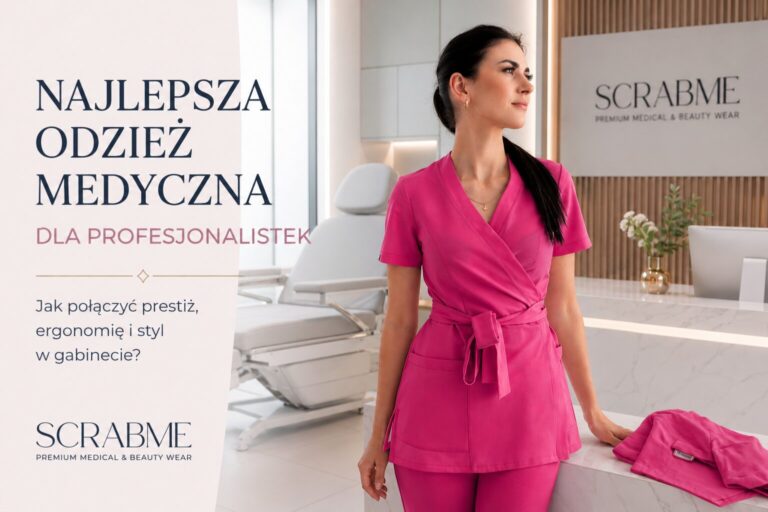
Consciously chosen clothing for medics protects against material fatigue, ensures freedom of movement and builds a professional image for the specialist. At Scrabme.com, we ensure that our designs – including thoughtful ladies' medical trousers and blouses – met the functional and aesthetic requirements of modern women working in medicine. Browse our offer and choose a uniform that matches the challenges of your specialisation.
Frequently Asked Questions (FAQ)
Which medical specialisation is currently the rarest in Poland? The most unique specialisations in terms of the number of qualified doctors include neuropathology (a dozen or so specialists in the country) and hyperbaric and maritime medicine (fewer than 100 active experts).
2. Does clothing for doctors working in hyperbaric chambers need to meet special standards? Yes. Due to the high oxygen concentration and elevated pressure, staff entering the hyperbaric chamber must wear clothing made from 100% cotton or specialised antistatic fibres. Clothing containing standard synthetic blends is prohibited due to the risk of electrostatic sparking.
3. What are the earnings of doctors in rare medical specialisations? Salaries vary and depend on the type of employment (permanent vs. contract), the number of procedures performed, and the sector (public vs. private). Average rates range from 10,000 zł gross for a permanent hospital post to over 25,000 – 30,000 zł gross for specialised surgical procedures, radionuclide diagnostics or forensic expert reports.
4. What to look out for when choosing a medical uniform for work that involves sitting at a microscope? When working for long hours sitting and with the head bent, flexibility in the shoulder and neck area is crucial. A medical scrub top should not have a stiff collar that causes pressure. Trousers should have a high waist and a soft waistband to prevent pressure on the abdomen and improve circulation in the legs.