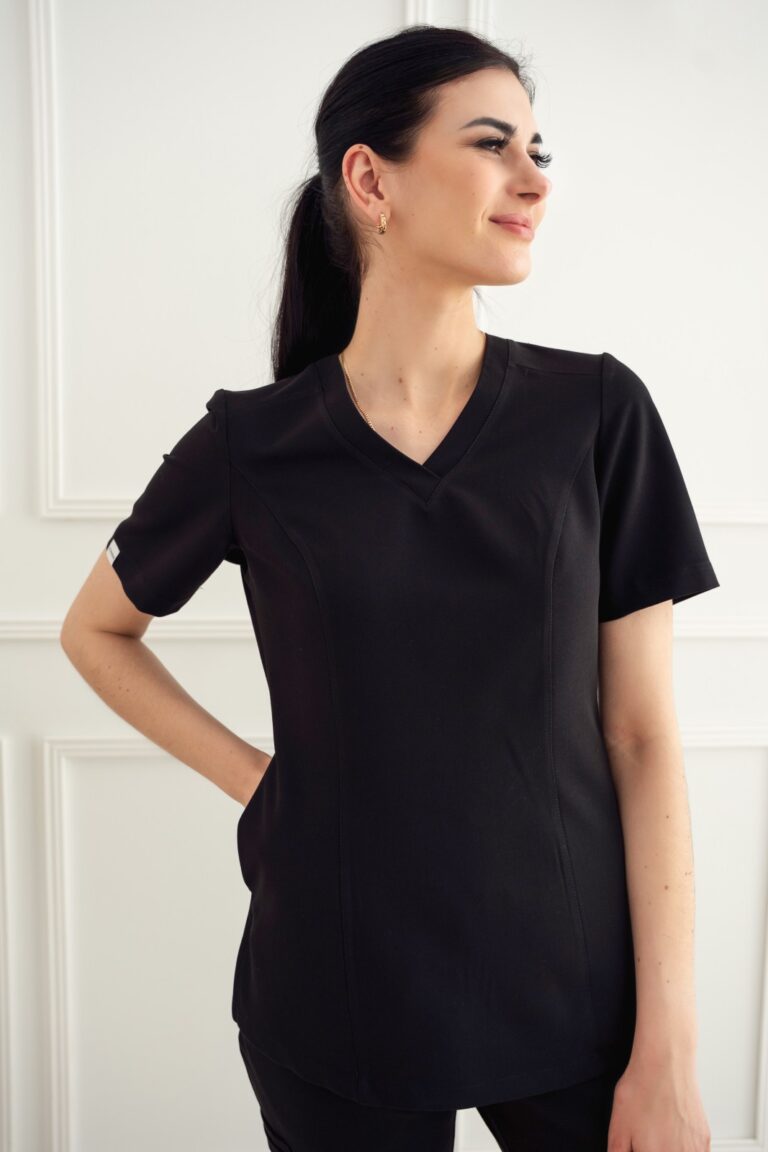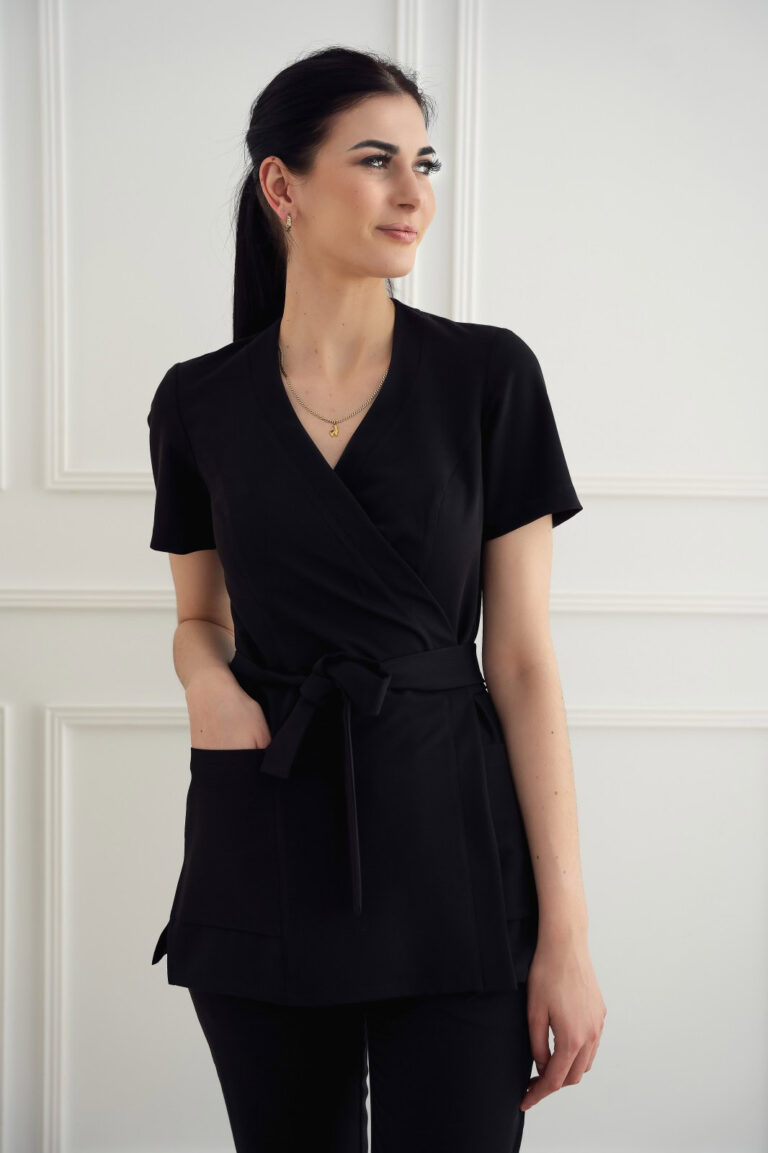

There is no room for chance in medical work. Precision, concentration and readiness to act at a moment's notice count. In this environment medical trousers cease to be a mere item of clothing. They are becoming a working tool.
For many years, the topic of comfort was marginalised. Uniforms were supposed to be „by the book”, clean and neutral. Today we know that this is not enough. Contemporary ladies' medical trousers is designed with work physiology, biomechanics of movement and psychological comfort in mind.
Because if you wear something for 10-12 hours a day, it can't be indifferent to your body.
1. Movement is everyday - medicine is physical work
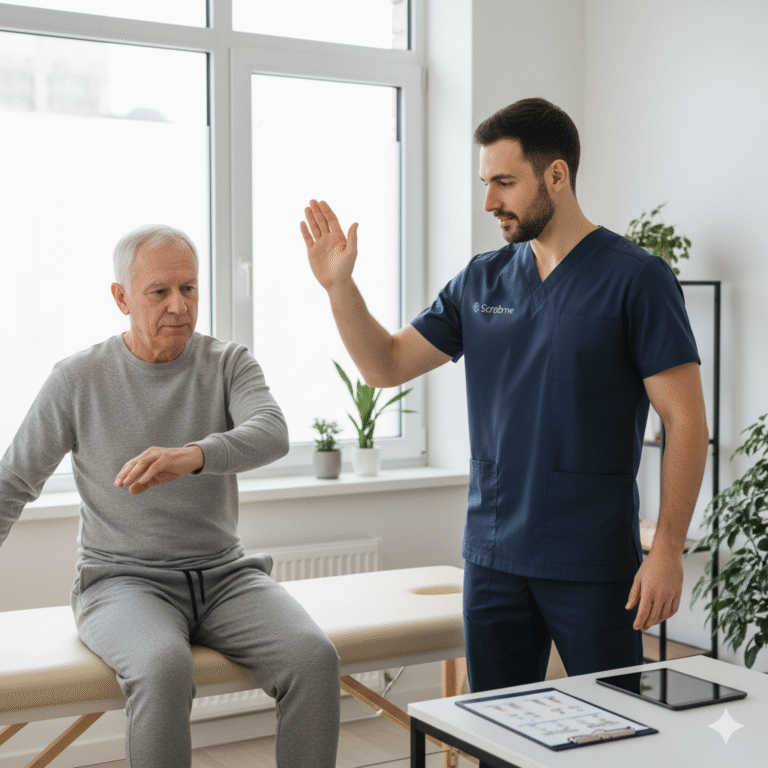
Statistics show that a nurse or doctor travels up to several kilometres while on duty. On top of that:
- bending over the patient,
- rapid movement between rooms,
- repeatedly sitting down and standing up,
- half squat work,
- torso twists.
If medical trousers are badly tailored, too stiff or too tight at the waist, the body starts to compensate for the movement. And this leads to tension, lumbar pain and fatigue sooner than it should.
Comfort is therefore not a question of aesthetics. It is a question of ergonomics and health.
2. Women's medical trousers and the anatomy of the female figure
For years, the uniform has been designed „universally”. The problem is that the female body is not universal.
Women's medical trousers should include:
- hip and waist proportions,
- differences in leg length,
- natural pelvic mobility,
- variability of the circuit during the day (stress, meals, tension).
An ill-fitting belt puts pressure on the abdomen when sitting. Hips that are too low cause the fabric to slide down when bending over. Legs that are too narrow restrict the step.
Modern medical scrubs solve these problems with:
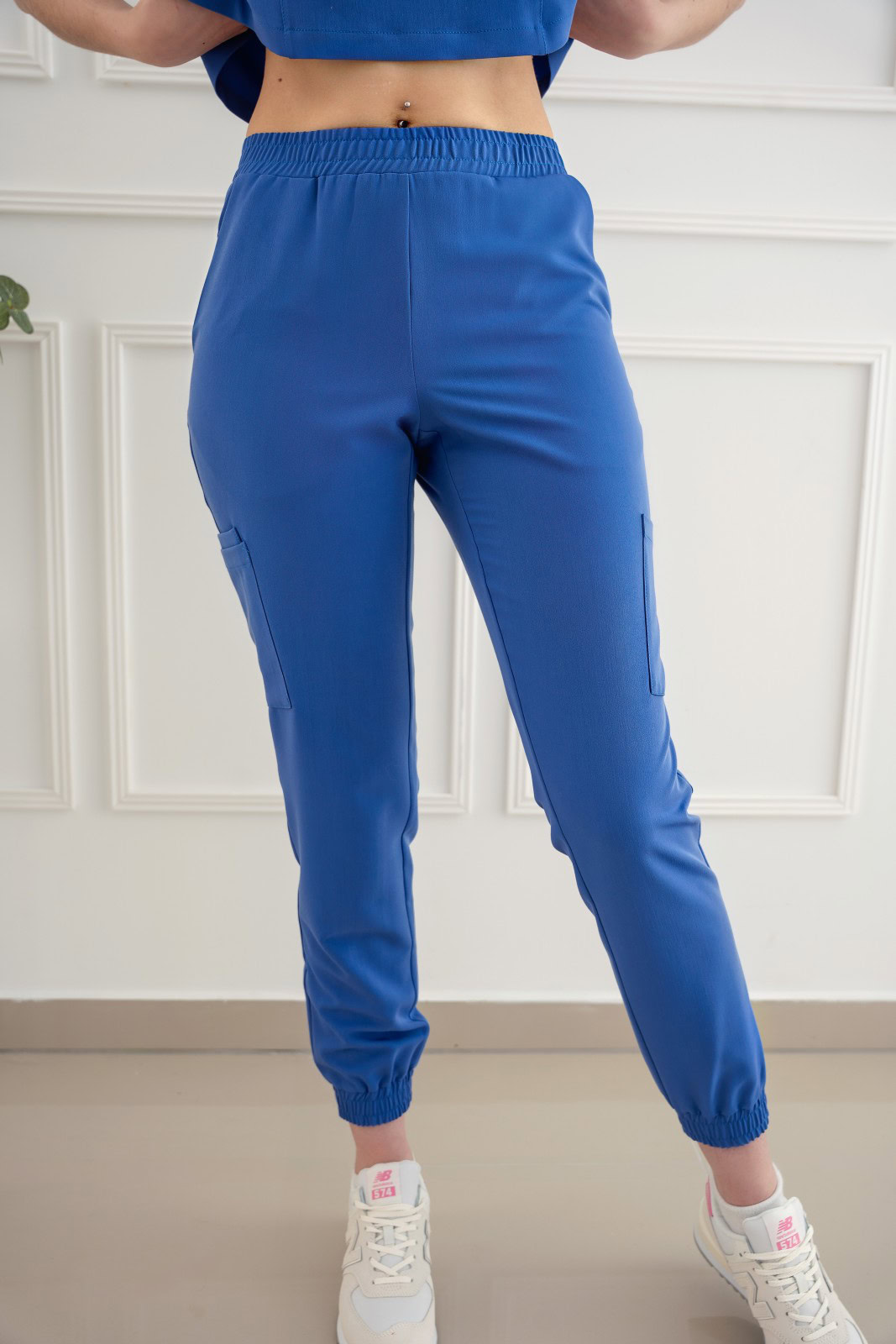
- elastic waistband with wide elastic band,
- jogger cuts,
- profiled seams,
- 4-way stretch materials.
It's not fashion. It's biomechanics.
3. material matters more than you think
The most common mistake? Looking solely at the price.
Cheap medical trousers are often made of pure, thick cotton. They seem „natural” at first, but in practice:
- crumple after an hour,
- absorb perspiration,
- they take a long time to dry,
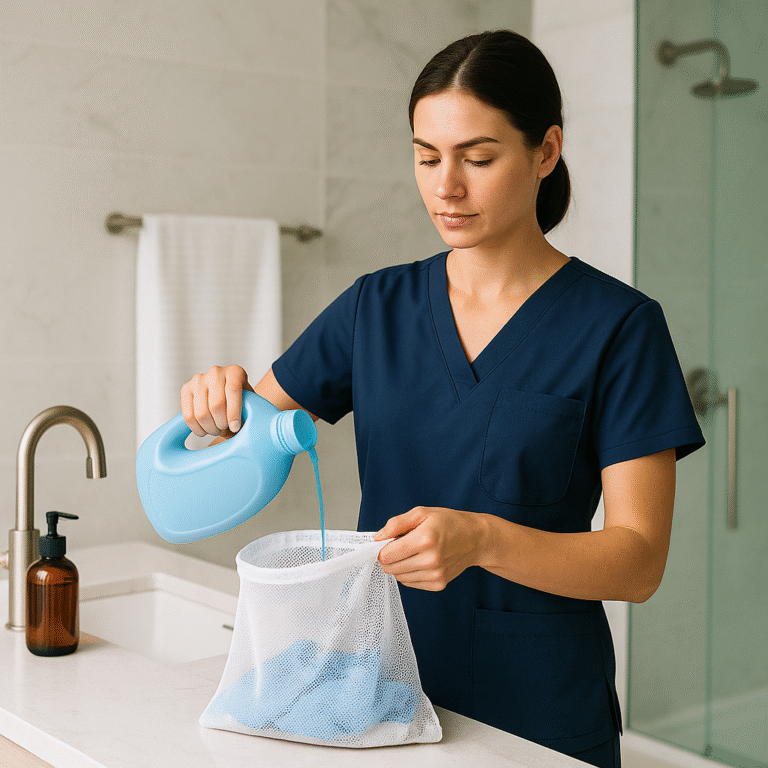
- lose their shape after a few washes.
Professional medical scrubs use mixtures:
- polyester - durable and stain-resistant,
- viscose - softness and breathability,
- elastane - flexibility and recovery.
With this, the trousers:
- do not restrict movement,
- they do not push up on their knees,
- retain their colour for many months,
- do not require ironing.
In practice, this saves time and energy.
4 Why is a belt in medical trousers a key element?
The belt is a centre of comfort.
While on duty:
- you eat irregularly,
- you function under stress,
- Your body is working intensely.
The waist circumference changes throughout the day. A stiff button or narrow elastic can cause:
- diaphragm compression,
- breathing problems,
- discomfort when sitting.
Good ladies' medical trousers have:
- wide elastic waistband,
- adjustment strap,
- a high rise to stabilise the silhouette.
It's the difference between „I can stand the change” and „I don't feel like I'm wearing them”.
5. pockets - time-saving functionality
Telephone. Scissors. Marker. Notepad. Gloves.
In medical work, pockets are not an add-on. They are a necessity.
Poorly positioned pockets cause:
- drooping trousers,
- figure skewing,
- discomfort when walking.
Modern medical scrubs offer:
- cargo pockets,
- reinforced edges,
- compartments for small accessories.
It is the details that make a huge difference in practice.
6 The psychology of comfort - focus and confidence
Research into the phenomenon of „enclothed cognition” shows that what we wear affects our effectiveness.
If you spend half the day mending your medical trousers because they are slipping off - your concentration drops.
If you feel comfortable in them:
- you move freely,
- you have an upright posture,
- you communicate confidence.
Patients sense this.
Comfort is not just about physical comfort. It is part of a professional image.
7. medical trousers and body temperature
Hospital wards can be hot. Treatment rooms - overheated. Private clinics - air-conditioned.
Material must:
- wick away moisture,
- allow the skin to breathe,
- do not stick to the body.
Modern ladies' medical trousers is designed with thermoregulation in mind. This is particularly important for long operations or procedures.
8. leg length - a detail that affects the silhouette
Too long trousers:
- get dirty,
- optically shorten the silhouette,
- look unprofessional.
Too short:
- expose the ankle,
- distort the proportions.
For this reason, it is advisable to choose models available in different lengths. Good brands offer shorter and longer variants.
9. Joggers or classic medical trousers?
More and more people are choosing medical joggers.
Why?
- a drawstring at the ankle prevents the leg from rolling up,
- the silhouette looks modern,
- trousers do not „sweep” the floor.
Classic models work well in more formal establishments.
The choice depends on the nature of the work - but in either case, convenience should be a priority.
10. cheap vs good medical trousers - what can you see after 3 months?
Low-cost models:
- Stretched knees,
- washed-out colour,
- meching,
- spreading seams.
Good medical scrubs:
- hold form,
- do not fade,
- remain flexible,
- look professional for a long time.
It is an investment, not an expense.
11. convenience and long-term health
Back pain. Hip tension. Knee stiffness.
Some of these problems are due to overload. Part - from inappropriate attire.
If ladies' medical trousers limit the range of movement, the body compensates in other ways. Years later, this can lead to chronic ailments.
It is therefore worth treating the uniform as part of preventive health care.
12. colour and confidence
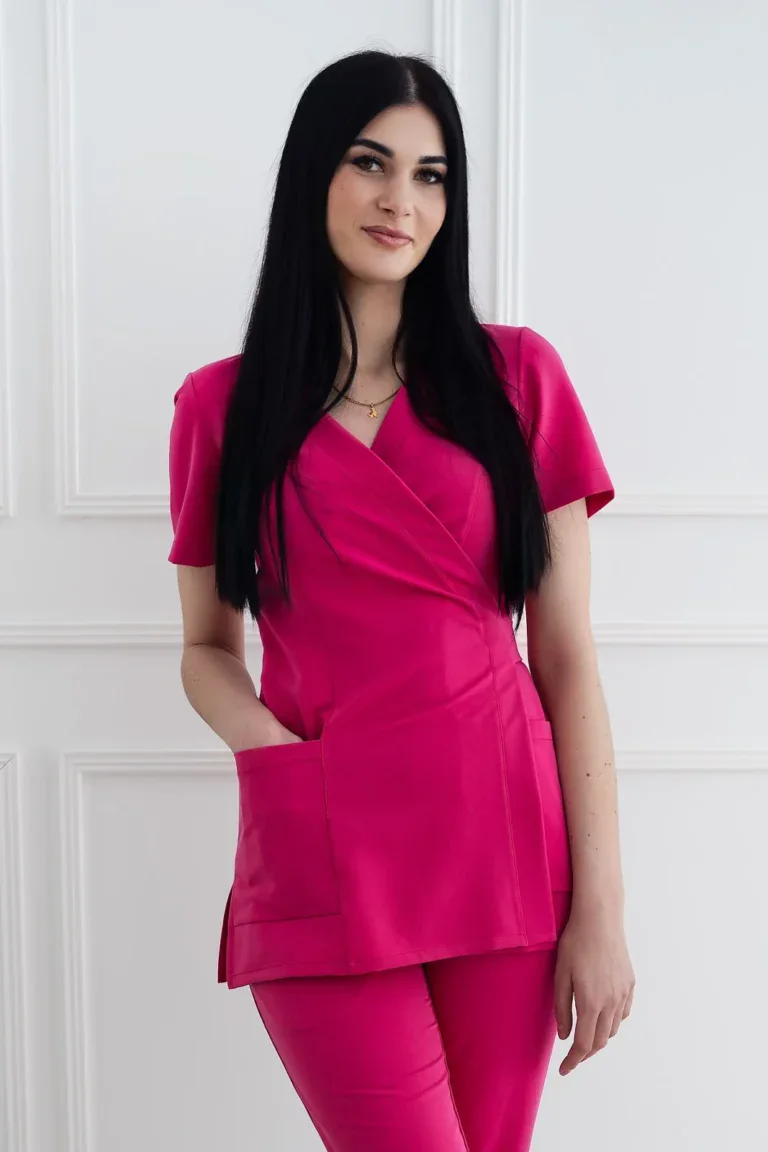
Garnet builds authority. Black - prestige. Fuchsia or green - energy.
Although the topic is about comfort, it is worth mentioning that aesthetics also affect mental comfort.
When you feel comfortable in your medical uniform - you work differently.
13. How to choose the perfect medical trousers?
Ask yourself some questions:
- Is the material flexible?
- Does the belt apply pressure when sitting?
- Are the pockets functional?
- Do the trousers return to shape when stretched?
- Do they require no ironing after washing?
If the answer is yes - you are close to a good choice.
Summary: Convenience is the foundation of professionalism
Medical trousers They are not an accessory to an outfit. They are its foundation.
Good ladies' medical trousers:
- support your body,
- allow you to focus on the patient,
- build a professional image,
- save time and energy.
In a world where every minute matters, the uniform should be your ally.
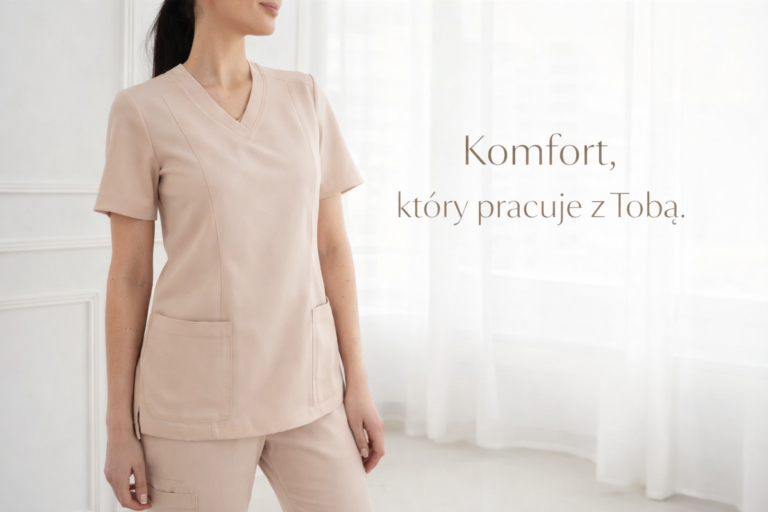
Because the best medical scrubs are the ones you forget about as you work - because they are so comfortable.