
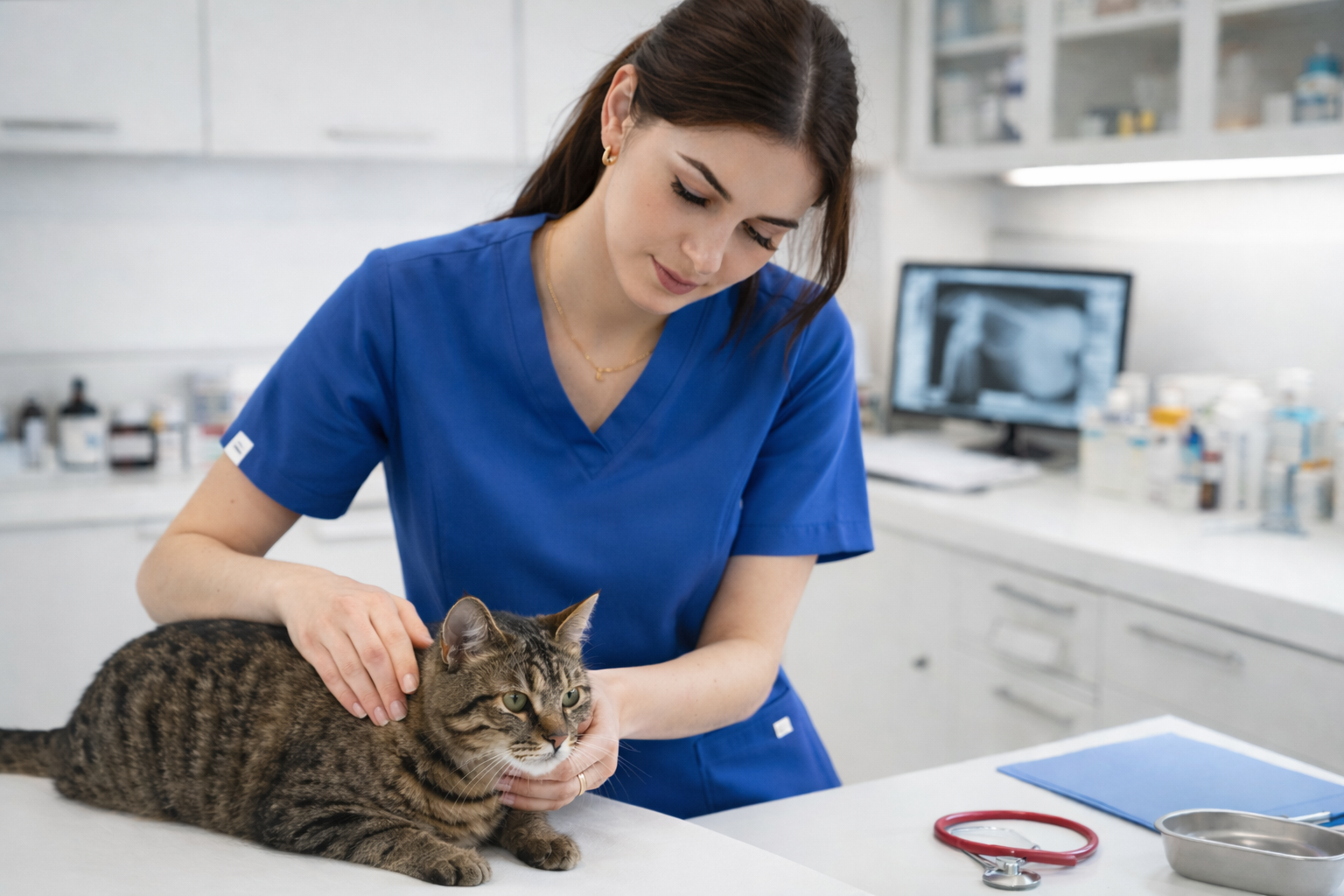
The veterinary profession has been held in high regard by the public for many years. It is a profession that requires powerful clinical knowledge, mental toughness, empathy and a willingness to work under extremely diverse conditions. A vet is not only a medical professional - he or she is also a psychologist for owners, a guardian of public health and an expert who ensures the safety of the food chain.
Daily work in the outpatient clinic is dynamic and unpredictable. Each on-call duty can bring extreme cases: from routine prophylaxis to complex orthopaedics to night-time life-saving interventions. This is why professional medical uniforms, functional ladies' scrubs and modern clothing sets are the cornerstone of any specialist's equipment. In this article, we will analyse how clothing supports the vet in the fight for patient health.
Who is a veterinarian and what does he or she do on a daily basis?
A veterinarian is a specialist who deals with the diagnosis, treatment and extensive prevention of animal diseases. Although the pop-culture image of this profession focuses on dogs and cats, the actual scope of duties is much broader and includes:
- Small animal clinics: working with companion animals (dogs, cats, rodents, reptiles).
- Large animal clinics: equine and livestock medicine (cattle, pigs).
- Laboratory diagnostics: sample analysis, microbiology and parasitology.
- Veterinary Inspection: control of the welfare and safety of food of animal origin.
- Research centres and pharmacy: development of new therapies and vaccines.
The veterinarian must be multitasking - combining the competences of surgeon, internist, radiologist and pharmacologist. Moreover, he or she works with patients who do not communicate pain verbally, which requires the medic to be extremely perceptive and clinically intuitive. Each of these roles requires clothing that can withstand specific physical challenges.
The road to the profession: From theory to first professional outfit
Becoming a veterinary surgeon is a marathon that starts with an extremely difficult recruitment process. In Poland, the study of veterinary medicine lasts 5.5 years and is a uniform master's degree. Candidates must demonstrate an outstanding knowledge of biology and chemistry, and the studies themselves are regarded as some of the most difficult.
The programme includes substantive pillars:
- Basic Sciences: Descriptive and topographical anatomy, histology, physiology.
- Clinical Sciences: Surgery, internal medicine, reproduction, diagnostic imaging.
- Apprenticeships: the moment when a student swaps everyday clothes for professional clothes for the first time medical uniforms.
It is at the apprenticeship stage that young animal medicine students learn that dress is not just about aesthetics. Well-chosen medical scrubs ensure hygiene during first aid operations and protect against biological fluids during dissections and laboratories.
Challenges in the clinic: Why is standard clothing not enough?
Unlike human medicine, the vet works with patients who react instinctively. A frightened dog or cat may scratch or move violently. This places unique technical demands on the garment.
Resistance to dander - the key to a neat appearance
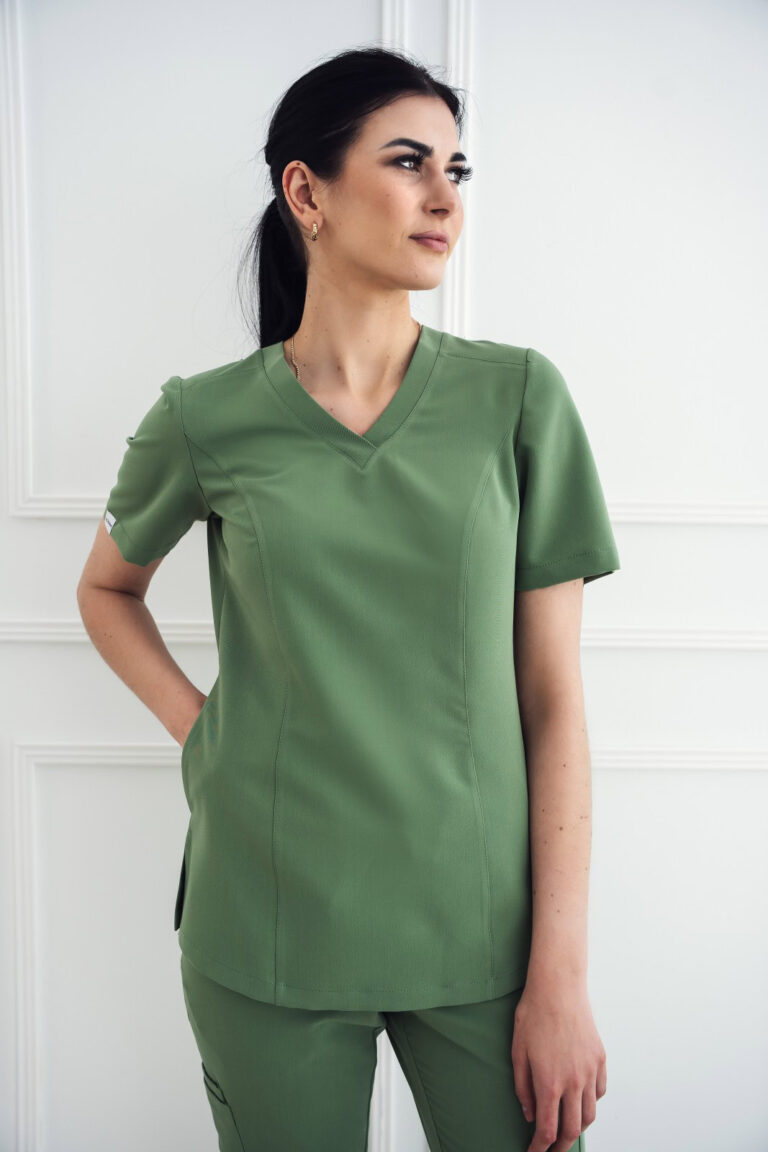
The biggest bane of those working with animals is the ubiquitous hair. Classic cotton acts like a magnet for dog and cat hair, which burrows deep into the weave of the fabric. That is why at Scrabme we rely on innovative fabric blends. Our ladies' scrubs have a smooth finish that allows dirt to be removed quickly with a single hand movement. The fabric must also be resistant to clawing - the dense weave prevents damage to the garment when holding the patient.
Ground floor work and movement ergonomics
A veterinarian rarely works only at a desk. He often kneels on the floor, leans over cages or has to react quickly to the sudden movement of a large animal. Medical uniforms must have 4-way stretch technology. This ensures that the trousers do not restrict movement at the hips and the blouse does not restrict arm reach during precision procedures.
Hygiene and safety: The key role of protective clothing
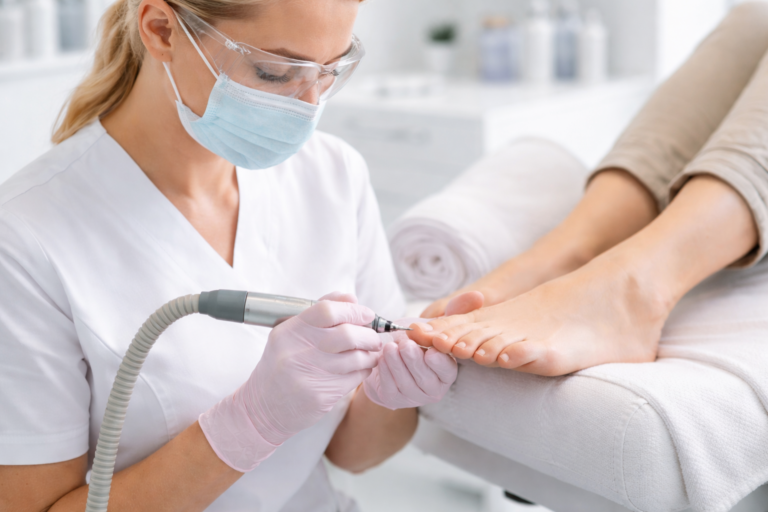
Professional clothing acts as a protective barrier. In veterinary medicine, the risks are real: from bacteria (e.g. Salmonella, Brucella) to parasites to zoonotic viruses.
- A barrier against liquids: Garments must be easy to clean from blood, urine or saliva. Scrabme technical fabrics are characterised by quick drying and resistance to stains penetrating deep into the fibres.
- Resistance to disinfection: The veterinarian has to wash his clothes very frequently and at high temperatures. Our garments retain their colour and texture even when subjected to rigorous washing cycles, which is key to maintaining sanitary standards.
Women in veterinary medicine - a new definition of fit
Today, veterinary medicine is a highly feminised industry - statistics show that women make up the majority of students and clinic staff. This has changed the approach to professional dress design.
The old, shapeless unisex fashions are becoming a thing of the past. The modern vet is looking for garments that are:
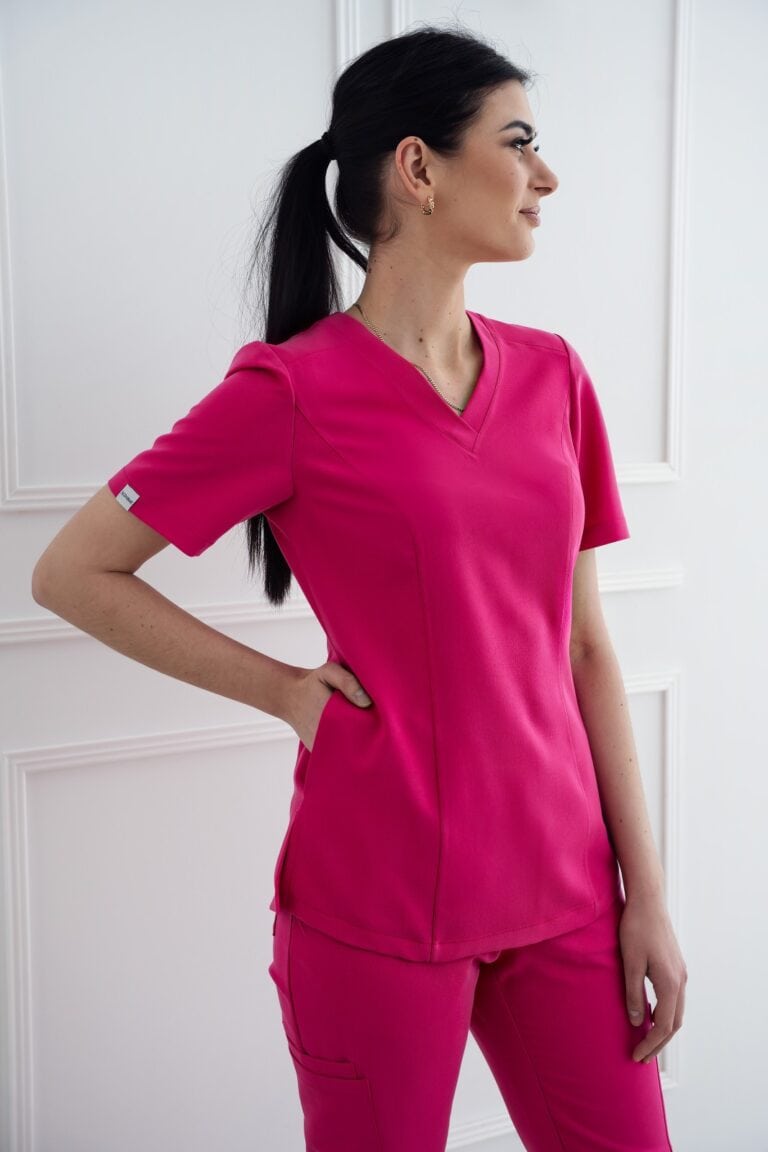
- Slim-fit: tailored to fit a woman's silhouette, preventing excess fabric from getting in the way while working.
- Aesthetic: modern ladies' scrubs They allow you to feel confident, which influences your authority in the eyes of the pet owner.
- Functional: with pockets positioned so that they do not get in the way when leaning over the treatment table.
Colour psychology and confidence building
The pet owner comes to the clinic under stress. The first element he assesses is the professionalism of the staff. Neat, modern medical uniform builds confidence faster than any certificate on the wall.
The colour scheme also matters:
- Pomegranate and Blue: are associated with knowledge and tranquillity. They are the most common choice in surgical clinics.
- Greenery: calms the eye and masks dirt very well, which is practical for everyday internal medicine work.
- Modern colours (anthracite, sage): allow you to distinguish your establishment from the competition and give it a prestigious flair.
Functional details that make a difference
At Scrabme, we understand that the devil is in the details. The right outfit for vets should have:
- Reinforced pockets: for a stethoscope, thermometer and telephone that will not tear under the weight of the tools.
- High-waisted trousers: crucial when frequently kneeling and bending over patients on the floor.
- Breathability: moisture-wicking fabrics are essential during long operations under hot surgical lights.
Summary - Professionalism starts with your uniform
The veterinary profession is a mission that requires passion and top-notch tools. Your workwear, professional ladies' scrubs and well-tailored sets are working tools as important as the stethoscope or scalpel. They support you during the most difficult moments on duty, ensuring comfort and safety.
An investment in quality clothing solutions is an investment in your wellbeing. Because when you are comfortable, you can fully focus on what matters most - saving the lives and health of your patients.