
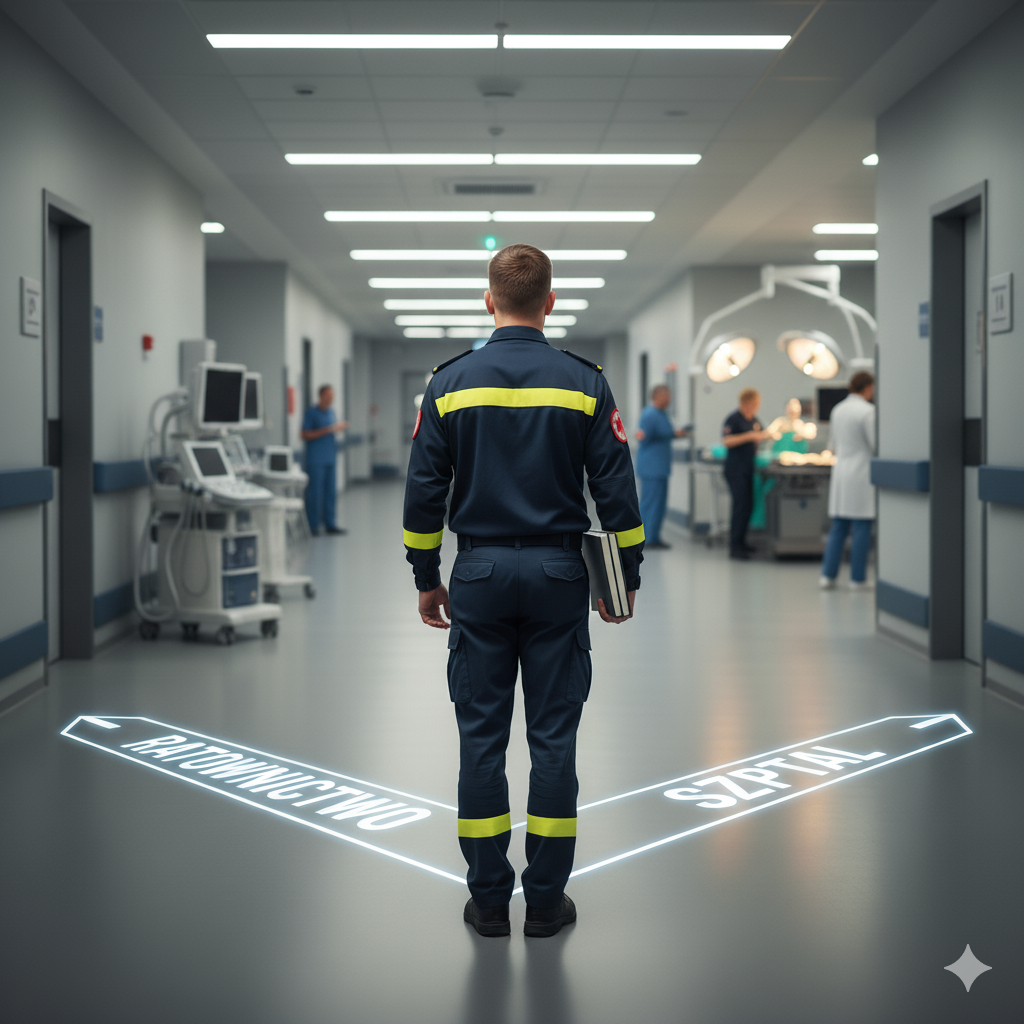
The sound of a siren in the distance for most of us is the signal to pull over. For them it is the sound of the „office”. The blue lights reflecting in shop windows are their daily routine. Paramedics. People who step in where others run from.
For years, the profession has been undervalued, confused with the function of „ambulance driver” or „paramedic”. This is a damaging myth. Today's paramedic in Poland is a high-class specialist, qualified to perform advanced medical procedures (medical rescue operations), administer dozens of powerful drugs and make life-and-death decisions in a split second - often in the rain, mud, in the middle of a busy road or in a cramped fourth-floor flat without a lift.
It is a profession for people of steel, but with a dove's heart. What is the path to this elite group like? How have regulations, education and the realities of the job changed? And why is the right medical suit is as important to them as a defibrillator?
We take you on a journey along the path of education and the work of the „silent heroes” of the system.
Pillar 1: A Revolution in Education - It's No Longer a „Course”, It's Higher Education
Until a decade or so ago, the way to a profession was through two-year post-secondary schools. Those days are gone irrevocably. Changes in the law (including the most recent Act on the profession of paramedic) have professionalised the profession, setting the bar very high.
Today, in order to become a paramedic, you need to complete a higher education.
Bachelor of Science in Emergency Medicine (3 years)
The foundation. The course of study lasts 6 semesters and takes place at Medical Universities, State Higher Vocational Schools (PWSZ) or some AWFs.
This is not a „first aid course”. It is a tough, medical study. The programme includes:
- Basic Sciences: Anatomy (often in the dissection room), physiology, pathophysiology, biochemistry.
- Emergency Medicine: Advanced resuscitation surgery (ALS), emergency cardiology, traumatology (personal injury).
- Pharmacology: The rescuer is self-administering the drugs (adrenaline, morphine, muscle relaxants), so he or she must know their effects at a glance.
- Specialist subjects: Disaster medicine, toxicology, obstetrics and gynaecology (yes, paramedics deliver babies!).
Hundreds of Hours of Practice
Theoretical knowledge is not enough. The student has to „ride out” and „stick it out”. Compulsory placements take place in Accident and Emergency Teams (ambulances), hospital emergency departments (EDs), intensive care units (ICUs), cardiology, surgery or paediatrics. It is there that the first clash with reality takes place - with the smell of blood, the sight of suffering and stress. Many drop out at this stage. The strongest ones stay.
Pillar 2: PERM - The Last Straightaway to the Right to Practice Law
Defending an undergraduate thesis and obtaining a diploma is only half the battle. In order to work in the system, the graduate must pass the National Examination in Emergency Medicine (PERM).
This is an exam organised by the Medical Examinations Centre in Lodz (the same institution that exams doctors). It consists of 100 test questions covering the entire range of knowledge from the 3 years of study. The margin for error is small.
It is only after passing the PERM and gaining registration that the lifeguard becomes fully qualified and can independently undertake Medical Emergency Response (MCR).
Pillar 3: Where does the paramedic work? (It's Not Just an Ambulance)
We mainly associate them with yellow ambulances, but there are many more job opportunities. The paramedic is the „człowiek orchestra” of the Polish health system.
1. emergency medical services - medical rescue teams
This is the salt of the profession. Working „away”. There are two types of teams in Poland:
- „S” (Specialised) teams: Where (theoretically) there should be a doctor, although the system is evolving towards rescuers being independent.
- „P” (Primary) teams: Where only paramedics or system nurses are staffed. This is where they have the greatest responsibility - there is no doctor to „make the decision”. The team leader (paramedic) makes the decision.
2. ED - Hospital Emergency Department
It's the second front line. The work in the ED is different from that in the ambulance. It's stationary work, but at an incredible pace. The paramedics in the ED:
- Make triage (segregation of patients by urgency).
- They safeguard patients with injuries, strokes, heart attacks brought in by the paramedics.
- Assist with minor surgical procedures.
- Monitor vital signs.
This is where the ergonomics of the garment are crucial (more on that in a moment).
3 Other Services and Institutions
- LPR (Air Ambulance): The elite of the elite. Helicopter rescuers are the best of the best, after gruelling fitness and knowledge tests.
- Uniformed Services: Rescuers work in the military (medical evacuation), police, fire brigade.
- Medical Transport and Security: Transporting patients between hospitals and securing mass events (concerts, matches).
Pillar 4: Uniform as Armour - The Role of Clothing in the Work of the Rescuer
In a job where every second decides a life, there is no room for casual dress. A lifeguard's outfit has a protective, identifying and ergonomic function.
Outside: Visibility and Protection (PRM system)
Strict uniform regulations apply when working in the Emergency Medical Service (ambulance). Fluorescent red/orange colour, reflective elements, heavy tactical boots, reinforced combat trousers. This is clothing for special tasks - it must protect against rain, glass at the scene of an accident and provide visibility on the road.
Inside the Hospital: Comfort and Precision (Role of Scrubs)
However, paramedics working in the ED, Emergency Departments or intra-hospital transport have different needs. Here, the heavy, outdoor uniform often gives way to lighter solutions.
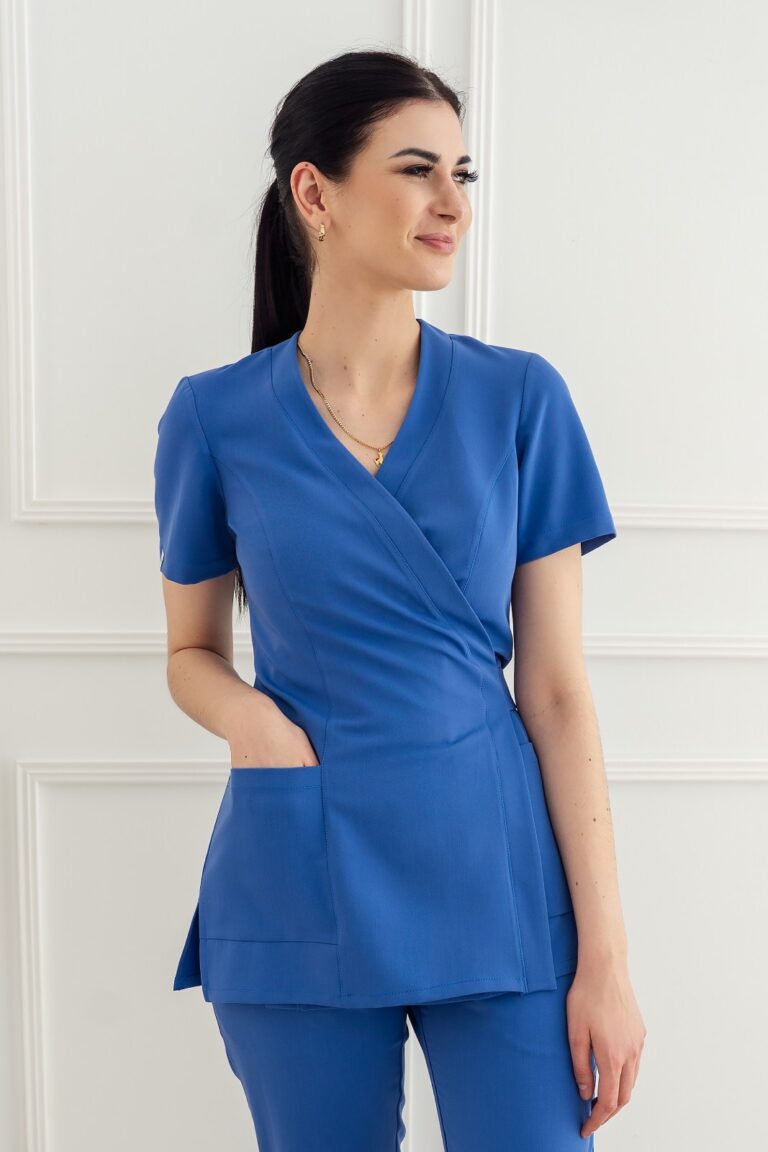
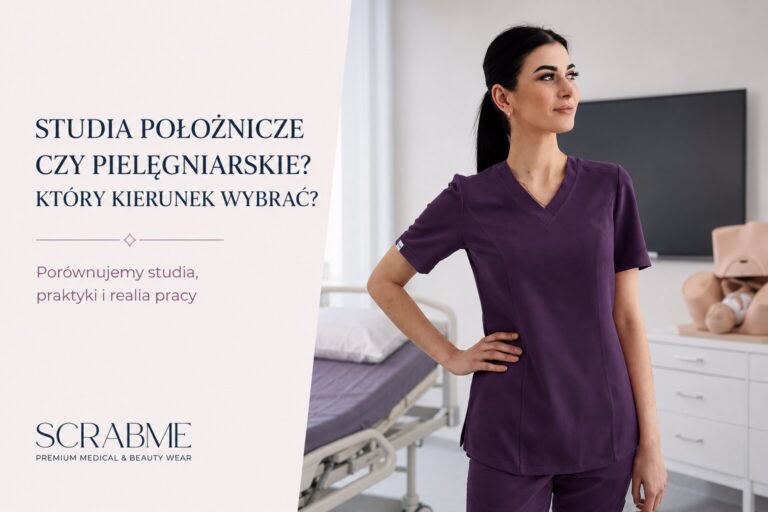
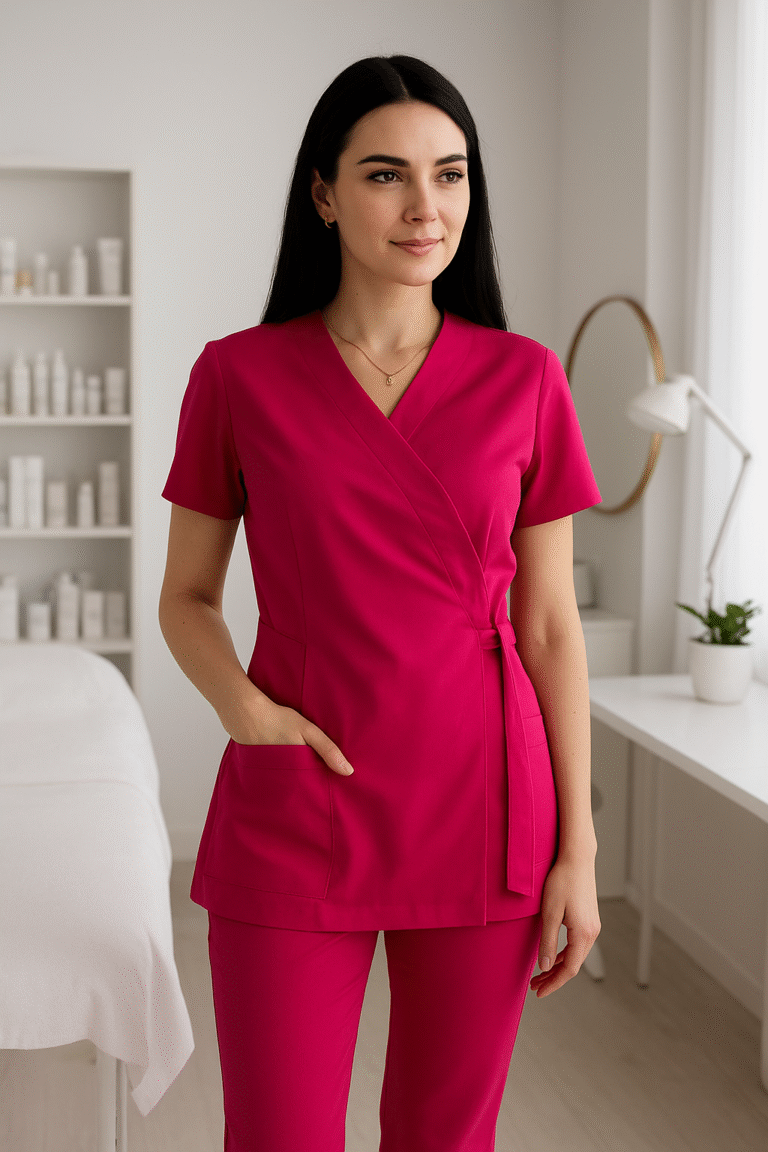
In hospital settings, where the temperature is constant and the work requires precision and speed (stretcher runs, resuscitation, injections), the modern medical uniforms type scrubs.
- Thermoregulation: The work of a rescuer is an enormous physical effort. Resuscitation (CPR) lasting 30 minutes is an energy expenditure comparable to interval training. The heavy „outside” uniform can sometimes be a torment in hospital. A lightweight, breathable medical suit made from an advanced blend (Polyester/Viscose/Elastane) allows the skin to breathe and wicks away perspiration, preventing overheating.
- Freedom of Movement: Transferring the patient from the stretcher to the bed, bending down, kneeling beside the patient - this requires full mobility. Flexible medical trousers (often joggers) and sweatshirts with added elastane work with the body without restricting movement like stiff cotton or cordura.
- Image and Hygiene: In the ED, the paramedic is part of the treatment team alongside doctors and nurses. Professional, tailored medical uniforms (e.g. in navy blue, black or „rescue” red) build authority and trust with the patient. They are also easier to wash and disinfect, which is crucial in an environment full of pathogens.
For many lifeguards working in shifts (12 or 24-hour duty), the opportunity to change from the heavy „away” uniform to a comfortable medical suit while working on the ward is a question of occupational hygiene and regeneration.
Pillar 5: The Dark Side of the Medal - The Realities That Are Being Dismissed
The path of the rescuer is not only about heroic actions. It is also the mundane of life, which can sometimes be brutal.
Physical load
The spine is the „spare part” of the rescuer. Lifting patients weighing 100, 120 or 150 kg (often up stairs because the lift doesn't work or the stretcher doesn't fit) is a daily occurrence. Knee injuries, discs, hernias - these are occupational illnesses that come quicker than you think.
Post Traumatic Stress Disorder (PTSD)
Rescuers see things that no one should see. Traffic accidents, deaths of children, suicides, aggression of patients under the influence of intoxicants. This emotional baggage is put off for years. Professional burnout and PTSD are a real problem in this professional group that is only just beginning to be talked about.
Contract work
Most lifeguards in Poland do not work full-time. They work on so-called „contracts” (economic activity). This means no paid holidays, no sick pay (full-time) and working as much as possible. To earn with dignity, it is standard practice to work 300-400 hours a month. This is life in an ambulance.
Pillar 6: Development and Transition - Self-Governance and New Powers
Despite the difficulties, the profession is growing rapidly. In 2023, weszła long-awaited Act on the profession of paramedic. What does it change?
- Professional Self-Governance: A Chamber of paramedics is being established (along the lines of the Chambers of Physicians and Nurses). This gives paramedics a real say in the law, standards and legal protection.
- Refresher courses: The lifeguard has a duty of continuing education. He/she has to accumulate educational credits in 5-yearly accounting periods. ALS (advanced resuscitation), PALS (paediatric), ITLS (trauma) courses are standard.
- Extension of Competence: The list of medicines and activities that the rescuer can perform autonomously continues to grow. Rescuers are becoming more and more autonomous medics.
Summary: Passion Above All
The path of the paramedic is one for people with passion. You don't go there for the money (although this is slowly growing) or for the fame. You go there for that special feeling when, after successful resuscitation, the patient's heart starts beating again. For the satisfaction of being able to take control of a situation in the midst of the greatest chaos.
It is a profession that requires constant learning, physical stamina and mental toughness. But it's also a profession that gives you a sense of purpose.
At Scrabme, we look at your work with admiration. We know that when you take off your heavy uniform after a tour of duty, you need comfort.
If you feel you have the strength within you to help others in their most difficult moments - this path is for you. Rescue is not a job, it's a lifestyle. Start with your studies and get ready for the adventure of a lifetime.
And if you are already on duty in the ED, Emergency Room or medical transport - we know how important comfort and professionalism are to you. Your medical suit must not restrict you. Check out the collection of men's scrubs and women's Scrabme. We created them with professionals in mind who refuse to compromise. Comfort, durability and style - because you deserve it.