
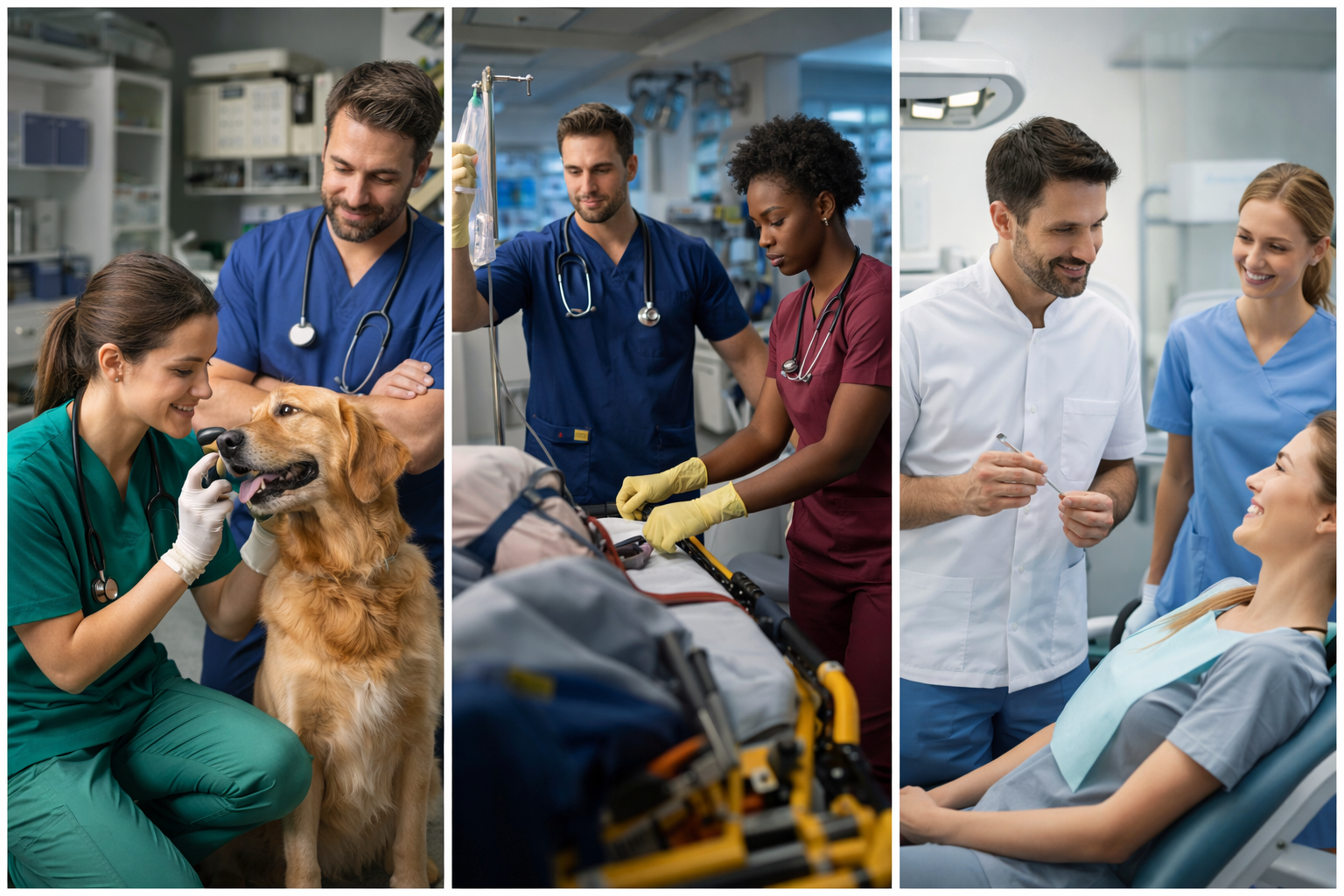
The medical uniform is nowadays much more than just a mandatory outfit for work. In modern health care medical clothing has a practical, image and ergonomic function at the same time. What medical staff wear influences work comfort, safety, hygiene, as well as patients' perception of the specialist. Importantly, grooming needs vary significantly between specialties. A hospital Emergency Department job has different requirements, a daily dental practice has different requirements and a veterinary practice has different requirements.
This is why there is increasing talk of the need to tailor the medical uniform to the realities of the job, rather than opting for a one-size-fits-all solution. A well-chosen medical blouse, medical tunic or medical trousers can make a real difference to the quality of daily work, reduce fatigue and increase freedom of movement. In this article, we take a look at what a medical uniform should look like in three demanding specialties: ED, dentistry and veterinary medicine.
Medical uniform for the ED - durability, functionality and readiness for action
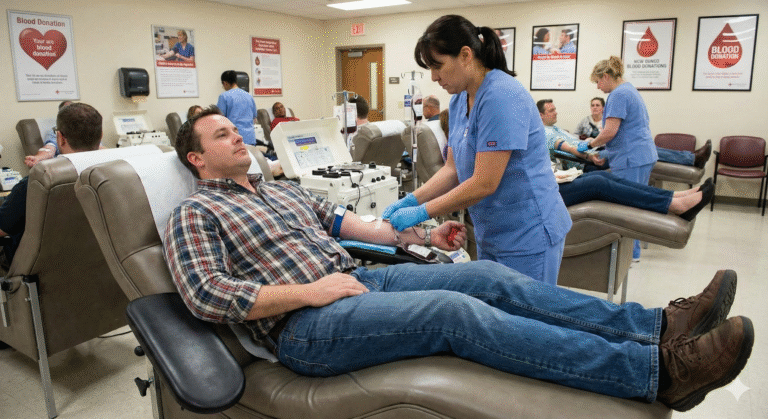
Working in the Hospital Emergency Department is one of the most demanding environments in all of healthcare. Dynamic situations, time pressure, intense traffic and contact with a variety of biological agents mean that the medical uniform in the ED must meet very specific requirements. There is no room for compromises or „by eye” solutions here.
The staple attire in the ED is the medical blouse, which provides full freedom of movement. Emergency personnel are often bending over, lifting patients, moving equipment and working at a fast pace. A sweatshirt that is too tight or poorly tailored quickly becomes a problem that affects not only comfort but also workplace safety. What matters is the elasticity of the fabric, the right length of the sleeves and a cut that does not restrict shoulder and back movement.
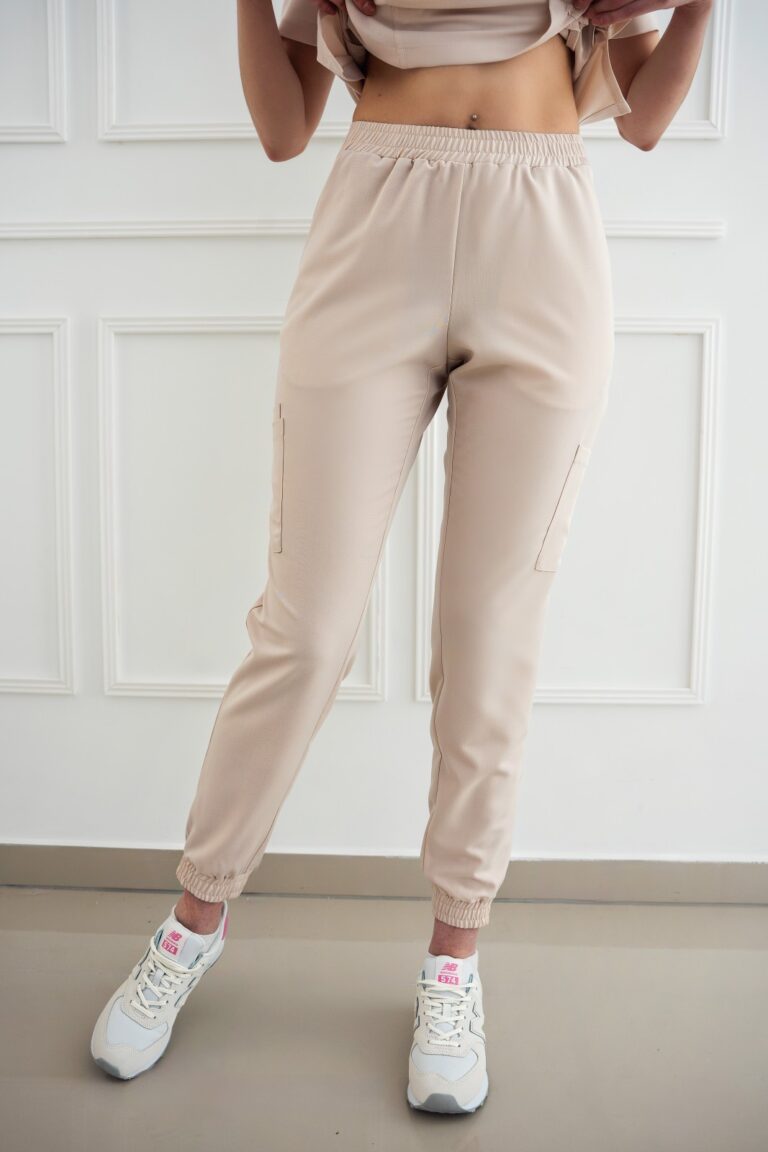
Equally important are medical trousers. In the ED, models with a reinforced construction that can withstand frequent washing and contact with fluids work well. The trousers should fit well, not slip down during intensive movement and provide stability throughout the duty period. High-quality materials allow them to retain their shape and comfort even after many hours of work.
The colour scheme of uniforms in the ED is usually subdued and practical. Navy blue, graphite or bottle green not only look professional, but also better mask the dirt that is almost inevitable in this speciality. Medical Uniform must be ready for any situation - from minor injuries to severe cases requiring immediate intervention.
Dentistry - aesthetics, precision and patient contact
In dentistry medical uniform has a special role, as staff work very close to the patient, often in their field of vision for long periods of time. Here, it is not only functionality that counts, but also aesthetics and a professional appearance that builds trust and a sense of security.
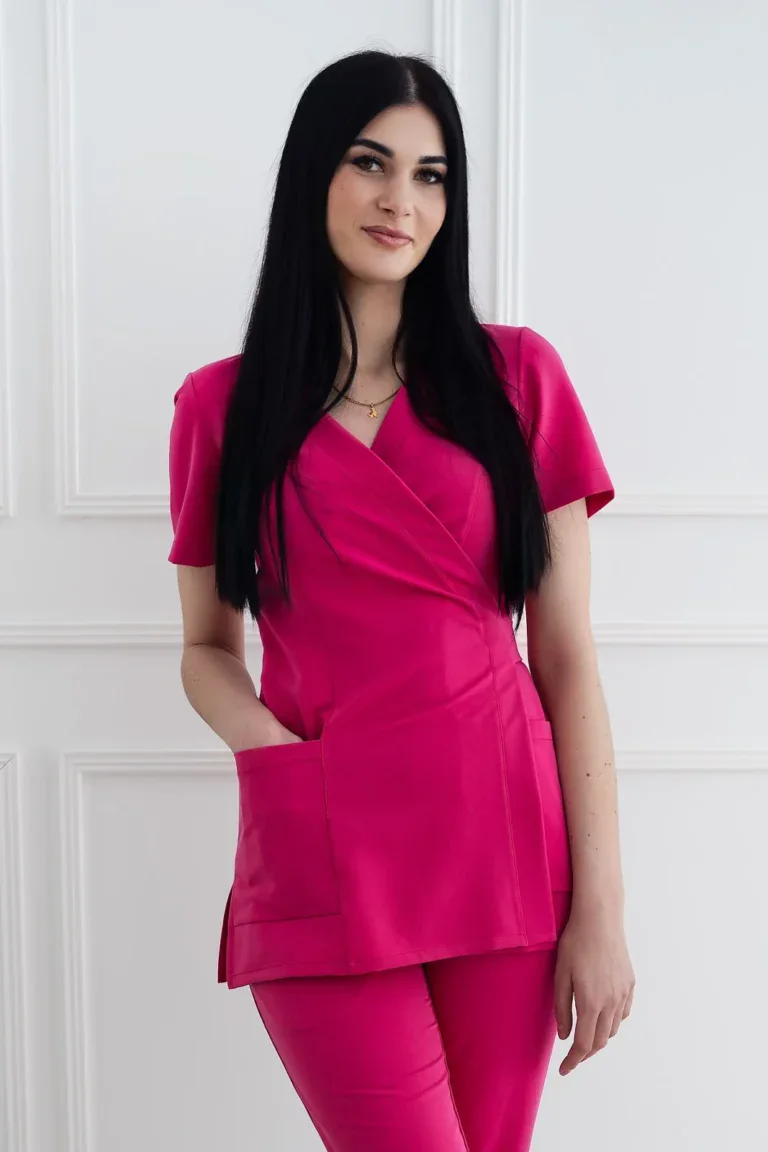
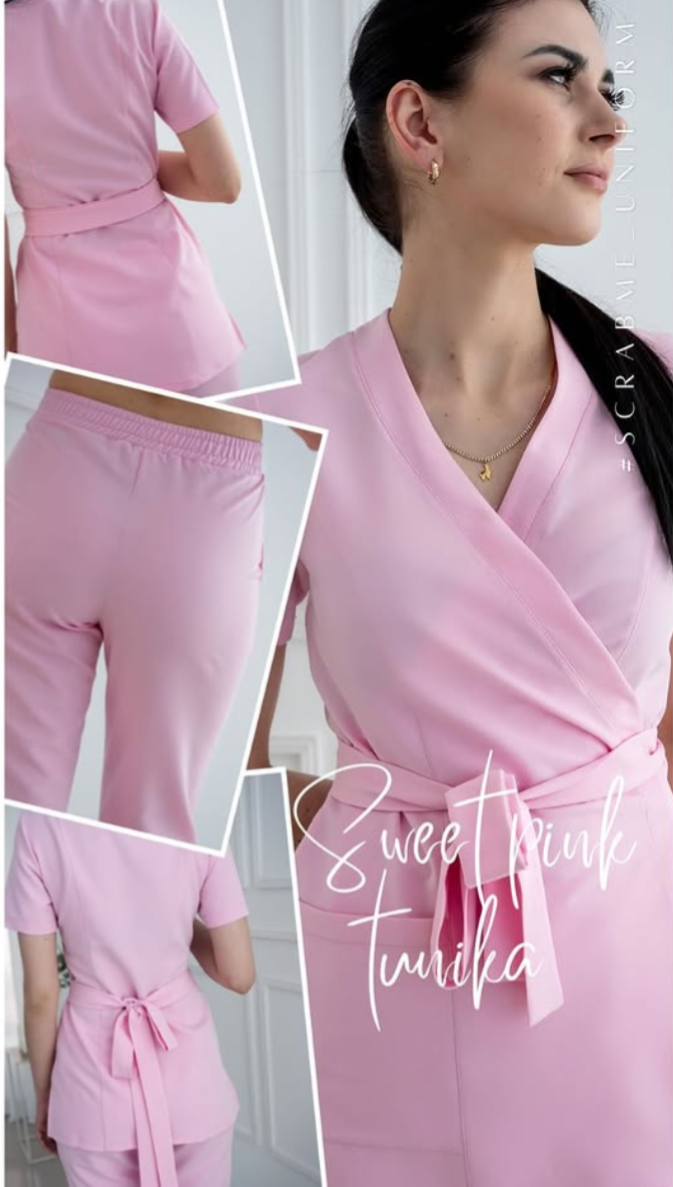
The medical tunic is very popular in dental practices. Its cut is usually more fitted than a classic blouse, which contributes to a neat and modern look. The medical tunic in dentistry should allow freedom of movement in the shoulders and back, as doctors and assistants work in a stooped position for many hours.
The material plays a key role here. In dentistry, ease of cleanliness and resistance to frequent washing at high temperatures are very important. At the same time, the fabric should be pleasant to the touch and breathable to ensure comfort even during a long day of work in a closed room.
Medical trousers Worn in dental practices, they must allow you to sit, turn and change position freely without feeling any pressure. Well-fitted trousers help to maintain ergonomics at work, which in the long term is of great importance for the health of the spine and joints.
The colours of dental uniforms are often brighter than in the ED. White, blue, grey or pastel shades are perceived by patients as clean and reassuring. The right medical uniform can make a real difference to a patient's visit and their confidence in the team.
Veterinary medicine - resilience, practicality and flexibility
Veterinary medicine is a specific field in which the medical uniform has to meet completely different challenges than in human medicine. Contact with animals, hair, claws, moisture and frequent movement mean that clothing must be extremely resistant and functional.
In this speciality, the medical blouse should be made of materials with increased durability. Vets often work in different positions, bending, kneeling and lifting animals of different weights. The elasticity of the fabric and robust seams are an absolute must here. The sweatshirt must not restrict movement or cause discomfort during dynamic work.
Medical tunic in veterinary medicine is often chosen by support staff because it combines comfort with a practical cut. It is important that it has the right length and does not roll up during work. In this speciality, pockets are particularly important to keep small accessories or tools at hand.
Medical trousers for veterinarians must be dirt-resistant and easy to clean. Contact with animal bodily fluids, mud or hair is a daily occurrence, so the materials used in this industry must retain their properties even after intensive use. Well-fitted trousers increase the comfort of your work and allow you to focus on your patients rather than on uncomfortable clothing.
The colour scheme in veterinary medicine is often more varied. In addition to the classic colours, more intense colours are emerging to help distinguish staff and give the workplace a more welcoming feel, especially in companion animal clinics.
Why matching the uniform to the speciality matters
Although, at first glance, it may appear that a medical uniform is simply work attire, in practice its fit to the specifics of the job is of paramount importance. A paramedic in the ED has different needs, a dentist working with a patient in a chair, and a veterinarian dealing with animals in different settings has different needs.
Well-chosen medical blouse, medical tunic or medical trousers They improve ergonomics, reduce fatigue and limit the risk of injury. A uniform that „works with the wearer” allows the wearer to focus on their duties, rather than on mending clothes or fighting discomfort.
The image aspect is also important. The medical uniform is the business card of the specialist and the entire facility. Consistent, aesthetically pleasing attire builds a professional image of the team and reinforces the trust of patients - both people and pet owners.
Modern medical uniform as part of the quality of work
Contemporary medical clothing is increasingly being designed with specific specialities in mind. Manufacturers pay attention to details such as cut, elasticity, breathability of materials and resistance to intensive use. In this way, the medical uniform ceases to be a mere obligation and becomes a real support in everyday work.
When choosing a uniform, it is worth looking not only at the appearance, but above all at the functionality adapted to the nature of the duties performed. Properly selected medical clothing is an investment in comfort, health and professionalism.
Summary
Medical uniforms in different specialities have different functions, but always have one common goal - to support staff in their demanding work. In the ED, it is durability and functionality that counts, in dentistry it is aesthetics and patient contact comfort, and in veterinary medicine it is resistance and flexibility. Matching an item such as a medical blouse, medical tunic or medical trousers to the realities of the job has a direct impact on the quality of daily duties.
A conscious choice of uniform is nowadays one of the elements of a professional approach to the medical profession. A well-chosen garment not only looks good, but above all works together with the wearer - regardless of speciality.