

When we think of a doctor, nurse or any medical professional, a distinctive outfit almost immediately comes to mind - a scrubs. These simple but functional sets have become a universal symbol of healthcare. But have you ever wondered why they look just like that? Why aren't they smart suits, lab coats or just everyday clothes?
The history of medical clothing is a fascinating journey through the centuries, reflecting our progress in understanding hygiene, psychology and ergonomics. It is the story of how we went from plain clothes, through sterile white gowns, to colourful, high-tech scrubs, that we know today. Take a journey through the evolution of the medical uniform.
🏛️ Beginnings: When clothes didn't matter
In ancient and medieval times, medicine was strongly linked to religion and philosophy. The dress of a doctor was not particularly different from that of a scholar or priest. Hippocrates or Galen simply wore everyday togas, typical of their social class. There was no concept of „medical attire”, let alone sterility.
For centuries, doctors and surgeons have worked in their everyday, often dark, woollen clothes. Why dark? For a mundane reason - stains, including blood and other bodily fluids, were less visible on them. The surgical apron, if it existed at all, was more like a butcher's robe, designed to protect the doctor's clothes, not the patient's, from infection.
A groundbreaking, if somewhat macabre, symbol of the „protective garb” of the time is the plague doctor's mask with its characteristic „beak”. It was filled with herbs and spices to protect the medic from the „plague air”. This shows that the understanding of disease transmission was based on the theory of miasms (złego air) rather than microbes.
🔬 The Hygiene Revolution: Pasteur, Lister and the Age of Whiteness
The real revolution in medicine, which entailed a change in clothing, camezła the second half of the 19th century. Louis Pasteur's work proving that microorganisms cause disease and Joseph Lister's pioneering work in the field of antisepsis (disinfection) in operating theatres turned everything upside down.
It was realised that doctors and nurses could transmit pathogens on their clothes. The concept of asepticism - a sterile working environment - was born.
Birth of the White Apron
It was then, at the turn of the 20th century, medical clothing gained its first iconic colour - white. Why white?
- Purity Symbol: White was a visual proof of sterility. Unlike black outfits, any dirt, even the smallest dirt, was visible on white.
- Practicality: White fabrics could be washed at high temperatures and bleached (e.g. with chlorine), which effectively killed bacteria.
- Science Symbol: White has become a symbol of a scientific approach, laboratory cleanliness and professionalism, cutting itself off from the „dark ages” of medicine.
Surgeons began to wear white cotton surgical gowns and nurses white caps and starched uniforms. The white doctor's apron became such a strong symbol of authority that it still causes the so-called „white apron syndrome” (a rise in blood pressure in the presence of a doctor) in patients today.
🟢 The Problem with Whiteness and the Birth of the Modern Scrubs
White reigned supreme for several decades, but in the middle of the 20th century a major problem arose in operating theatres. With the development of lighting technology, the rooms became much brighter. The bright white lights reflecting off the surgeons' white gowns caused immense visual fatigue and headaches.
To make matters worse, surgeons began to report a problem with so-called „afterimage”. After staring for a long time at the dark red colour of the patient's blood and tissues, shifting one's gaze to the assistant's white apron caused green „ghost” spots to appear. This was a contrast effect that distracted and impeded precise work.
The Psychology of Colour in the Operating Room
The solution przyszłhis is from the psychology of colour perception. Scientists realised that a colour was needed to neutralise this effect. The choice fell on green (and later also blue).
Why? Green and blue are the colours that oppose red on the colour wheel. Gazing at them „refreshes” the eye's ability to perceive shades of red. This helps surgeons maintain visual sensitivity to anatomical details and reduces the risk of error due to fatigue.
This is how the first operational green outfits were born. At first, they were still simple aprons and caps, but the foundation for modern scrubs was laid.
👕 Evolution of Shape: How did „Scrubs” emerge?
The very name „scrubs” (English. scrubs) is derived from the process of „scrubbing”. scrubbing in), i.e. the ritual, thorough washing of the hands and forearms before surgery. The outfit worn in the operating theatre thus became the „scrubbing outfit” - the scrub suit.
First scrubs were to be first and foremost:
- Simple: Easy to put on and take off quickly.
- Cheap: Mass-produced, often disposable or easily replaceable.
- Hygienic: Easy to wash at high temperatures and sterilise.
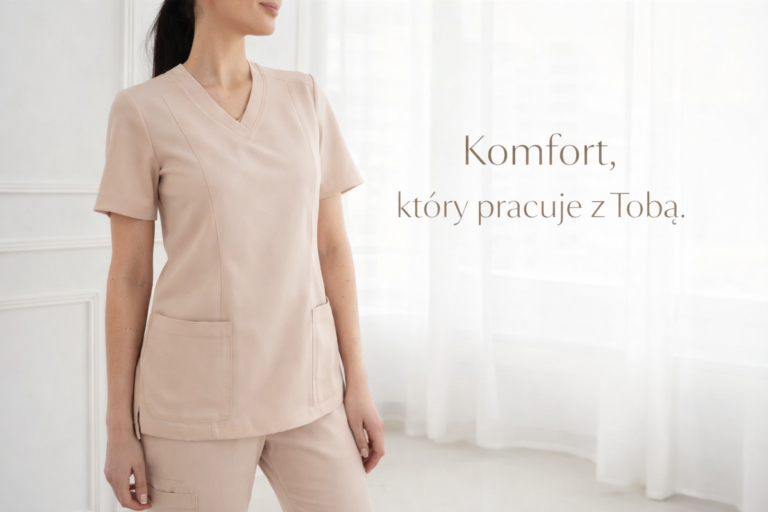
- Universal: Initially, the cut was baggy and unisex (a simple blouse with a „V” neckline and trousers with trousers).
For decades scrubs were seen only as workwear for the operating theatre and intensive care units. They were synonymous with sterility, but certainly not comfort or fashion. They were sewn from 100% cotton, which became stiff and rough after repeated washing.
✨ Scrubs Today: A Revolution in Comfort, Style and Technology
It was not until the late 20th and early 21st century that a real revolution took place. Manufacturers medical clothing, such as scrabme.com, they have understood something fundamental: medical staff spend 12 and sometimes 24 hours in their outfits. It is their second skin. It must not only be hygienic, but above all comfortable.
Today's scrubs are high-tech products that are only linked to the rigid uniforms of the past by their name.
H3: Materials Technology
Modern fabrics have become key to the revolution. We have moved away from 100% cotton to smart blends:
- Polyester: It provides durability, crease resistance and ensures that colours do not fade.
- Spandex (Lycra/Elastane): This is an absolute breakthrough. The addition of elastic fibres makes it scrubs are stretchable (so-called. stretch), do not restrict movement when lifting the patient, bending or running fast.
- Viscose/Rayon: They add softness, a „flowing” feel and breathability to the fabric.
Modern medical scrubs are breathable, wick away moisture (like sportswear) and often have antibacterial or stain-resistant properties.
H3: Fashion and Individuality
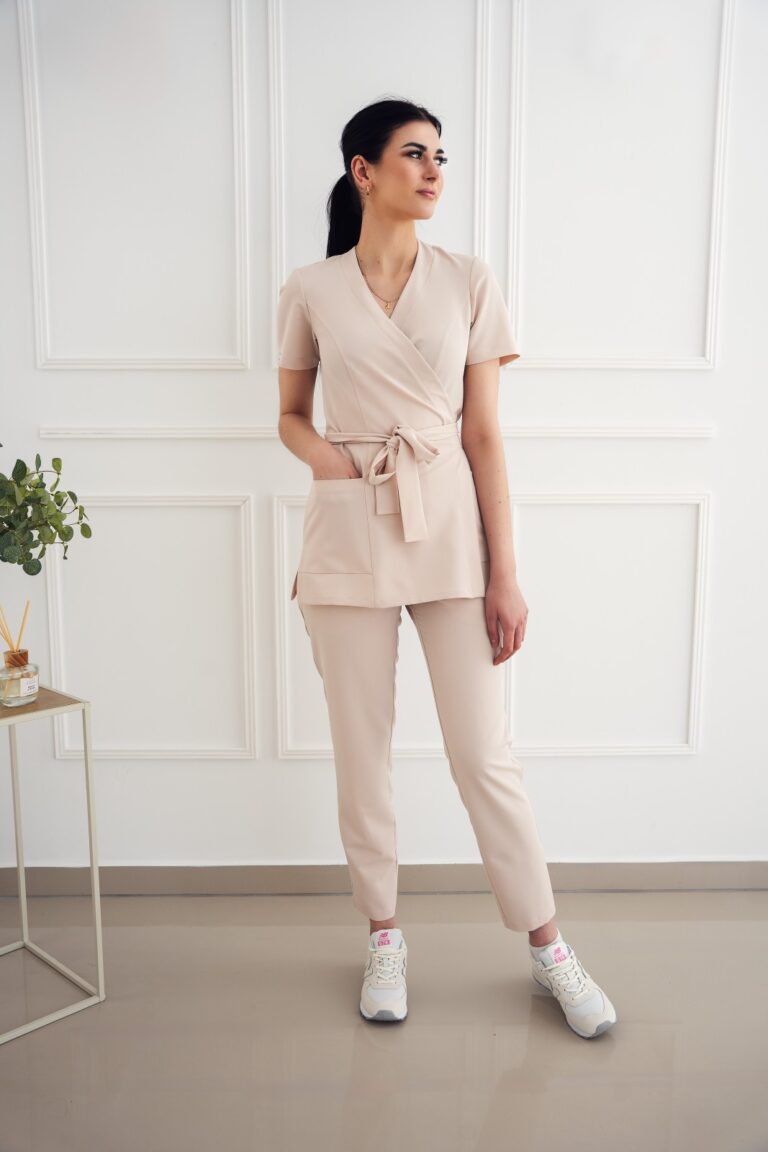
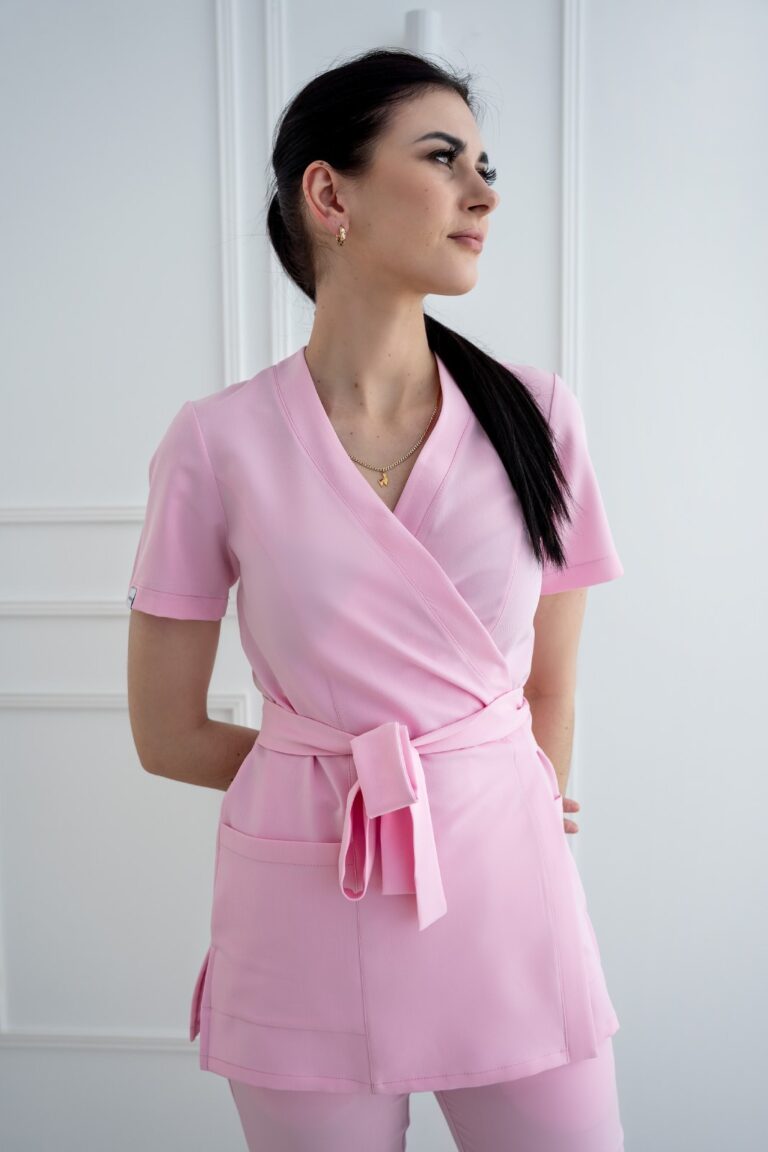
Who said that medical clothing must be boring? For years, only two colours dominated: green and blue. Today, the colour palette is almost limitless. From classic black and navy blue, through energising fuchsias and turquoises to delicate pastels.
What's more, the cuts have changed. Scrubs have become a fashion item:
- Women's Scrubs: There are waistlines, figure-hugging cuts, boat necklines and envelope necklines. Jogger trousers with drawstrings have become a real hit.
- Men's Scrubs: They have gained a more athletic, fitted cut, reminiscent of modern technical clothing.
This allows medical professionals to finally express themselves and feel professional, yet fashionable and comfortable.
H3: Who Wears Scrubs Today?
Evolution has made scrubs wyszły far beyond operating theatres. Today, they are the dress standard for almost the entire industry health & beauty:
- Doctors and nurses in the wards
- Dentists and dental hygienists
- Veterinarians
- Physiotherapists
- Laboratory staff
- Cosmetologists and spa workers
Why Investing in Good Scrubs is a Must?
History medical clothing shows that it has always been about three things: safety (patient and staff), functionality and professionalism. Contemporary scrubs add a fourth key element to this: employee comfort and well-being.
Working in healthcare is a huge physical and mental effort. Wearing stiff, uncomfortable and unbreathable clothing for 12 hours only adds to the fatigue. High-quality scrubs is not a luxury, it is the basis of ergonomics at work.
Choosing scrubs from the shop scrabme.com, you invest in:
- Your Comfort: The flexible materials mould to your body, allowing a full range of movement without feeling constricted.
- Your Energy: Breathable fabrics regulate body temperature and wick away perspiration to keep you fresh throughout even the toughest duty.
- Your Professionalism: The modern cut and vibrant colours build a professional image, inspire confidence in patients and make you feel more confident yourself.
- Your Comfort: Functional pockets, ID or pen holders - details that make everyday work easier.
Summary: Medical Apparel's Tale of Evolution
Medical clothing has traveled an amazing path - from ceremonial toga, to dirty butcher's aprons, to sterile but uncomfortable white, to the revolutionary green of operating theatres.
Today we stand at a place where technology meets fashion and functionality meets comfort. Modern scrubs are the answer to the needs of today's professionals, who deserve to feel as good as they look professionally at work.
History has shown the importance of evolution. Don't stop at przeszłości. Discover the przyszłity of comfort and style with a collection of modern scrubs on scrabme.com. Your duty station will never be the same again.