
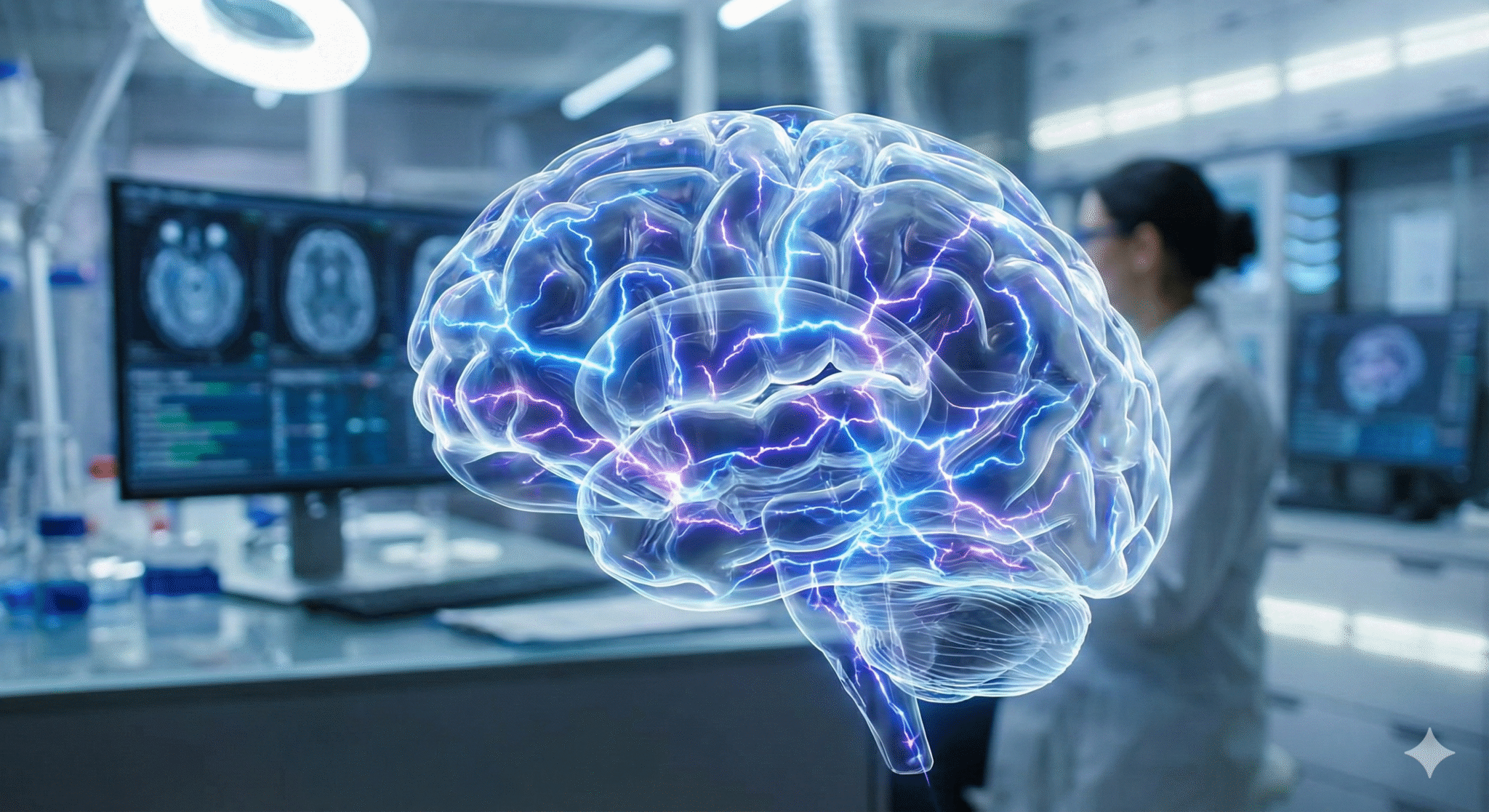
It weighs only about 1.3 - 1.5 kg. It has the consistency of soft tofu. It looks inconspicuous, like a corrugated walnut. And yet it is it - the human brain - that is the most complex structure known in the entire Universe. It is where your thoughts, dreams, fears and memories are born. It is the one that decides that you are now reading this text, understanding it and scrolling down the screen.
Neurology is a branch of medicine that has taken on a breakneck task: understanding and fixing this biological supercomputer. For centuries, neurologists have been seen as brilliant diagnosticians who can accurately name a problem but can rarely cure it. Today, this is changing. Neurology in the 21st century is an interventional, dynamic field that offers hope where once there was only judgment.
This monumental two-part guide will take you on a journey into the depths of the human nervous system. You'll understand how your body works, how to recognise a stroke, why your head hurts with a „migraine” and the day-to-day life of doctors who fight to preserve our identity.
Chapter 1: Your Body's Road Map - Anatomy of the Nervous System
To understand diseases, we must first understand how the „healthy machine” works. The nervous system is not just the brain. It is a gigantic network of cables, relays and receiving stations that manages every single bodily function, even the smallest, from heartbeat to digestion to the movement of the little toe.
It is divided into two main parts:
1. central nervous system (CNS) - Headquarters
It is the „government” of your body. It makes decisions, processes data and gives orders. It consists of:
- Brains: (Brain, cerebellum and brainstem). This is where thinking, memory, emotion and coordination take place.
- Spinal Cord: It is the main „information highway”, running inside the spine. It transmits signals from the brain to the rest of the body and vice versa. Damage to the spinal cord is like cutting the main power cable - the signal doesn't get through, paralysis ensues.
2. peripheral nervous system - Couriers
It is a network of nerves that wraps around the entire body. It connects the „headquarters” to every organ and muscle. They are divided into:
- Cranial nerves (12 pairs): They emerge directly from the brain. They are responsible for the senses (sight, smell, hearing), facial expressions, swallowing or eye movements.
- Spinal nerves: They emerge from the spinal cord and innervate the trunk and limbs.
The Ideal Cell: The Neuron
The basic building block of this system is neuron. It is a cell capable of producing and transmitting electrical impulses. Neurons do not come into direct contact with each other. There is a microscopic gap between them - the synapse. In order for a signal to jump from one neuron to another, a „chemical messenger” is needed, i.e. a neurotransmitter (e.g. dopamine, serotonin, acetylcholine).
Most neurological and psychiatric diseases result from errors in this process: either the neuron dies or the „messenger” does not reach its destination.
Chapter 2: The Geography of the Brain - Who's Responsible for What?
The brain is divided into zones of influence. Although it works as a whole, damage to a specific area (e.g. by a stroke or tumour) produces very specific symptoms. It is on this basis that neurologists can locate the problem often without the use of a CT scanner.
Frontal lobe: „Chief Executive Officer”.”
It is located just behind your forehead. It is the most „human” part of the brain. It is responsible for:
- Planning, decision-making and anticipating consequences.
- Control of emotions and social behaviour (inhibits impulses).
- Movement (motor cortex).
- Speech (Broca's centre - word production).
- Signs of damage: Personality change (aggression or apathy), speech problems, limb paresis.
Parietal Lobe: „Navigator”
Located at the top of the head. It processes sensory information (touch, pain, temperature) and spatial orientation. It is how you know where your hand is, even when you are not looking at it.
- Signs of damage: Difficulties with dressing, confusion between left and right sides, inability to recognise an object by touch.
Temporal Lobe: „Librarian”
On the sides of the head, near the ears. Responsible for:
- Hearing and speech comprehension (Wernicke centre).
- Memory and emotion (thanks to the deeply hidden hippocampus).
- Signs of damage: Memory problems, not understanding the words you hear (you hear a sound but don't know what it means).
Occipital lobe: „Cinematographer”.”
At the back of the head. This is the centre of vision. The eyes only „receive” light, but it is the occipital lobe that „sees” and interprets the image.
- Signs of damage: Visual disturbances, visual hallucinations, cortical blindness.
Cerebellum: „Traffic Engineer”
Smaller structure under the hemispheres. Responsible for precision, balance and muscle tone. It allows you to touch your finger to your nose with your eyes closed.
- Signs of damage: „Sailor” gait (wide, shaky), trembling hands when reaching for an object, scandalized speech.
Chapter 3: Visit to the Neurologist - Sherlock Holmes at the Surgery
The neurological examination is one of the most fascinating parts of medicine. It often resembles a detective investigation. Before the doctor sends you for an MRI, he or she is able to determine with great precision where the problem lies, using only a hammer, a torch and... your own hands.
This requires the doctor to be not only knowledgeable, but also physically fit. The neurologist repeatedly bends down, examines reflexes, checks muscle strength by putting resistance on the patient's limbs. This is why modern neurology is increasingly moving away from stiff suits or aprons in favour of ergonomics.
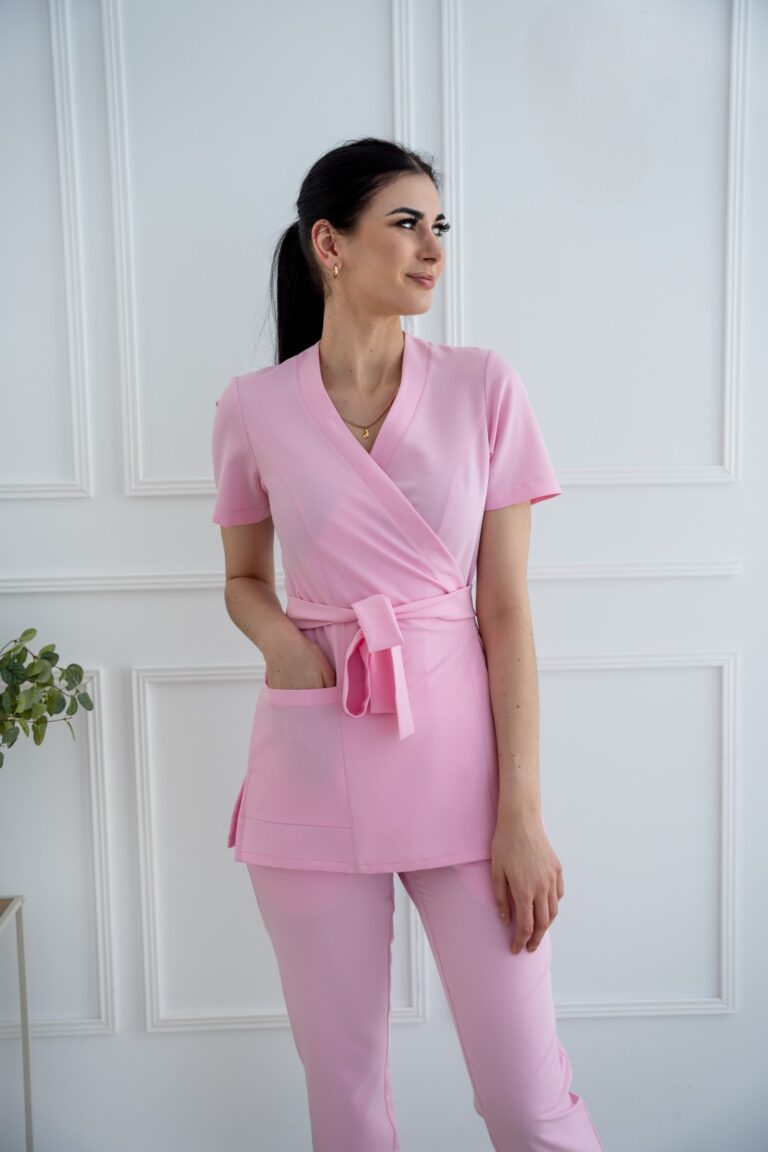
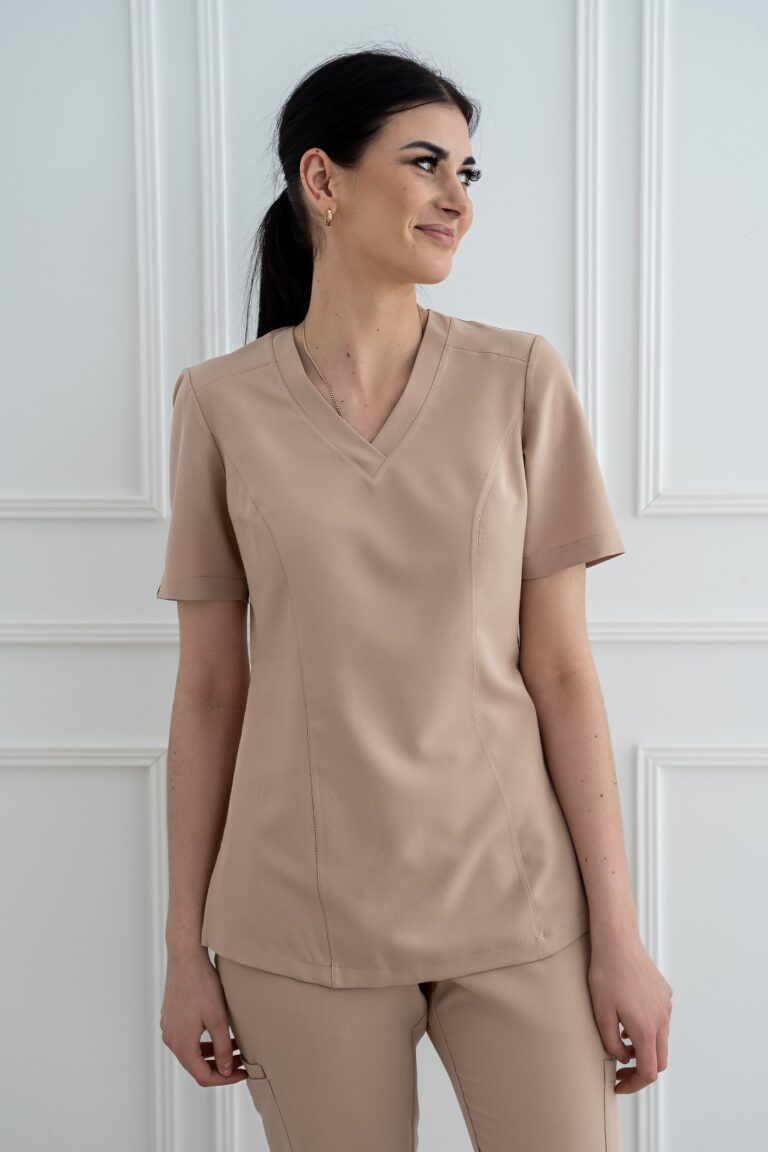
Comfortable medical blouse and flexible medical trousers (often of the jogger type) are becoming standard in stroke wards or outpatient clinics. A doctor who has to check Babinski's sign in a lying patient and in a moment assess the patient's gait needs a medical clothing, The system is easy to use and does not restrict movement. Working comfort translates into diagnostic precision.
What does the neurologist check?
- Mental state: Is the patient conscious, oriented as to time and place?
- Cranial nerves: „Please wrinkle your forehead”, „Please stick out your tongue”, „Please follow your finger with your eyes”. This tests the muzzle of the brain.
- Motor system: Assessment of muscle strength (Lovett scale), muscle tone and atrophy.
- Reflexes: The famous hammering of the knee (patellar reflex). An overly vivid or abolished reflex is indicative of damage to a specific segment of the nervous system.
- Feeling: Touching the patient in different places („Do you feel the same on both sides?”).
- Cerebellar tests: „Toe to nose”, walking foot by foot.
- Meningeal symptoms: Checking for neck stiffness (key in suspected meningitis or haemorrhage).
Chapter 4: Brain Stroke - The Race Against Time
It is the most important emergency condition in neurology. A stroke is the sudden death of part of the brain caused by a stoppage of the blood supply. In Poland, approximately 70,000 people suffer a stroke every year.
The two faces of stroke:
- Ischaemic stroke (80%): An embolus (clot) clogs an artery. Blood does not flow, neurons begin to die from lack of oxygen.
- Haemorrhagic stroke (20%): A vessel ruptures (often due to hypertension or aneurysm). Blood spills into the brain, destroying it by compression.
Time is Brain!
In ischaemic stroke, 2 million neurons die every minute. We have a very narrow „therapeutic window” (usually up to 4.5 hours) to administer a clot-dissolving drug (thrombolysis) or up to 6 hours to mechanically extract the clot (mechanical thrombectomy).
FAST test - Knowledge that saves lives
Everyone, absolutely everyone, should know this acronym. If you suspect someone is having a stroke, check it out:
- F (Face): Ask for a smile. Is the corner of your mouth dropping?
- A (Arm - Shoulder): Ask them to close their eyes and stretch both hands out in front of them. Is one hand dropping („running away”)?
- S (Speech - Speech): Ask the patient to repeat a simple sentence („It is nice weather”). Is the speech gibberish, unclear, or does the patient not understand the command?
- T (Time - Time): If even one symptom is positive - call 112, immediately.
Chapter 5: Epilepsy - Storm in the Brain
Epilepsy is one of the most common neurological diseases. It affects approximately 1% of the population. It is not a mental illness or possession - it is an „electrical” illness.
Mechanism
In a healthy brain, neurons „talk” to each other in an orderly fashion. In epilepsy, there is a sudden synchronous discharge of a group of neurons. It is as if, in a large office building, suddenly everyone starts shouting at the same time. Chaos is created - an epileptic seizure.
Not every robbery looks the same
We associate epilepsy with convulsions, foaming at the mouth and loss of consciousness (tonic-clonic seizure). But this is only the tip of the iceberg.
- Seizures of the unconscious (Petit Mal): The patient (often a child) suddenly „switches off” for a few seconds. He freezes, looks at one point, does not react. It looks like thoughtfulness.
- Focal seizures: The discharge affects only a part of the brain. The patient may smell a strange odour (which is not there), have a vibration of only one arm or experience déjà vu while maintaining full consciousness.
First aid (Dispelling myths!)
Many damaging myths have grown up around epilepsy.
- NEVER put anything in the patient's mouth! No sticks, spoons or wallets. The patient will not „swallow his tongue” (anatomically impossible), and with a hard object you can knock out his teeth or cause him to choke.
- What to do? Protect your head from hitting the floor (put something soft on the floor, such as a rolled up medical blouse or jacket). Move dangerous objects away. Wait for the seizure to pass. If it lasts longer than 5 minutes - call an ambulance (status epilepticus). After the seizure, place the patient in a safe position.
Chapter 6: Headaches - When is it „Just” a Migraine?
Headache is the most common reason for visiting a neurologist. But pain is unequal to pain.
Migraine - Queen of Pain
Migraine is not „just a headache”. It is a chronic neurological disease.
- Symptoms: The pain is usually unilateral, throbbing and very severe. It intensifies with movement. It is accompanied by nausea, vomiting, photophobia and hypersensitivity to sounds (phonophobia).
- Aura: In 20% patients, an aura - visual disturbance (flashes, zigzags, dark circles) - occurs before the pain.
- Treatment: Ordinary painkillers often do not work. Triptans (drugs that interrupt the seizure) and prophylactic drugs (antiepileptics, antidepressants and, more recently, monoclonal antibodies and botulinum toxin) are used.
Tension pain
The most common type. The pain is a „hoop” squeezing the head. It results from stress, fatigue, tension in the neck and jaw muscles. Here physiotherapy, relaxation and ergonomics at work are key.
Red flags (When is a headache dangerous?)
When to go to the doctor immediately?
- The pain appeared suddenly and is „the most severe ever” (suspected subarachnoid haemorrhage).
- The pain is increasing day by day.
- The pain is accompanied by fever and neck stiffness.
- The pain wakes you up at night.
- The pain occurs after exercise or coughing.
Command Centre of the Universe: The Complete Guide to Neurology. Part 2: Chronic Diseases, the Physician's Career and Treatment Przyszłity.
In the first part of our guide (which you can find here: [LINK TO PART 1]), we travelled through brain anatomy and chilling emergencies such as stroke and epileptic seizure. That's where the minutes counted.
However, neurology also has a second face. It is the face of the long haul. It is the struggle to preserve memory, dignity and fitness in the face of diseases that are slowly but inexorably stealing us from ourselves. It is also the story of the people - the neurological doctors who face the most difficult medical conundrums every day.
In this section we will go deeper. We will understand the mechanisms of Alzheimer's and Parkinson's. We will go through the tortuous path of specialisation to understand how one becomes a neurologist. We will also see why, in this precision work, modern medical clothing is more than just a uniform. And finally, we will look into an przyszłość that - despite appearances - is full of hope.
Chapter 7: Silent Thieves - Neurodegenerative Diseases
We are living longer and longer. This is a success story for civilisation, but also a challenge for neurology. Our neurons are ageing with us, and sometimes this process takes a pathological turn. Neurodegenerative diseases are an epidemic of the 21st century.
Alzheimer's disease - The Memory Thief
This is the most common cause of dementia. Toxic proteins (beta-amyloid and tau protein) are deposited in the patient's brain and destroy neurons, starting in the hippocampus - the centre of memory.
- Symptoms: It starts innocently enough - forgetting words, losing objects. Over time, the patient loses orientation in time and space, stops recognising loved ones and eventually forgets how to perform basic activities of daily living.
- Treatment: Currently, we cannot reverse the disease. Drugs (cholinesterase inhibitors) can only slow down the symptoms. The hope is new monoclonal antibody therapies that „clean” the brain of amyloid.
Parkinson's Disease - Prisoner of His Own Body
Here the problem lies in the black matter of the brain. The neurons that produce dopamine - the neurotransmitter responsible for fluidity of movement and drive - are lost there.
- Symptoms (TRAP):
- Tremor (Tremor) - usually resting, e.g. hands.
- Rigidity (Stiffness) - muscles are tight as if made of lead.
- Akinesia (Slowing down) - movements become slow, face mask-like.
- Postural instability.
- Treatment: The gold standard is levodopa (a dopamine precursor). In advanced stages, DBS (Deep Brain Stimulation) - a „pacemaker” implanted in the brain - is used.
Multiple Sclerosis (MS) - The Neurology Chameleon
It is an autoimmune disease. The body's own immune system attacks the myelin sheaths of the nerves (the insulation of the cables). It affects young people, often between the ages of 20 and 40.
- Symptoms: They can be anything, depending on where the damage occurs. Sudden blindness of one eye, paresis of the hand, numbness of half the body, dizziness. Symptoms appear in bouts and may regress.
- Breakthrough: Just 20 years ago, MS meant a wheelchair. Today, thanks to modern disease-modifying drugs, MS patients are living normal lives, working and starting families.
Chapter 8: How to Become a Brain Detective? The Road to Neurology
Neurology is regarded as one of the most difficult and intellectual specialisations. It requires an analytical mind, a photographic memory for anatomy and enormous patience.
1. Studies and Internship (7 years)
The path is standard: six years of medical school (which we wrote about in our article on the doctor's path) and 13 months of postgraduate training. Even at university, neurology (called „neuro”) is feared. It is a subject where students have to memorise the course of thousands of nerve pathways.
2. specialisation (5 years)
After passing the LEK (Medical Final Examination), the doctor starts a residency in neurology. It lasts for five years. During this time, the resident doctor works in the neurology department (often stroke), is on duty, performs lumbar punctures (collection of cerebrospinal fluid) and learns to interpret tests (CT, MRI, EEG, EMG).
3. the PES examination
The specialisation ends with the State Specialist Examination. Neurology has one of the most difficult examinations - the committee can ask about every, tiny detail of the structure and function of the nervous system.
Chapter 9: A Day in the Life of a Neurologist - Training Ground and Clinic
A neurologist's job is a constant balancing act between adrenaline (strokes) and painstaking analysis of chronic problems.
Stroke Unit
The pace here is like that of the ED. An ambulance brings in a patient with a suspected stroke. The neurologist has minutes to decide. An examination, a quick CT scan, a decision: thrombolysis (medication) or thrombectomy (endovascular procedure)? It's a time-pressured job, where the patient's fitness for the rest of his life is at stake.
Working at the Counselling Centre
This is where the neurologist turns into Sherlock Holmes. A patient comes in with a headache, finger numbness or dizziness. The doctor has to take a history, perform a detailed physical examination (a hammer is a must!) and put the facts together. Often the diagnosis is not obvious and requires the exclusion of dozens of rare diseases.
Chapter 10: Ergonomics and Image - Medical Clothing in the Work of the Neurologist
Neurology is a speciality that requires a doctor to be specifically physically active. It is not a job that involves just sitting behind a desk.
During the neurological examination, the doctor repeatedly:
- He bends over a lying patient.
- It lifts the patient's limbs (muscle tone testing), which are numb and heavy in people with paresis.
- Kneels or crouches to check jump reflexes.
- Assists the patient during gait and balance testing (Romberg test).
Performing these activities in a stiff apron, tie-dyed shirt or uncomfortable trousers is not only uncomfortable, but actually hinders the examination. This is why modern neurology has come to love scrubs.
Why is the medical blouse a neurologist's tool?
- Pockets for Arsenal: The neurologist carries a specific set of tools: a neurological hammer (quite heavy and bulky), a reed (for vibration sensation testing), a diagnostic torch, a needle (for pain sensation testing). Modern, functional medical blouse with reinforced pockets allows you to always have this „workshop” with you, without the risk of the hammer falling out when bending down.
- Freedom of Arm Movement: When testing muscle strength, the doctor often wrestles with the patient („please draw your hand towards you”). Flexible medical blouse with added elastane does not restrict the range of movement in the shoulders, which is crucial for accurate strength assessment.
Why Jogger medical trousers?
In the stroke unit, the doctor often has to run to the treatment room or move quickly to the ED. In the surgery, on the other hand, he repeatedly crouches by the bed.
- Convenience: Flexible medical trousers The jogger type provides comfort that no other business trousers offer. The drawstring at the bottom of the leg is not just about fashion - it's about safety (the leg doesn't drag on the ground) and hygiene.
- Professionalism: The neurologist needs to build authority. A patient with a neurological disorder is often confused, frightened (e.g. when multiple sclerosis is suspected). Neat, modern medical suit (e.g. in navy blue, burgundy or graphite) builds trust and the image of a competent specialist who keeps up with the times.
At Scrabme, we know that a neurologist is an intellectual in motion. That is why our medical clothing is designed to support this dynamic without distracting from the thought process.
Chapter 11: The Przyszłity of Neurology - Will We Fix the Brain?
Neurology is the fastest growing field of medicine today. What was science-fiction yesterday is now becoming a reality.
- Mechanical thrombectomy: This is a revolution in stroke treatment. Doctors (neuroradiologists) enter with a catheter through an artery in the groin up to the brain and mechanically pull out the clot. The patient, who was paralysed and unable to speak, often gets up from the operating table on his own strength.
- Gene Therapies: In the treatment of SMA (spinal muscular atrophy), we are already able to „repair” the damaged gene. This offers hope for the treatment of other genetic diseases (e.g. Huntington's chorea).
- Brain-Computer Interfaces: Research into chips (such as Neuralink) offers the hope that paralysed people will be able to control a computer or exoskeleton with their thoughts.
Summary: Respect Your Brain
Neurology teaches humility. It shows how fragile a construction our consciousness and fitness is.
Taking care of the nervous system is not just about avoiding injury. It is a healthy lifestyle:
- Sen: This is when the brain „cleans up” the toxins (including those responsible for Alzheimer's).
- Movement: It improves blood supply to the brain and stimulates the formation of new connections (neuroplasticity).
- Diet: The brain needs healthy fats and antioxidants.
- Intellectual Training: Learn new things all your life. This builds a „cognitive reserve”.
The brain is the only organ we can't transplant. You only have one. Take care of it.
Do you have back pain? Do you have frequent migraines? Don't ignore the signals coming from your nervous system. Consult a neurologist - early diagnosis is the key to staying fit for years to come.
And if you are a neurologist, resident or neurology nurse - we know how demanding (intellectually and physically) your job is. You deserve a garment that can keep up with you. Check out the professional Scrabme medical clothing. Our medical blouses i medical trousers is a combination of materials science and aesthetics, created for today's medical professionals.