
Facial care has become one of the most talked about topics in the beauty industry. Social media inundates us with hundreds of tips, trends and „revolutionary” cosmetics that are supposed to transform the skin in a matter of days. In practice, however, many people still struggle with skin problems, irritation or lack of results, despite using expensive products and regular office visits. Why does this happen?
The answer is simpler than you might think. Skin doesn't need miracles or chaos. It needs understanding, consistency and conscious care based on real needs, not fads. Both facial cosmetics, as well as professional treatments only make sense if they are part of a coherent process. A process that starts at home, but whose standards are derived from professional beauty salons.
This article was written to structure the knowledge of facial care and to show it from the perspective of practice, experience and professionalism. Without simplification, but also without scaremongering. The way a good beautician explains it to her clients.
Facial skin - the most demanding „organ” of our body
Facial skin is unique. It is thinner, more delicate and much more exposed to external factors than the skin on the rest of the body. Every day it comes into contact with UV radiation, smog, temperature changes, air conditioning, make-up and the touch of hands. At the same time, it is the face that is our calling card - the first thing others see.
From a cosmetologist's point of view, the facial skin is an area that very quickly „shows the truth” about lifestyle, care and hygiene. Sleep deprivation, stress, zła diet or lack of sun protection take their toll on it faster than anywhere else. That is why facial care requires special attention and regularity.
Cleansing - a foundation that cannot be overlooked
There is no effective skincare without proper cleansing. This is a stage that is taken very seriously in beauty salons, as poorly cleansed skin not only reacts less well to cosmetics, but can also become irritated or inflamed.
Facial cleansing should remove make-up, sebum, sweat and environmental pollutants, but at the same time not disturb the natural the skin barrier. A feeling of tightness, burning or excessive dryness is not a sign of „cleanliness”, but a signal that the skin has been treated too aggressively.
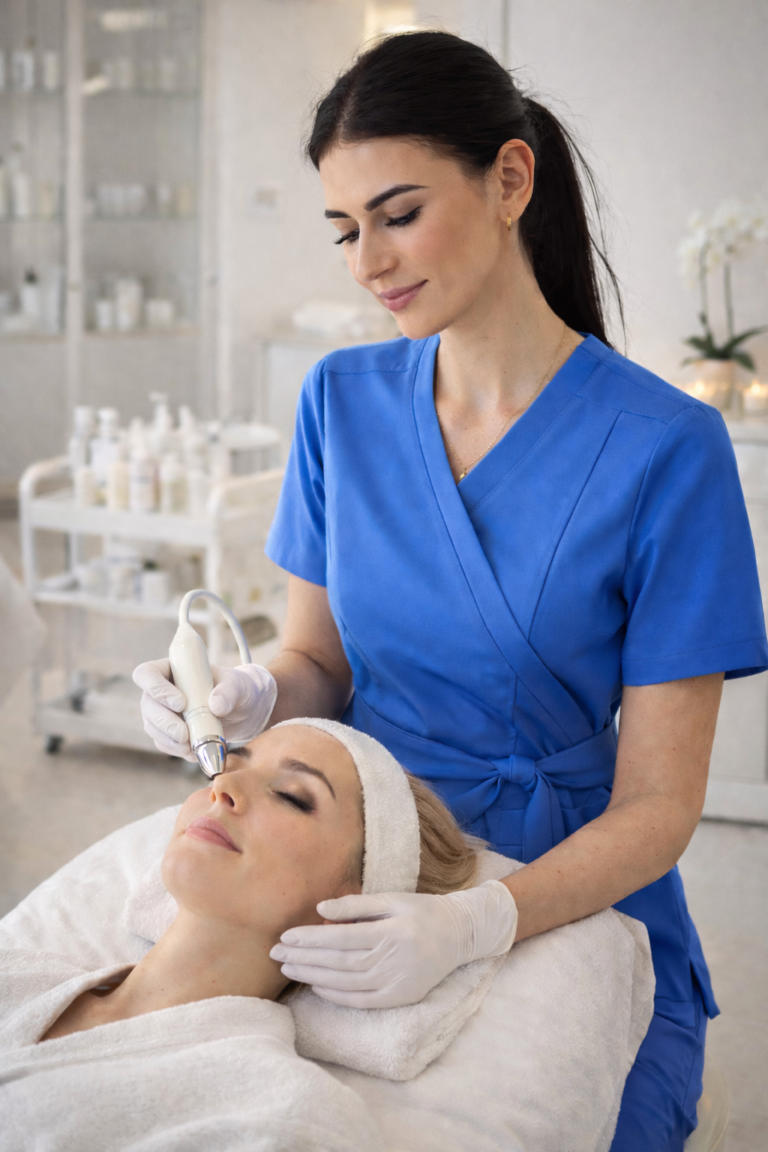
In professional practices, great importance is also attached to the hygiene of the cleaning process itself. Clean hands, disposable materials and a sterile working environment are standard. It is worth remembering that similar principles can and should also be applied at home.
Toning and rebalancing the skin
Toner was underestimated for many years, but today more and more people understand its importance. A well-chosen toner helps to restore the skin's correct pH after cleansing, soothes and prepares it for the next stages of care. In beauty salons, toning is a natural extension of cleansing and part of caring for the client's skin comfort.
In your daily skincare routine, it is worth treating a toner not as an unnecessary add-on, but as a support for the skin, especially if you use active cosmetics or have regular treatments.
Active ingredients - when a cosmetic helps and when it harms
One of the biggest problems of modern skincare is excess. The skin is very often „over-stimulated” by too many active ingredients used at the same time. Acids, retinol, vitamin C or niacinamide have great potential, but require knowledge and moderation.
A professional cosmetologist never selects treatments at random. Each procedure is preceded by a skin analysis, an interview and an assessment of its current condition. In home care, it is worth applying the same principle. Facial cosmetics should respond to the real needs of the skin and not to current social media trends.
Cream and moisturising - a daily protective shield
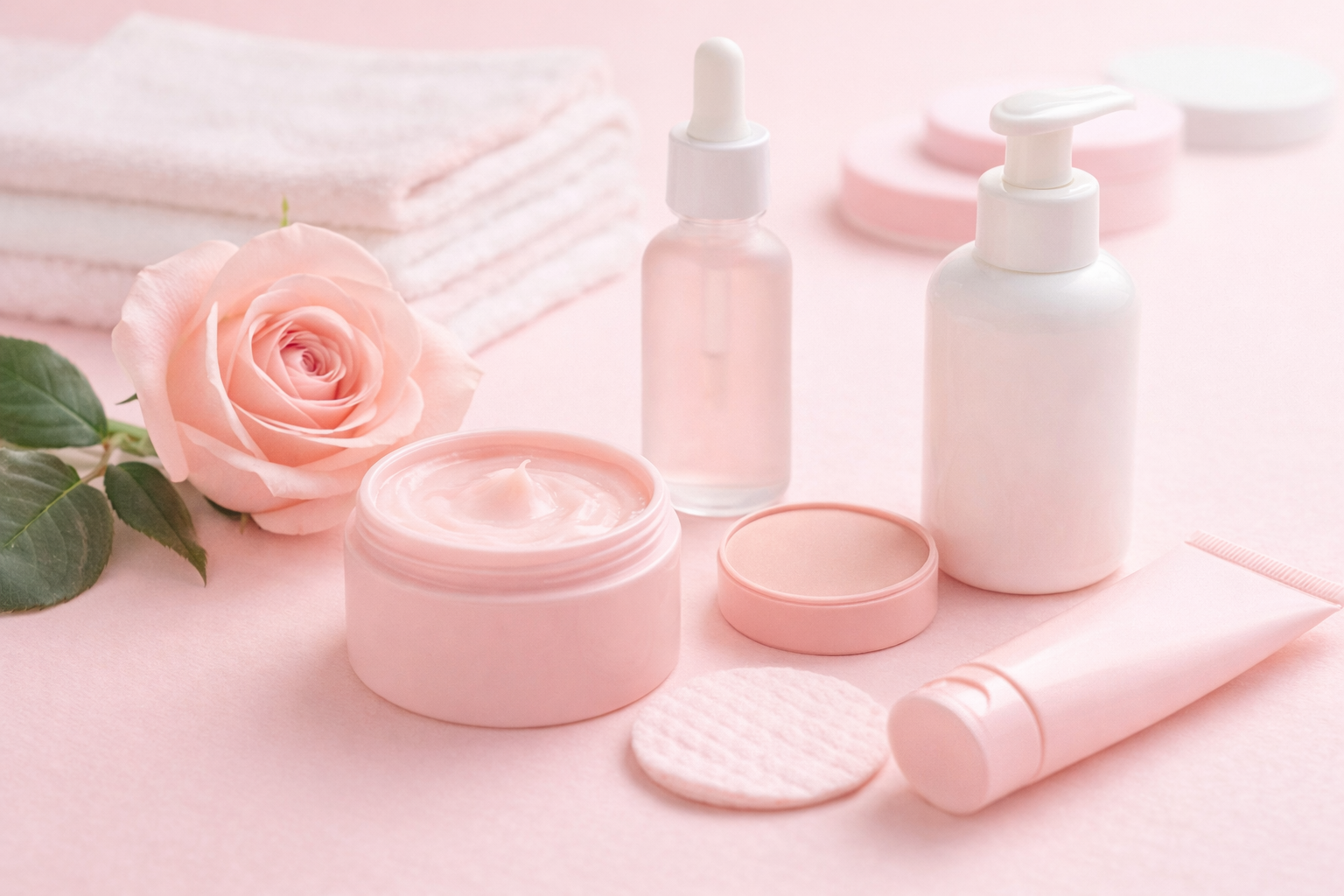
Face cream is one of the most important elements of skincare, but its role is often misunderstood. A good cream is not supposed to „fix” everything. Its job is to protect, moisturise and support the skin's natural regenerative mechanisms.
In cosmetic surgeries, great importance is attached to the restoration of the the hydrolipidic barrier, especially after treatments. The same principle applies at home. Moisturised skin regenerates better, ages more slowly and is more resistant to external factors.
SPF filter - the cosmetic that changes everything
There is no effective anti-ageing care without sun protection. UV radiation is one of the main factors responsible for premature skin ageing, discolouration and loss of firmness. Importantly, UVA radiation is active all year round, regardless of the weather.
This is why in professional practices, SPF protection is standard after treatments and part of client education. Applying sunscreen on a daily basis is one of the best investments in healthy and youthful skin.
Home and salon care - a system of communicating vessels
Contrary to popular belief, it is not in-office treatments that are the key to beautiful skin, but daily habits. A cosmetologist can give the skin a boost of regeneration, but it is home care that determines the longevity of the results. Therefore, a good beautician not only performs the treatment, but also educates. She explains how to care for the skin between visits and what to avoid. It is a relationship based on trust and cooperation, not a one-off service.
Professionalism in cosmetics starts with the details
The image in a beauty salon is of great importance. The client judges professionalism not only by the effects of the treatment, but also by the cleanliness, organisation and appearance of the professional. This is why it is so important to have the right cosmetic clothing, which fulfils both hygienic and image-enhancing functions.
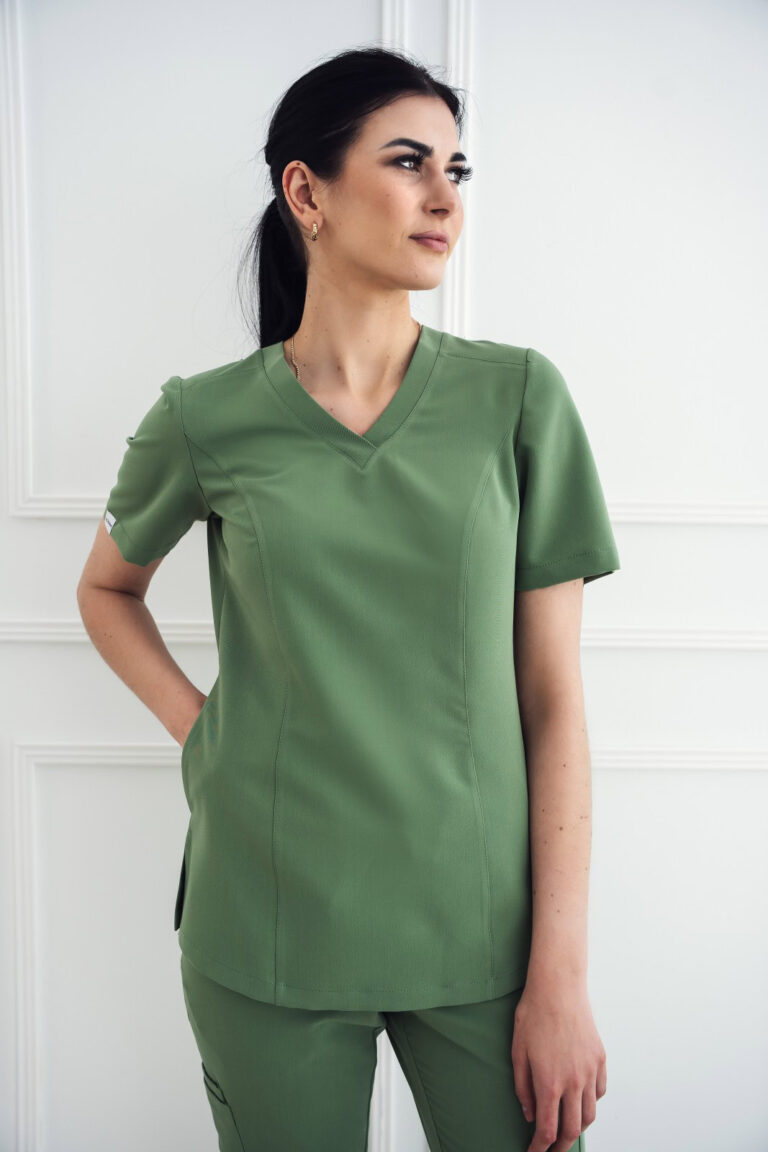
Cosmetic uniforms are part of the working standards. They separate private and professional life, allow a high level of hygiene to be maintained and ensure comfort when working for hours at the treatment chair. Well designed clothes for the beautician they are free of restraint, breathable and aesthetically pleasing, which has a direct impact on the quality of the professional's work and well-being.
Why does dress in the practice matter to the client?
From the client's perspective beautician's outfit is one of the first signals of whether you are in a professional place. A clean, consistent and aesthetically pleasing uniform builds trust and a sense of security. It shows that the practitioner takes their job seriously and cares about standards.
Therefore, modern surgeries are increasingly investing in high quality cosmetic uniforms, which are not only practical but also aesthetically pleasing and in line with the brand's visual identity.
Conscious care is a process, not a one-off decision
Beautiful and healthy skin is not the result of one cosmetic or one treatment. It is the result of daily choices, consistency and collaboration with a professional. Skin does not like chaos, excess and constant change. It likes stability, regularity and thoughtful action.
Therefore, it is worth looking at skincare as a long-term process in which both the facial cosmetics and the conditions in which they are applied - hygiene, comfort and professionalism - count.
Bottom line - care that makes sense
Caring for facial skin is not a fashion statement, but part of caring for health and wellbeing. Conscious care is based on knowledge, hygiene and regularity. So is professional work in a beauty salon.
Whether you are a client or someone working in the beauty industry, the foundations are common. Respect for the skin, for the process and for your own work. These are what distinguish haphazard actions from true quality.
.