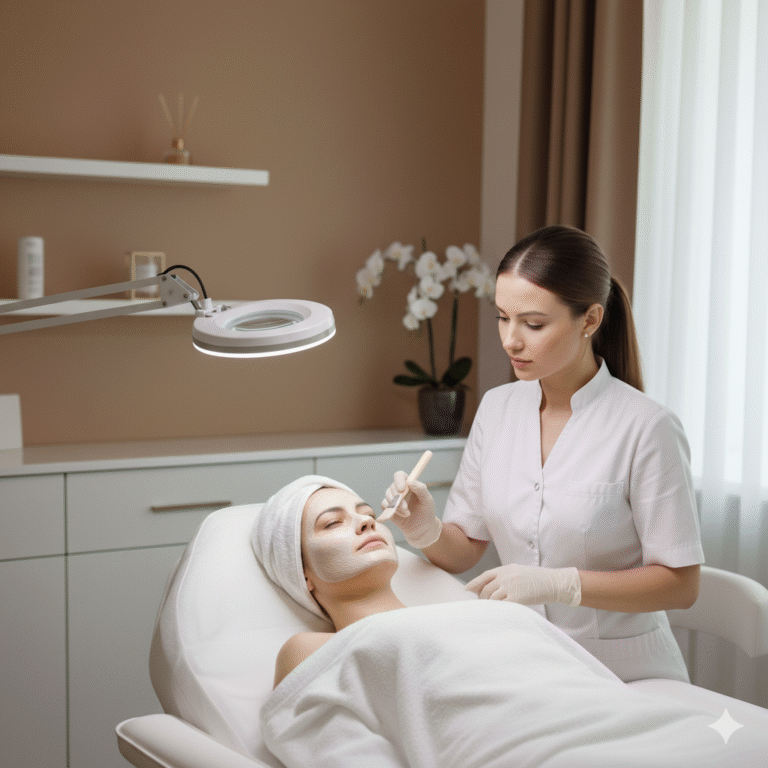

The cloakroom. It is there, in silence, often before the sun rises, that every duty station begins. The moment of changing from private to work clothes is not just a physical act. It is a rite of passage. Taking off the jeans or dress and putting on the medical clothing, you step into the role. You leave your private concerns, your shopping list and traffic jams behind the door to become a carer, a rescuer, a therapist. This moment of transformation deserves more than random, stiff material. It deserves respect for your body and your mission.
In the world of medicine, where precision, knowledge and seconds count, the subject of grooming was relegated to the sidelines for years. It was simply supposed to be „clean”. But modern healthcare is not just about procedures, it is all about relationships and image. In this wide-ranging essay, we will look at the profound significance of clothing in the work of the medical profession. We will consider why contemporary medical uniforms are working tools as important as the stethoscope, how they affect the patient's psyche and why your physical comfort is fundamental to the successful treatment of others.
White Coat Psychology and the New Scrubs Era
For decades, the symbol of medicine was the white, long, starchy apron. It inspired respect, but also distance. In psychology, there is even the term „white coat hypertension” - a patient's stress reaction to seeing a doctor's authority in white, which artificially raises the results of blood pressure measurements. White was associated with sterility, but also with coldness, pain and institution.
Today, this paradigm is changing. Medicine is becoming more of a partnership, and the barriers between staff and patients are being consciously torn down in favour of building trust. It is in this space that modern medical clothing type scrubs. The colourful two-piece sets, which originated in operating theatres, wyszły into clinic corridors, hospital wards and aesthetic medicine practices.
Changing to a more sporty cut, reminiscent of „workleisure” clothing, sends a completely different signal to the patient's subconscious. It states: „I am here to act. I am ready to move, to help, I am close to you”. A doctor or nurse in a well-tailored scrubs does not lose authority - on the contrary, he or she gains the image of a modern professional who keeps up with the changing world. It is an evolution from the figure of the „god in white” to that of the „expert in action”.
Enclothed Cognition: How Clothes Change Your Brain
Did you know that what you wear affects how you think? This phenomenon is called enclothed cognition (cognition embodied in clothing). Research shows that donning an outfit associated with a specific role and competence (e.g. medical uniforms) actually changes the thought processes of the wearer. There is increased concentration, attention to detail and a sense of responsibility.
That is why it is so important to scrubs medical set was not a random collection of materials. If you put on an outfit that is uncomfortable, gritty, in which you feel unattractive or unprofessional - your confidence drops. You are subconsciously sending out signals of insecurity, which the patient senses. On the other hand, by wearing a premium uniform - made of soft, stretchy material that fits perfectly - you straighten your back. You feel competent, capable and ready for a challenge. This is not vanity. It's mental hygiene in a job that requires you to be at peak performance all the time. Your outfit is your armour.
12 Hours in Motion: Why Material is a Matter of Life and Death (Your Comfort)
The work of a medic is a competitive sport. A nurse on call takes several thousand steps. A physiotherapist uses whole-body strength to work with a patient. A surgeon stands in a forced position at the operating table for hours. The dentist leans over the chair in an unnatural twist of the torso.
Under such conditions medical clothing may not be an obstacle. Traditional cotton, although natural, has its drawbacks - it absorbs moisture and holds it to the body, creases mercilessly and restricts movement. The stiff polyester of yesteryear does not breathe, creating a sauna effect. The material revolution that has taken place in recent years has brought solutions previously known from sportswear.
Modern medical uniforms are sewn from advanced blends. The key is the trio: new generation polyester, viscose and elastane (spandex).
- Polyester is responsible for colour fastness and resistance to repeated washing at high temperatures (which is key to maintaining asepticity).
- Viscose is an „artificial silk” of natural origin - it gives the fabric its softness, breathability and makes it skin-friendly. It is responsible for that pleasant coolness and the „flowing” structure of the fabric.
- Elastane is freedom. It is what makes scrubs medical set works together with you. When you're crouching at a patient's bedside, when you're reaching on a high shelf for medication, when you're running to an emergency call - the outfit stretches rather than bursting at the seams or digging into your body.
An investment in fabric quality is an investment in your physical health. Fewer chafing, better thermoregulation (no sweat stains in stressful situations) and freedom of movement translate into less fatigue at the end of a duty station.
Colour therapy on the ward: What Does Your Uniform Say?
The choice of colour for medical clothing is no longer a matter of chance or rigid hospital regulations. It has become an element of non-verbal communication. Colours affect the limbic system of the brain - both yours and the patient's.
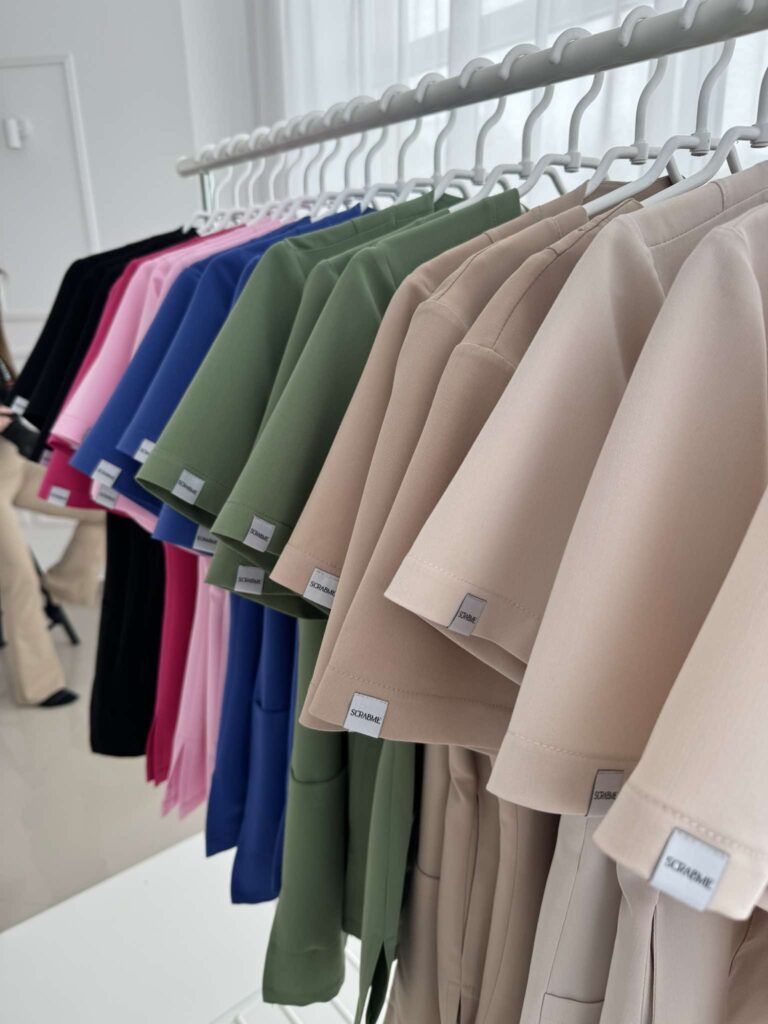
Navy & Blue: They are classics for a reason. These colours are associated with confidence, calm, intelligence and stability. They are the least tiring to the human eye, which is important when working long hours. Navy blue scrubs medical set is synonymous with professionalism, ideal for doctors and executives.
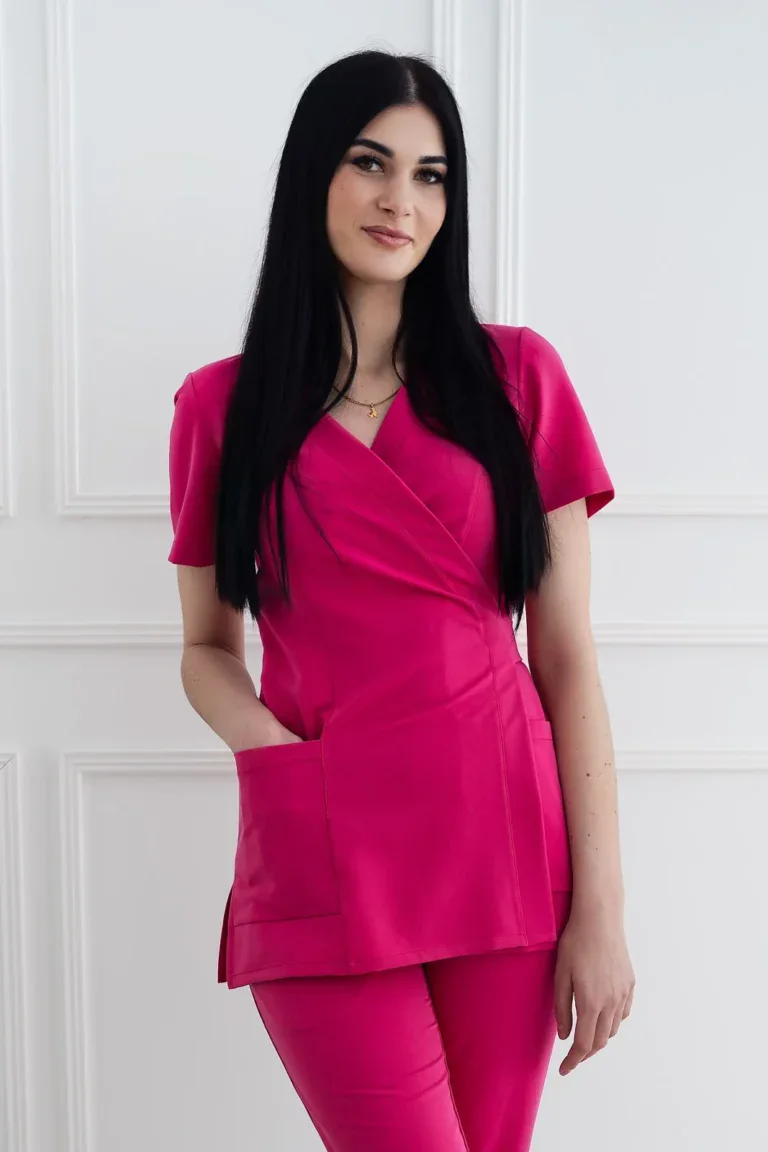
Pink & Magenta (Pink & Berry): These colours carry a charge of empathy, warmth and caring. Light pink calms aggression (which is why it is often used in psychiatry or geriatrics). Intense magenta adds energy and dynamism. These are the favourite colours of the beauty industry, cosmetology, but also of paediatric and neonatal wards, where building a „soft” relationship is key.
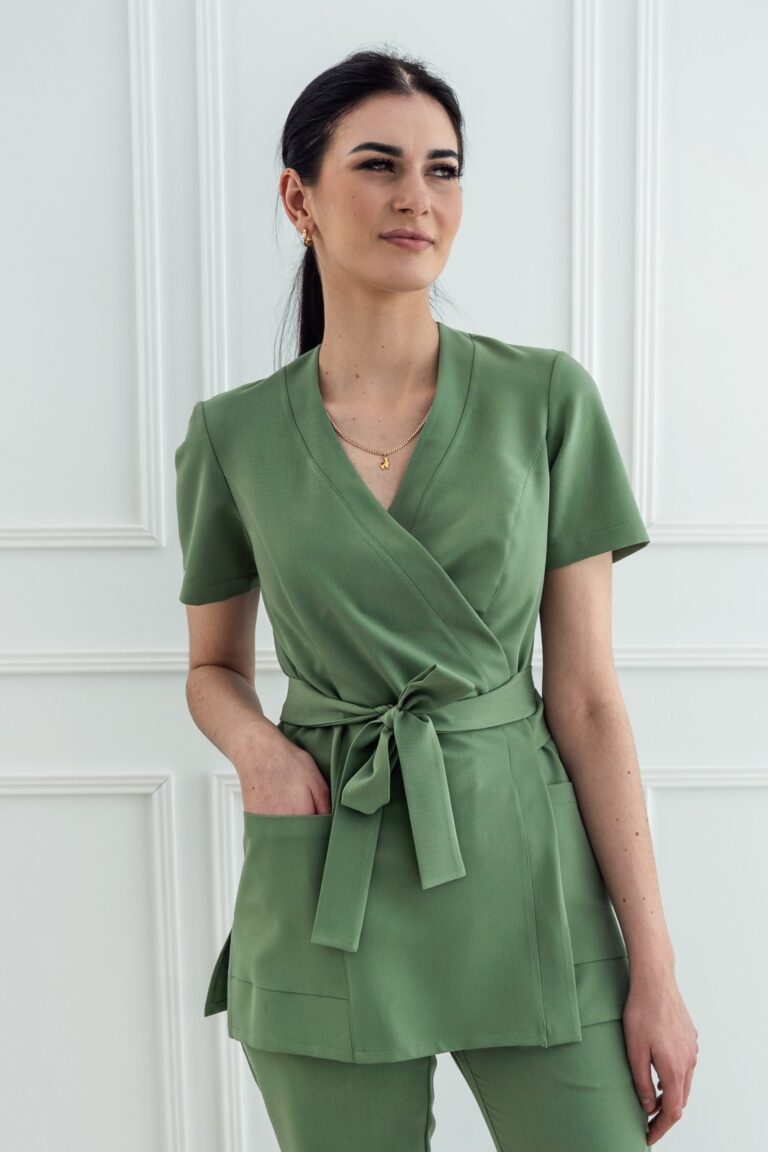
Green and Olive: The colours of hope, nature and regeneration. In hospitals, surgical green was meant to dull the afterimages of looking at the red of blood. Today, bottle green in physiotherapy or dentistry is associated with serenity and health.
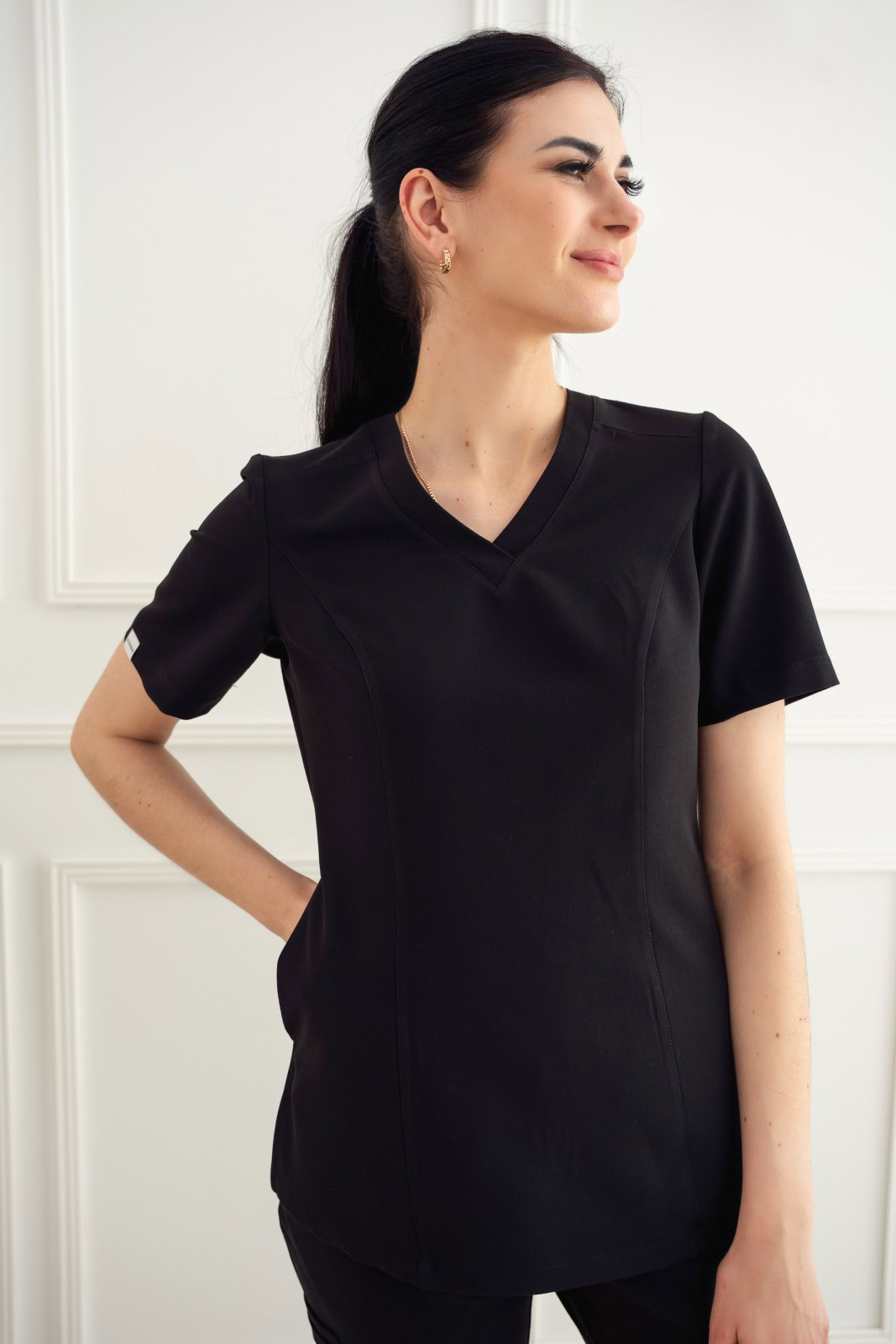
Black (Black): Once unthinkable in medicine, today a symbol of luxury and prestige. Black medical uniforms reign supreme in aesthetic medicine, plastic surgery and premium dentistry clinics. They are elegant, slimming and extremely practical.
When choosing a colour for yourself or your team, ask yourself: what emotion do I want to evoke in the patient when I enter the practice? Do I want to reassure him or her, energise him or build authority?
Personal Branding in Healthcare: You are Your Business Card
We live in an age where the patient is the customer. Before they come to your practice, they often check online reviews, browse your website and social media. The image of the doctor, nurse or cosmetologist is part of personal branding.
A sloppy, washed-out, two sizes too big apron sends the message: „I don't care. I'm here for punishment. I'm chaotic.” If you don't care about your appearance, the patient may subconsciously transfer this impression to the quality of your work: „Since he has a dirty shoe and a swept outfit, are the instruments sure to be sterile?”.
Well-groomed, fitted scrubs medical set works the other way round. He states: „I respect myself and I respect you. I am organised. I take care of the details.” In a private medical or beauty practice, a consistent image of the entire team (identical colours, logo on the chest, matching fashions) increases the perceived value of the services. It is a signal that the establishment is committed to the highest standards at every level - from reception to the treatment room.
Functionality: Details that save the day
Medical fashion is not a haute couture catwalk - it is utilitarian design. Beauty must go hand in hand with iron logic. When designing or selecting medical clothing, we need to think about the logistics of everyday life.
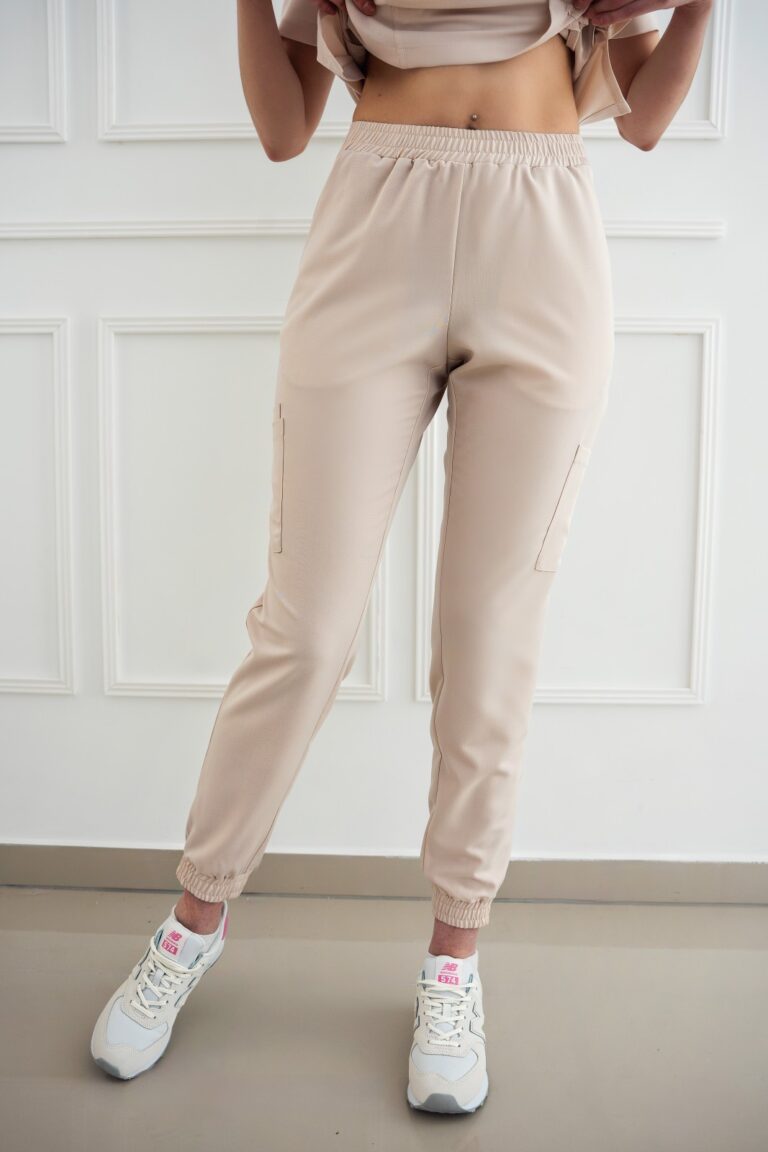
Pockets. This is the key word. A medic is a person who carries an office and a workshop. Pen, stamp, office phone, stethoscope, diagnostic torch, notepad, gloves, disinfectant gel... All this has to go somewhere. Medical uniforms Without functional pockets (so-called cargo pockets) they are useless. Good medical trousers should have deep thigh pockets from which nothing falls out when you squat. A sweatshirt should have pockets that do not deform your figure when you put a heavy phone in them.
Another aspect is the neckline and length. When bending over a patient, the garment must provide 100% of intimacy for the person wearing it. A V-neck top that is too deep or trousers that are too short and expose the body when bending over is a source of discomfort and lack of professionalism. Modern cuts are designed so that you never have to wonder if „something is showing”.
Self-Care for the Medics: Take Care of Yourself so You Can Take Care of Others
In the helping professions (doctor, nurse, paramedic), the self is often forgotten. The needs of the patient always come first. However, it is impossible to pour from an empty jug. Professional burnout is a real problem, and it is made up of a sum of small frustrations. Uncomfortable shoes, biting fabric, sweat pouring down your back, trousers that have to be pulled up every five minutes - these are micro-stressors.
Every such micro-stressor takes away a bit of energy you could spend on a diagnosis or conversation. Choosing comfortable clothing is an act self-care. It's saying to yourself, „My comfort is important”. When you put on a soft, tactile fabric, you are doing something good for your nervous system.
Feeling well-dressed also affects life after work. When you leave duty in a nice, modern scrubs (which often look like a fashionable tracksuit), you can walk into a shop or pick up your child from nursery without shame. You don't feel branded with a „hospital stigma”. Modern medical clothing blur the line between workwear and lifestyle clothing, allowing you to feel feminine and attractive even in the most difficult moments at work.
How to Choose the Perfect Scrubs Medical Set? A Practical Guide
When facing the choice of new clothing for work, it is worth paying attention to a few technical aspects that will determine your satisfaction for years to come.
1. compositional analysis: Always check the label. Look for blends. Avoid 100% old-style polyester (not breathable) and 100% cotton (loses cut and colour quickly). The gold standard is around 70% polyester (durability), 20-25% viscose (comfort and breathability) and 5% elastane (stretch). This blend ensures that the garment will survive hundreds of wash cycles without needing ironing (easy-iron technology), saving you valuable time.
2. Fitting to the figure: No more unisex bags. Today medical uniforms They are slim-fit, with darts that shape the bust and buttocks. Trousers come in jogger (with a drawstring), cigarette or straight versions. Choose the cut in which you feel most comfortable in private. If you wear skinny jeans every day, you'll also like tapered trousers at work. If you prefer a relaxed fit, go for straight legs. Remember that medical sizing can be specific - always measure yourself with a tape measure and compare with the manufacturer's chart.
3. squat test: If you have the opportunity for a fitting (or order online with a return option), do a „combat test” in your new outfit. Do a deep squat, lift your arms high into the air, do a bow. Is your back covered? Are the seams not pulling? Are the trousers not sliding down? Medical garments have to work at extreme ranges of movement.
4. consistency with the workplace: If you are working in a team, make sure you are not bound by a specific colour code (e.g. ward). If you have a free hand, think about practicality. If you work with dirty materials (dentistry, veterinary medicine), dark colours will be more forgiving. If you work with children, vibrant colours will be an asset.
Przyszłity of Medical Apparel: Towards Technology and Ecology
The medical wear market is not standing still. We are seeing fascinating trends that will shape how we look at work in the coming years.
The first trend is green. Conscious manufacturers are turning to recycled polyester (rPET), reducing the industry's carbon footprint. Fibres are increasingly dyed in a water-saving way. Choosing medical clothing from responsible brands, you vote with your wallet to protect the environment - which should be a natural direction for those involved in health and life protection.
The second direction is antibacterial technology. Fabrics with silver ions, which inhibit the proliferation of bacteria and neutralise odours, are becoming standard in the premium segment. This is an additional protective shield in an era of epidemiological threats.
The third trend is personalisation. We are moving away from anonymity. Name embroideries, clinic logos, the ability to mix top and bottom sizes - all of this is making scrubs medical set becomes unique, tailor-made for the individual czł person.
Summary: More Than Clothes
Looking at a rack of colourful uniforms, you don't just see pieces of fabric. You see hundreds of hours on duty. You see the emotions - the joy of healing a patient and the sadness of loss. You see the fatigue and the adrenaline. You see the professionalism.
Your medical apparel is a silent witness to your career. It is with you at the most important moments of your professional life. Therefore, it should not be casual. You deserve to feel dignified, comfortable and beautiful in it. Because when you feel comfortable in your second skin, you have more power to care for the health of others.
When choosing your outfit in the morning, remember - it's not just a uniform. It's a declaration of your attitude towards your work, your patients and yourself. Let it be a statement of the highest quality.