

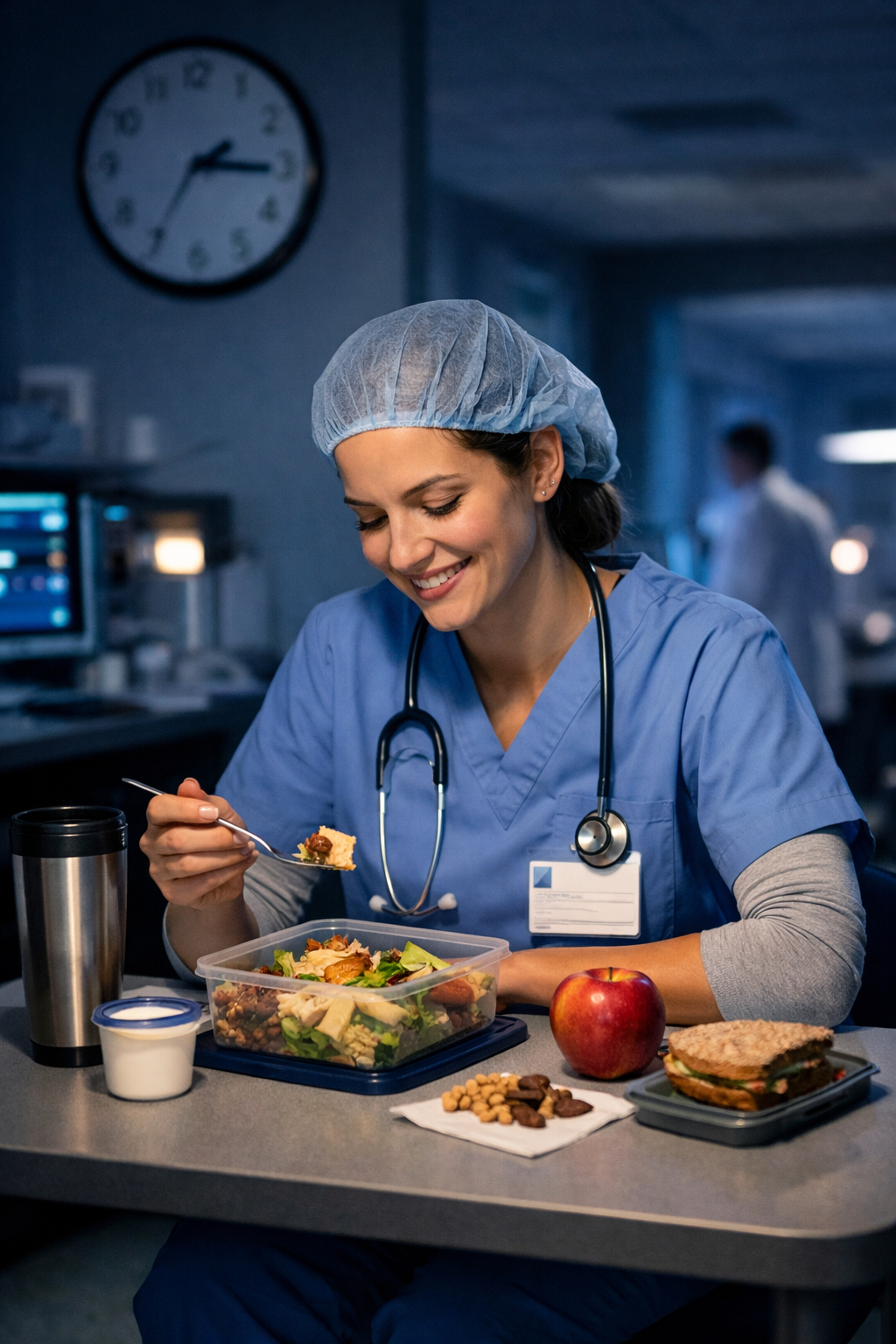
Night duty is one of the body's greatest challenges. Disrupted diurnal rhythms, fatigue, stress and limited access to wholesome meals mean that diet at night has a huge impact on mood, concentration and health. Medical staff are well aware that a night on the job can be unpredictable, intense and exhausting, so the diet on night duty should not be a coincidence.
More and more doctors and nutritionists are stressing that it is not the night work itself that is the biggest problem, but the way we try to „survive” it. Drinking litres of coffee, sugary snacks, fast food eaten on the run and a lack of regular meals lead to a drop in energy, stomach problems and increasing fatigue. In the long term, this not only affects health, but also the quality of work, which is particularly important in the medical profession.
The diet on night duty should, above all, be practical. It must take into account the realities of working in a hospital, clinic or emergency department, where there is often no time for long breaks or comfortable eating conditions. In the same way that well-designed medical clothing makes it easier to function during long working hours, properly selected meals can make a night-call a real improvement in comfort.
The most important rule of nutrition at night is to avoid extremes. Starving yourself for hours leads to a sudden drop in energy and problems with concentration, while heavy, fatty meals strain the digestive system and can cause lethargy, heartburn and a feeling of heaviness. The body functions differently at night than during the day, so the diet on night duty should be lighter but filling and stabilise blood sugar levels.
What we eat before we go on duty is crucial. The last major meal before a night's work should be well balanced and based on protein, 1TP1Carbohydrates and a small amount of healthy fats. Such a meal gives you a solid energy base and reduces the risk of sudden hunger attacks in the middle of the night. In practice, this means simple, homemade food that does not weigh down the stomach, yet allows you to enter the duty station with a sense of satiety.
During the on-call period itself, a strategy of smaller but regular meals works best. Instead of one large dish in the middle of the night, it is much better to reach for small portions every few hours. This ensures that the body receives a constant supply of energy and that the digestive system is not overloaded. This is particularly important for people who wear a medical uniform for long hours and are constantly on the move - a feeling of heaviness or bloating can significantly reduce comfort.
Protein plays a major role in the night-time diet. It is what helps to maintain the feeling of satiety for longer and prevents sudden fluctuations in energy. Protein-rich foods are a much better choice than sugary snacks, which provide a short-term energy boost that is quickly followed by a drop in form. Simple solutions that can easily be taken with you to work and eaten even in a short break work well.
Carbohydrates are no less important, but the type of carbohydrate is crucial. At night, the body is less able to cope with large amounts of simple sugars, so the diet on night duty should be based on 1TP1Eating carbohydrates. They provide stable energy and do not cause sudden spikes in blood glucose. This makes it easier to maintain concentration and avoid the drowsiness that often follows sugary snacks.
Fats in the night-time diet should be present, but in moderate amounts. Overly fatty foods slow down digestion and can cause a feeling of heaviness, which, combined with night-time fatigue, is particularly uncomfortable. Doctors often emphasise that at night it is better to rely on easily digestible sources of fat that do not burden the stomach and intestines.
One of the biggest enemies of night duty is dehydration. In the hustle and bustle of work, it is easy to forget to drink water, especially when patient care is a priority. Meanwhile, even slight dehydration can lead to headaches, loss of concentration and feelings of fatigue. Drinking water regularly while on duty is just as important as wearing comfortable medical clothes that allow you to focus on your work instead of discomfort.
Coffee is an integral part of night duty, but it is worth approaching it strategically in your night-time diet. Excessive caffeine can lead to irritability, stomach problems and difficulty falling asleep at the end of the duty period. The best solution is to consume coffee in moderation during the first part of the night and gradually reduce the amount in the morning. This makes it easier to get back into a normal rhythm after work.
The diet on night duty should also take into account digestive comfort. Many people who work at night complain of heartburn, bloating or abdominal pain, which are exacerbated precisely when they are on duty. Often, this is not due to night work itself, but to poor dietary choices. Food that is too heavy, spicy or highly processed at night can make even the best-organised on-call routine miserable.
The form of meals is also important. Food that can be eaten quickly, without the risk of contamination and without having to sit for long periods of time, works much better in a hospital setting. This is another area where diet and the realities of medical staff work come together. Just as a well-designed medical uniform takes into account pockets, comfort and freedom of movement, meals for night duty should be practical and easy to eat.
In the long term, a proper diet on night duty is of great importance for health. Eating haphazardly at night on a regular basis increases the risk of metabolic problems, gastrointestinal complaints and chronic fatigue. A conscious approach to nutrition helps to reduce these negative effects and makes night work less taxing on the body.
It is worth stressing that the diet on night duty does not have to be perfect. The most important thing is that it is well thought out and adapted to the realities of the job. Even small changes such as regular meals, more water or limiting sugary snacks can bring a noticeable improvement in wellbeing. For those working in healthcare, it's an investment that pays off not only in better health, but also in greater productivity at work.
Night duty will always be a challenge, but the right diet can make it much easier to survive. Conscious nutritional choices, like choosing good quality medical clothing, are part of looking after yourself in a demanding profession. The modern approach to working in healthcare increasingly takes into account not only one's responsibilities to patients, but also one's concern for one's own health and comfort.
If night duty is part of your daily routine, consider diet as a tool that realistically supports you in your work. Well-chosen meals can make more of a difference than you realise, and a healthy digestive system is one of the foundations of performing well - no matter what time of day or night it is.