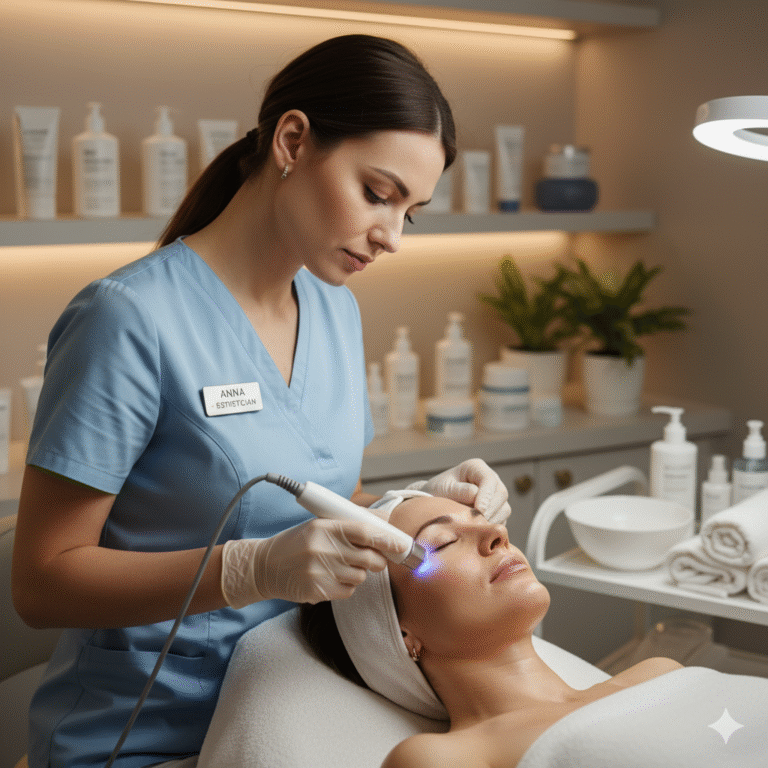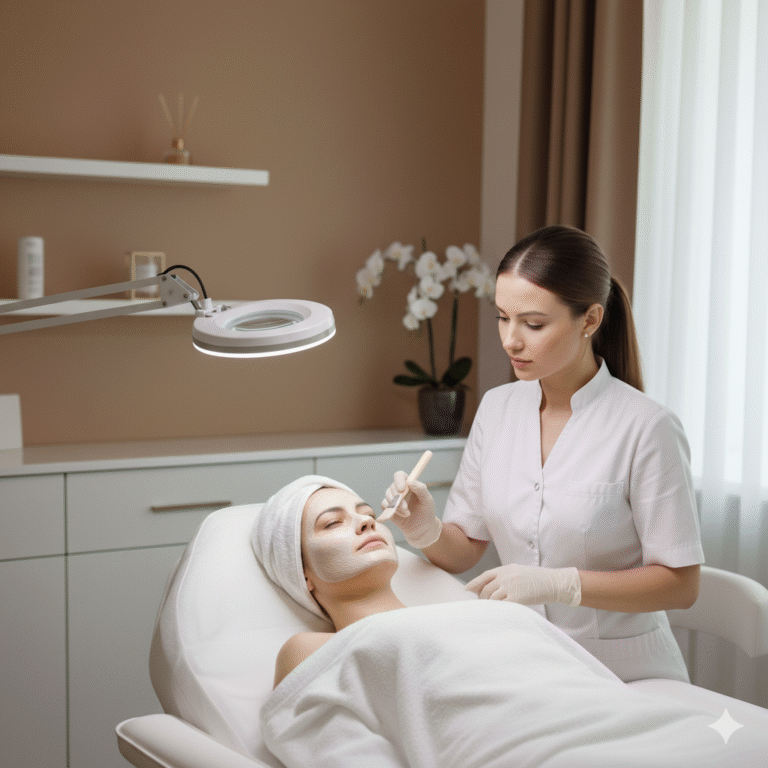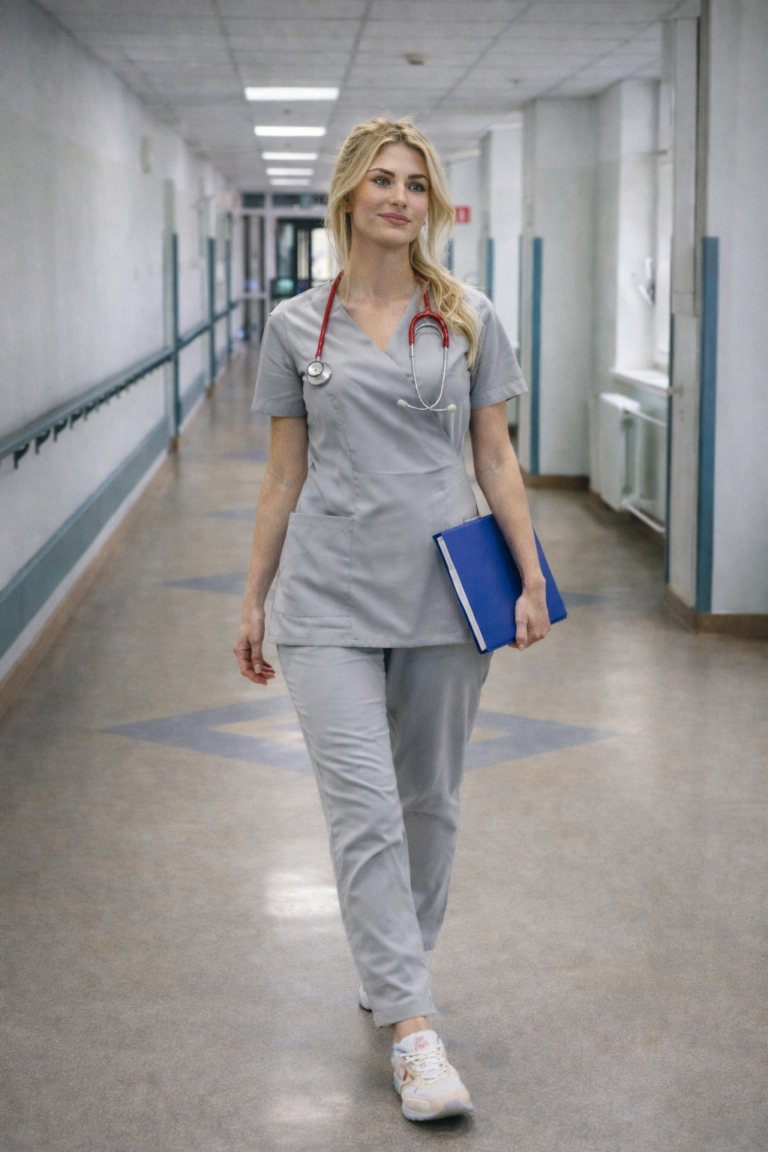

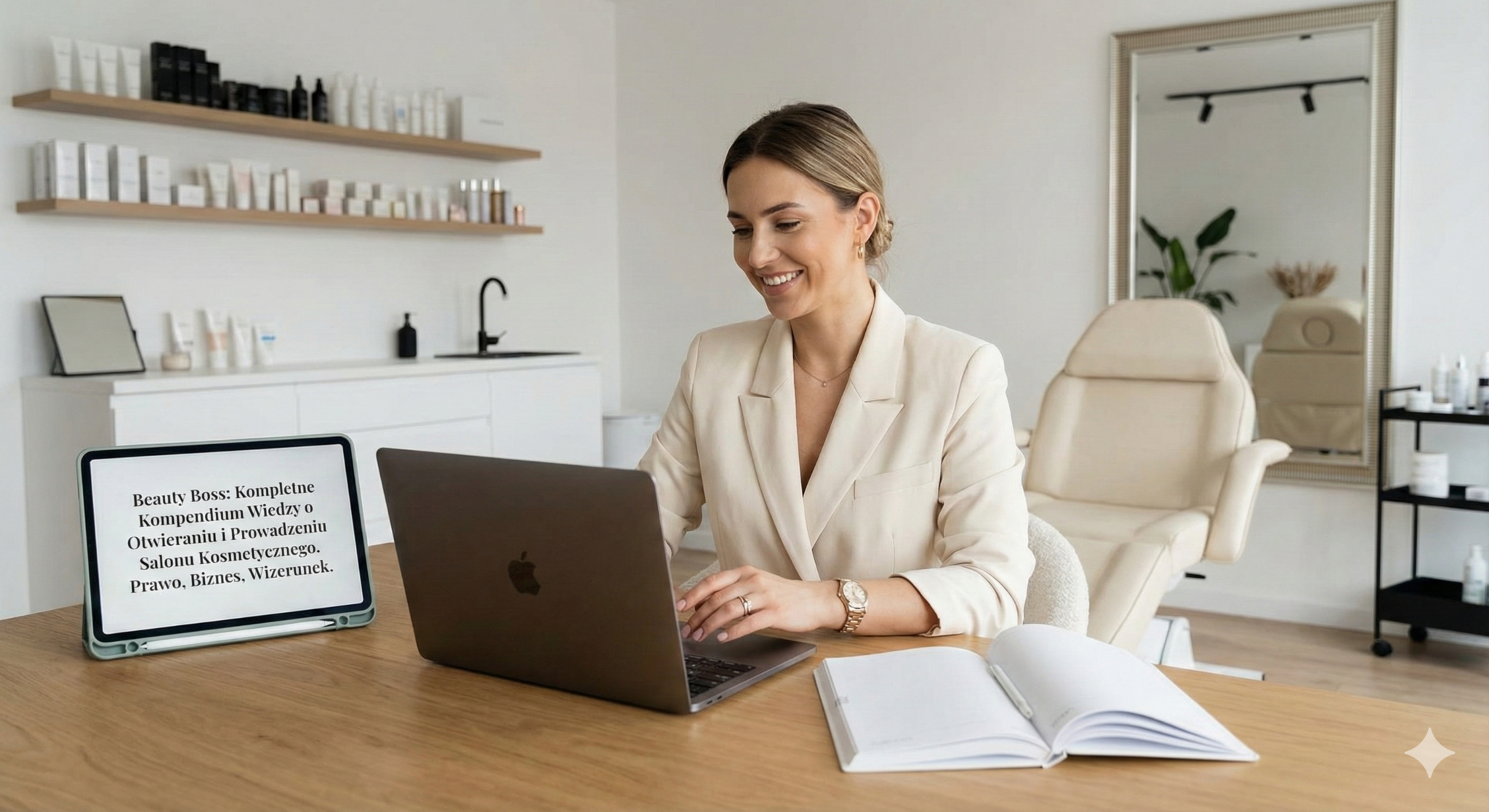
The vision is a beautiful one: a pastel interior, the scent of candles, a schedule filled for months ahead and grateful clients leaving the salon with radiant skin. This is the dream of thousands of cosmetologists who graduate and complete courses every year. However, the statistics are merciless - a large proportion of newly opened beauty salons close within the first two years of business.
Why? Because being a great cosmetologist is not enough to be a successful entrepreneur (Beauty Boss).
Running a practice in 2025 is playing on many pianos. You need to be a skin expert, but also an accountant, a marketer, a lawyer who knows the requirements of the Sanitary Inspectorate, a psychologist for the team and an art director all in one. It's an industry where competition is gigantic (there's a salon on every corner) and the customer is becoming increasingly demanding and aware.
This monumental guide has been created to take you through the journey - from the vague idea, through the bureaucratic hell of premises acceptance, to the moment when your team, dressed in professional uniforms, welcomes your first VIP client. We'll talk about the things they don't talk about at university: money, procedures and the power of image.
Chapter 1: Foundation - Business Plan and Niche Selection
Before you spend your first złot on a renovation or an expensive laser, you need to answer the question, „Who am I and who is this place for?”. The mistake of „doing everything for everyone” is the fastest way to bankruptcy.
Defining the Profile (Brand DNA)
The beauty market today is divided into several distinct trends. You need to choose yours:
- Hi-Tech Cabinet: Focused on fast, spectacular results. Lasers, HIFU, body contouring. Client: busy business woman who pays for time and effectiveness. Design: sterile, modern, minimalist.
- Holistic spa / wellness: Focused on relaxation, Kobido massages, aromatherapy, rituals. Client: a person seeking an escape from stress. Decor: wood, warm light, plants.
- Problem Clinic (Acne/Anti-Aging): Focused on targeted therapies, collaboration with dermatologist, blood tests. Client: person with a problem, seeking rescue. Image: medical, laboratory.
Location and competition analysis
Don't open a fifth manicure salon on a housing estate where there are already four. Do an „environmental interview”.
- Who lives in the area? (Students? Young mothers? Pensioners?).
- What is missing? Maybe everyone is doing nails and no one is offering advanced trichology or podiatry treatments?
The Mathematics of Business
Do a cost simulation.
- Fixed costs: Rent (location!), electricity (lasers use a lot of it), Social Security, salaries, equipment leases, medical waste disposal.
- Variable costs: Cosmetics, disposables (gloves, sheets), marketing.
- Margin: Remember that the price of a treatment is not just the cost of the ampoule. It is the cost of your knowledge, your time, the depreciation of your equipment and your laundry cosmetic clothing.
Chapter 2: The Battle for the Premises - Sanitation Requirements (Survival Manual)
This is a stage that many beginners rely on. Finding premises is one thing, adapting them to the restrictive sanitary requirements in Poland is another. The Sanitary Inspector will be your frequent visitor, so you need to know the regulations (Regulation of the Minister of Health on specific sanitary and hygienic requirements).
Zoning
The office cannot be one open space (unless it's a manicure). You need to section it off:
- The dirty zone: Waiting room, customer cloakroom, toilets.
- The clean zone: Treatment rooms.
- Social room: A place where employees can have a meal and change their clothes.
- Staff cloakroom: Must have bipartite lockers (for private and work clothing).
Technical requirements
- Height: A minimum of 2.5 metres (in some cases 2.2 metres with Sanitary Inspectorate approval).
- Floors and walls: They must be smooth, washable, non-absorbent. No carpets in the treatment room! All joints (floor-to-wall) must be easy to clean.
- Water: Every treatment room must have a hand wash basin (with hot and cold water) and a dispenser for soap and towels. If you perform body treatments - a client shower is required.
- Ventilation: Crucial for chemical fumes (nail styling, acids). Must be in working order and regularly serviced.
Sterilisation point (decontamination line)
If you use instruments that interrupt the continuity of tissue (pliers, tweezers, cutters), you must have a dedicated space or a separate room for sterilisation (dirty line -> washing/disinfection -> packing -> autoclave -> clean line). An alternative is to contract with an external sterilisation facility.
Chapter 3: Hygiene and health and safety procedures - Safety Above All
The customer sees a nice chair. The sanitary officer sees the procedures. You need to create a „Book of Procedures” that describes every move in the practice.
Procedure for washing and disinfecting hands
This is fundamental. Instructions must hang above every washbasin.
Waste Management Procedure
We divide waste into municipal and medical waste (code 18 01 03 - e.g. bloody gauze pads, needles). The latter must go into red containers and be collected by a specialist company.
Working clothing procedure
And here we come to a key point, often checked by inspectors. The regulations are clear: personnel performing treatments must wear work/protective clothing.
- Cleanliness: Clothing must be changed daily or when soiled.
- Washing: Must not be washed cosmetic blouses in the washing machine at home together with private or children's clothes (risk of transmission of pathogens). Washing must be done separately or in the living room (if you have a separate washer-dryer).
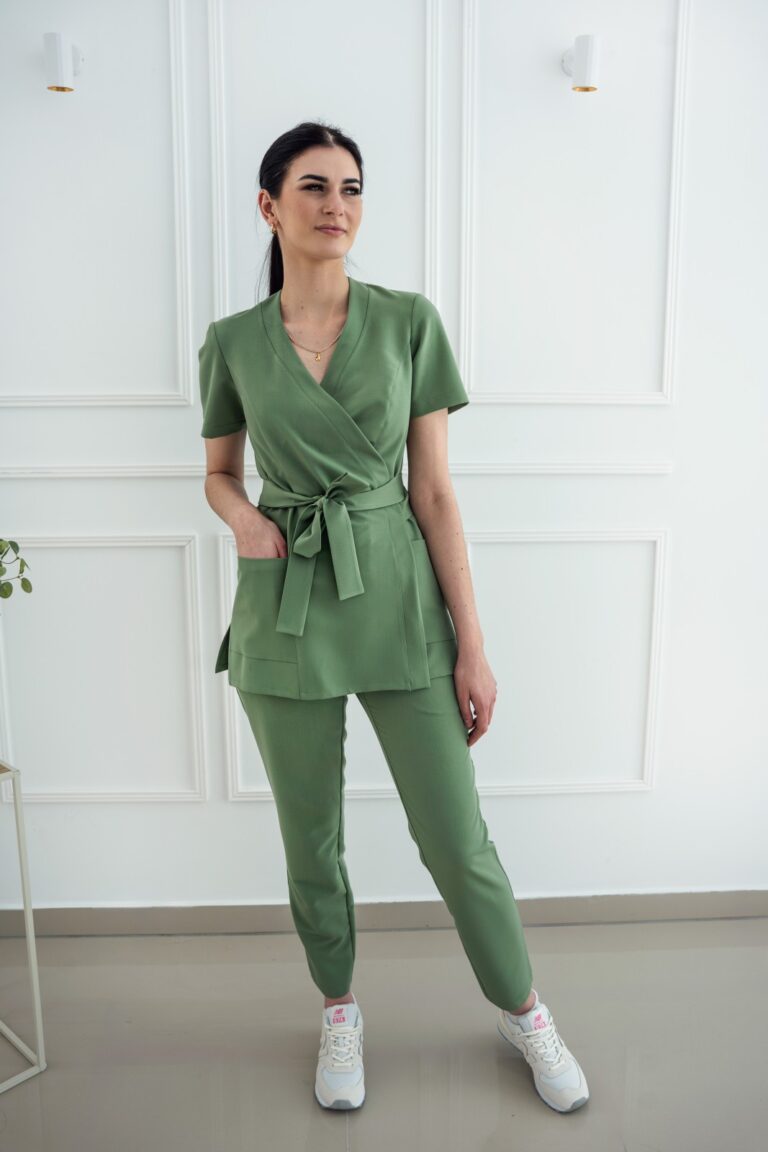
- Material specificity: Inspectors pay attention to whether the outfit is an „easily disinfectable surface”. Therefore, cotton T-shirts are risky. Professional cosmetic sweatshirt made from a blend of polyester and viscose is barrier - it is harder for body fluids to soak in and washes more easily at high temperatures without losing its cut.
Chapter 4: Technological Equipment - Invest Wisely
Buying a 150,000 zł laser for a start-up is often a noose around the neck. How do you build a machine park?
Base (Must Have)
- Cosmetic Armchair: It must be electric. Remember the ergonomics of your work! If the chair is not height adjustable, your spine will get off after a year.
- Magnifying Lamp: Good lighting is the basis of skin diagnosis.
- Stool (Hocker): It is your most important working tool. It must enforce a straight posture.
Technologies (Graduation)
- Cosmetic Combine: (Cavitation peeling, ultrasound, needle-free mesotherapy). Inexpensive, and allows you to extend your basic offer.
- Dermapen (Micro-needle mesotherapy): Low cost device, high margin on treatment, great results.
- Hi-Tech devices: (Laser, HIFU, Endermologie). Only buy when you have a client base. Leasing is your friend, but count the lease instalment as the cost of each treatment.
Chapter 5: Ergonomics of the Cosmetologist's Work - How Not to Destroy Your Health?
Working in a surgery is physical work. It puts a strain on the spine (lumbar and cervical), the wrists (carpal tunnel syndrome) and the circulatory system (varicose veins).
Position of Work
You spend most of the day either sitting bent over the client's face (cleansing, lashes, permanent make-up) or standing at the machine (laser, massages).
- Principle: Straight spine, shoulders lowered, elbows close to the body.
The Role of Clothing in Ergonomics
An often underestimated aspect. Uncomfortable clothing forces unnatural body positions, leading to micro-injuries.
- Hip freedom: When you sit on a hock, your legs should be slightly extended for stability. If you have a narrow pencil skirt or stiff denim trousers, you put pressure on the blood vessels in your groin and below your knees. This is a simple route to swelling and varicose veins. The solution is cosmetic trousers with a jogger cut or elastic waistband that work with the body.
- Range of shoulder movement: When massaging your face or body, you use extensive movements. If cosmetic sweatshirt is too tight in the back or under the arms, you will subconsciously lift your shoulders, which will end in tension headaches and neck pain. Professional garments are designed with added elastane (Lycra/Spandex) so that they do not resist working.
Chapter 6: Building the Dream Team (Recruitment and Onboarding)
As an owner, you will quickly realise that you can't do everything yourself. You need employees. But in the beauty industry, turnover is huge. How do you retain talent?
Hard vs. soft competences
It's easier to teach someone to use a laser than to teach them empathy and personal culture. Hire for attitude (smile, willingness to learn, attention to detail), train for skills.
Contracts and Commissions
The market standard is base + commission on turnover (usually 10-20% on services performed and 5-10% on cosmetics sales). Remember to have clear working regulations. It must specify: working hours, phone rules, appearance and dress code.
Dress Code as an Integrating Element
The introduction of uniform costumes for the team has a psychological dimension.
- For the employee: „I am part of the team. There is no problem of ”what to wear„ in the morning. Being given a beautiful, branded set (rather than a cheap apron) by the boss makes the employee feel appreciated.
- For the client: Seeing the team in identical, elegant cosmetic trousers and tunics, the client subconsciously judges the salon to be more professional and organised. This builds up the so-called 'professionalism'. First Impression (First Impression).
Chapter 7: Marketing in the Age of Instagram - Show the Face of the Expert
You have beautiful premises, procedures and a team. But if the world doesn't know about it, your business doesn't exist. In the beauty industry today, marketing is 90% based on image (Visual Marketing).
Instagram and TikTok as a business card
Your social media profile is your portfolio. A client checks you out on Instagram before going to your website.
- Photo quality: Forget blurry photos in złh light. Invest in image sessions.
- Personal Branding: People buy from people. Show your face and that of your team. Show the „backstage” - how you prepare the office, how you train.
- Education: Don't just upload „before and after” photos. Record reels in which you explain why retinol pinches, or how a laser works. This builds your position as an Expert.
The Role of Image in Social Media
When you record instastories, your appearance is key. If you're talking about a luxury treatment for 800 zł and you're wearing a crumpled T-shirt, cognitive dissonance ensues. The recipient thinks: „Are you sure it's sterile and professional in there?”. Professional, perfectly tailored cosmetic sweatshirt in a trendy colour (e.g. Magenta if your branding is energetic, or Black if you go for classic) acts as a beautification filter. It builds authority. In photos in the feed, a cohesively dressed team looks like a staff of professionals from a Beverly Hills clinic. This attracts premium clients.
Chapter 8: The Client Experience - Selling Emotions, Not Treatments
In the 21st century, the client is not paying for a „facial cleanse”. He or she is paying for how they feel in your practice. This is called User Experience (UX).
Customer Journey
- Registration: Is it possible to make an appointment online (Booksy/Versum)? Is the phone answered by a friendly receptionist?
- Input: Scent. This is the first thing that strikes the customer. It should be subtle, associated with cleanliness and luxury.
- Welcome: Does the team get up to greet the customer? Does it offer coffee/water in a nice glass?
- Consultation: Conversation, not monologue. Listening to needs.
- Treatment: Comfort (heated seat, blanket), music, intimacy.
- Farewell: Samples to take home, recommendations in writing, next appointment arranged immediately.
Staff Appearance and Confidence
In psychology, there is a halo effect - if someone looks attractive and tidy, we attribute positive qualities (intelligence, competence) to them. In a beauty salon, cleanliness of dress is synonymous with hygiene of tools. If a cosmetologist has dirty shoes or stained clothing, the client subconsciously fears that the tools are not sterile either. Investing in high-quality cosmetic trousers and tunics that are crease- and stain-resistant is an investment in customer confidence. An employee who feels comfortable in their outfit is more confident, smiling and better able to serve the customer.
Chapter 9: Finance and Valuation of Services - The Mathematics of Profit
Many salon owners are working „for free” without counting the real costs. How do you price a treatment to make a profit?
What makes up the price of the treatment?
The price is not just „cost of ampoule + 50 zł”.
- Product cost (Consumption): Ampoule, mask, cream.
- One-off cost: Gloves (often 2-3 pairs per treatment!), cotton wools, caps, sheets, needles, disinfectants (very expensive!).
- Fixed costs (man-hour): Rent, electricity, Social Security, reception, marketing, equipment leasing - divided by the number of hours the practice operates.
- Depreciation: Equipment and... clothing. Yes, washing and replacement cosmetic blouses is a cost that should be included in the price of the service.
- Margin (Profit): What's left for you to grow and a financial cushion.
„Cheapest in Town” error”
Never compete on price. There will always be someone cheaper (e.g. someone doing „black” treatments at home). Compete on quality, atmosphere, safety and brand. A premium client will pay more if they feel they are in the hands of a professional.
Chapter 10: Documentation and Legal Aspects (RODO and Consents)
Bureaucracy is tedious, but it protects you from lawsuits and damages.
Client Card and Consent for Treatment
Before any invasive treatment (laser, acids, needles), the client must sign an informed consent. The document must include:
- Treatment description.
- Possible complications (even the rare ones!).
- Contraindications.
- Health declaration. Without this signature, in the event of a complication, you are at a loss in court.
RODO
Sensitive (health) data are subject to special protection. The card cabinet must be lockable. The computer system must be secured.
Chapter 11: Scaling Business - From One Seat to Empire
When your schedule is full and you don't have time to eat lunch, it's a sign that it's time to scale up.
Development stages
- Employment: The first employee takes over the simple treatments (manicure, henna, basic grooming), you do the expensive and specialised treatments.
- Reception: Employing a receptionist/manager. This frees up your time from phone calls and scheduling.
- Education: Many salons are opening their own training academies. This is a great way to diversify income.
Network cohesion
If you are opening a second venue, it has to be a copy of the standards of the first. The same smells, the same music, the same dress code. The customer needs to know that he is entering „your world”. Here a standardised cosmetic clothing (e.g. with an embroidered salon logo on the chest) is a key element of branding.
Chapter 12: The Psychology of Colour in the Beauty Business
Your salon has colours (walls, logo). Your team also carries colour. What do the colours of your uniforms say?
- Black (Black): Elegance, luxury, prestige. Often chosen by aesthetic medicine clinics and linergists (PMUs). It's practical (you can't see the ink stains), but requires the perfect cut and material to avoid looking drab.
- White: Classic sterility, medicine, cleanliness. Risky for dirty treatments (henna, make-up), but indispensable in dermatology.
- Pink (e.g. Sweet Pink / Magenta): Femininity, energy, creativity. Light pink calms, dark (Magenta) adds dynamism. Great for manicure salons and eyelash styling.
- Beige / Brown (Latte / Cappuccino): Nature, tranquillity, earth. Ideal for spa, massage and holistic beauty salons. They build a warm, intimate atmosphere.
- Pomegranate / Blue (Blue): Trust, competence, professionalism. The colour of technology and knowledge. A good choice for hi-tech cosmetologists.
Selecting cosmetic trousers and sweatshirts for the team, think about what message you want to send to the customer in the first second.
Chapter 13: The Beauty Industry Trend 2025/2030
Where do we go from here?
- Specialisation: No more „beautician for everything”. There will be acne-only, anti-aging-only, trichology-only surgeries.
- The man in the study: The male grooming market is growing exponentially. Men want to take care of themselves too. Your salon must be ready for this (neutral décor, offer for men).
- Ecology: Customers are asking for vegan cosmetics and eco-friendly solutions. It is worth emphasising that your cosmetic clothing is sustainable (slow fashion) and certified (OEKO-TEX), rather than being fast fashion from China.
- Technology and AI: Skin diagnostic apps, virtual make-up fitting rooms.
Summary: Your Way to a Beauty Boss
Running a beauty salon is one of the most beautiful yet challenging business adventures. It's a job where you give people confidence.
Remember that success is made up of a thousand little details. A clean floor, a smiling receptionist, a painless treatment, a beautifully scented towel and... a perfectly dressed expert.
Don't save on foundations. Don't skimp on knowledge. Don't skimp on image. Because in this industry, you are your best business card.
Become the Beauty Boss that clients and employees dream of. Good luck!
Planning to open a practice or rebranding? Ensure a consistent image for your team from day one. Discover the collection Scrabme cosmetic clothing. We offer personalisation options (embroidery) and a wide range of colours to fit in with your brand DNA. Create a team that looks as professional as it works.
Want to raise your prices and attract a premium customer? Start with yourself. Invest in a professional cosmetic sweatshirt and comfortable cosmetic trousers is the fastest way to build authority. Feel like an Expert and others will see you that way too.