
You wake up in the morning and your face feels tight, like it's a size too small. After washing with water, redness appears. The new cream that was supposed to be a hit causes a burning sensation. Do you know the feeling? If so, you are one of the huge group of people struggling with dry and sensitive skin.
In an age of aggressive marketing, smog, stress and the „fashion” for applying potent acids at home, skin hypersensitivity has become the civilisation disease of the 21st century. Cosmetic surgeries are bursting at the seams with clients who, in their quest for beauty... have destroyed their natural protective barrier.
This article is not another collection of „granny advice”. It is a comprehensive compendium based on cosmetological and dermatological knowledge. We will guide you through the anatomy of the problem, the analysis of cosmetic formulations, your daily routine, right through to a visit to a professional practice.
You will learn why your skin suffers, how to „feed” it and why, in a treatment room, even the attire of the specialist matters for your safety. Sit back and get comfortable. We're about to start a lesson in comfort recovery.
Chapter 1: Diagnosis. What's Really Happening to Your Skin?
Before we start treating, we need to understand the mechanism. Dry skin and sensitive skin are two different concepts, but they very often go hand in hand, creating a vicious circle of discomfort.
Dry skin (skin type)
Dryness is a condition in which the skin produces too little sebum (natural fat). It is a genetic trait that we are born with or acquire with age (after menopause, lipid production drops dramatically). Dry skin is dull, rough and has few visible pores, but ages and wrinkles more quickly. It lacks a „sealant”.
Sensitive skin (skin condition)
Sensitivity is hyper-reactivity. It is a tendency to react violently (erythema, burning, itching, rash) to factors that for normal skin are indifferent (wind, tap water, new cosmetic, stress). Sensitive skin can be dry, but it can also be oily or acne-prone!
Key to the Riddle: The Hydrolipid Barrier (BHL)
Imagine a wall of bricks. The bricks are the cells of your epidermis (corneocytes). The mortar that binds and seals them together is the Hydrolipid barrier. It consists of:
- Ceramides (approx. 50%)
- Fatty acids
- Cholesterol
For those with dry and sensitive skin, this „wall” is a hole.
- Water escapes: Increased transepidermal water loss (TEWL) occurs. The skin dries to a crisp.
- Irritants penetrate: Through the leaky wall, allergens, bacteria, dust and cosmetic ingredients enter the deeper layers of the skin, causing inflammation.
All your grooming must therefore come down to one goal: reconstruction of the wall.
Chapter 2: Major Sins. Why Does Your Skin Suffer?
Before you buy the next cream for millions, consider whether you are sabotaging your skincare. Here's a list of the most common „crimes” against sensitive skin.
1. Too Aggressive Cleansing
This is the number one scourge. Using alkaline soaps, gels with strong detergents (SLS, SLES) or „scrubbing” your face to make it „squeaky clean”. It's like washing silk in bleach. Such washing strips away any residual lipids, leaving the skin naked and vulnerable.
2. Hot water
A long, hot bath relaxes the mind, but kills the skin. High temperatures dilate blood vessels (erythema!) and dissolve the skin's protective layer.
3. Home Experiments with Acids
TikTok and Instagram are full of advice about „miracle” acid peels. Applying strong acids (glycolic, salicylic) to a damaged hydrolipidic barrier is like pouring spirits on a wound. The result? Chemical burns and extreme sensitisation.
4 Mechanical Friction
Cosmetic cotton pads, rough towels, sonic face brushes. Sensitive skin hates friction. Every mechanical movement is a micro-trauma.
Chapter 3: The Golden Ingredients (INCI). What to Look for in Cosmetics.
You don't have to be a chemist, but you do need to know your allies. When looking for products, read the labels. Here is the „Holy Grail” of ingredients for dry and sensitive skin.
1. Ceramides
Absolute foundation. They are the intercellular „cement”. They fill in the gaps in the masonry, sealing the epidermis. Look for the composition: Ceramide NP, Ceramide AP, Ceramide EOP.
2 Squalene and Squalane
Bio-compatible with human sebum. Acts as a natural dressing, preventing water from escaping, yet is not comedogenic (does not clog pores).
3. Niacinamide (Vitamin B3)
In low concentrations (2-5%), it has a soothing, anti-inflammatory effect and stimulates ceramide production. It is the silent hero of regeneration.
4 Trehalose and Hyaluronic Acid
These are humectants - water-binding substances. They act like a sponge. Remember, though: you must always „encapsulate” a humectant with an emollient (fat), otherwise the water will evaporate, pulling moisture out of the epidermis!
5. Asian Centella (Cica / Centella Asiatica)
Plant-based rescue. It has powerful soothing properties, accelerates healing and reduces redness.
6. Panthenol and Allantoin
A classic of the genre. They soothe irritation, burning and accelerate the regeneration of the epidermis.
What should you avoid like a flame?
- Denatured alcohol (Alcohol Denat): Dry and irritating.
- Essential oils: Although natural, they are potent allergens.
- Exfoliating granules: No granular scrubs! (Nut, apricot kernels are a grater for the skin).
Chapter 4: Your New Care Routine (Step by Step)
Forget complicated, 10-step Korean rituals. Sensitive skin loves minimalism. Less is more.
MORNING: Protection and Hydration
- Washing: If you don't feel the need, don't wash your face with gel in the morning. Often a wash with lukewarm water is enough. If you must - use a gentle non-foaming emulsion.
- Toning (Optional): Moisturising tonic or hydrolate (e.g. rose, lime). Restores pH.
- Antioxidant Serum: E.g. stable vitamin C (in oil or ethylated form) or serums with ceramides.
- Moisturising Cream: Care base.
- SPF 50+ (Mandatory!): The sun is the number one enemy of sensitive skin. UV radiation destroys the protective barrier and intensifies erythema. Use it daily, all year round.
AGE: Regeneration and Serenity
- Make-up removal (Two-step):
- Step 1: Cleansing oil, butter or micellar fluid. Oil dissolves grease (make-up, sebum, SPF) without rubbing.
- Step 2: Gentle gel or foaming cleanser to wash away residue.
- Dehumidification: Use disposable cotton or paper towels. Only apply to the face, do not rub!
- Active Regeneration: Serums with anthrax, trehalose or peptides.
- Rich Cream (Occlusion): At night you can indulge in a greasier cream that will create a „duvet” over your skin, allowing it to regenerate overnight.
Chapter 5: Visiting the Specialist - Cosmetic Surgery
Home care is essential, but sometimes you need to put yourself in the hands of a professional. And this is where the fear comes in: „Will the treatment irritate me?”.
Modern cosmetology offers a range of safe therapies for „sensitivities”.
Safe Treatments
- Oxybrasion: Hydro-oxygen peeling. Very gentle, cooling, ideal for vascular complexions.
- Sonophoresis and Oxygen Infusion: Injecting active ingredients deep into the skin without needles.
- Chemical peels (New Generation): Lactobionic acid, azelaic acid or gluconolactone. These are year-round acids that don't złreat drastically, but moisturise and calm inflammation.
- Needle mesotherapy: (For the advanced). Administering hyaluronic acid directly into the dermis is a powerful injection of hydration.
The Role of the Professional: Hygiene, Confidence and... Attire
When choosing a practice, you look at the reviews, cosmetics and equipment. But do you pay attention to hygiene and image of the specialist?
For a person with sensitive skin, sterility and hygiene is a matter of „to be or not to be”. Any bacteria, any pollen can trigger an allergic reaction.
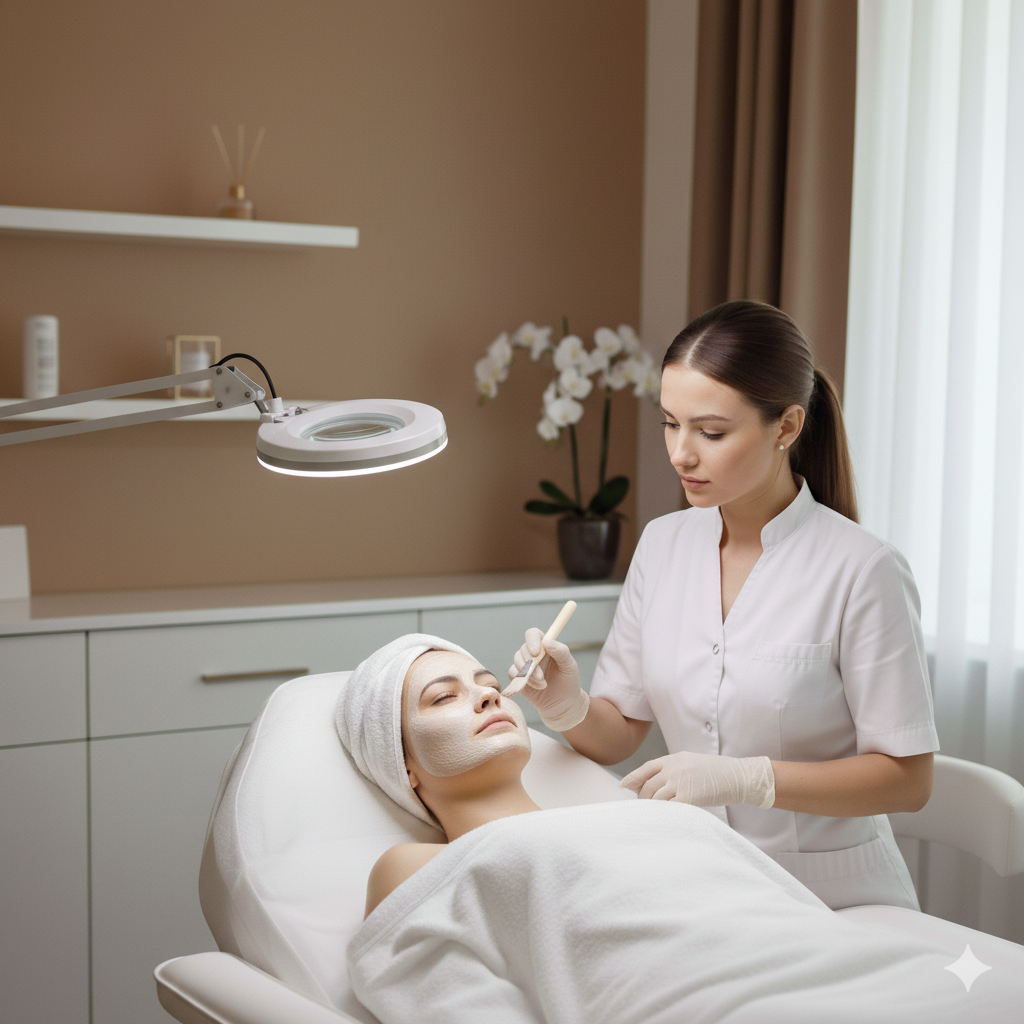
This is where professionalism plays a key role medical suit cosmetologist. It's not just a matter of aesthetics - it's part of the safety procedure.
Imagine a treatment. The cosmetologist is leaning over your face. His clothing is in close proximity to your sensitive, often irritated skin.
- Microbiological Purity: Professional
cosmetic sweatshirtmade of certified materials (often washed at high temperatures) is a barrier to microorganisms. An ordinary homemade t-shirt does not offer such a guarantee. - No Mechanical Irritation: During a facial massage or body treatment, the cosmetologist often touches the client with his clothes (arm, torso). Rough cotton or wool can irritate your skin. Modern
cosmetic tunicsScrabme are made of viscose blends - they are smooth, slippery and soft to the touch, minimising the risk of mechanical abrasion to the client's epidermis. - Specialist comfort = your safety: A cosmetologist performing a precise procedure (e.g. laser vascular closure) must have complete freedom of movement. Comfortable, flexible
cosmetic trousers(e.g. joggers) allow him to assume a stable position. If the specialist is struggling with uncomfortable clothing, his hand may be less secure.
Therefore, seeing a cosmetologist in a professional, well-groomed uniform can make you feel safer. It's a sign that every last detail of your comfort is taken care of at this practice.
Chapter 6: Lifestyle (Holistic Approach)
The skin is the body's mirror. You won't fix it with just a cream if your body is inflamed.
1. hydration from within
Drinking water is a cliché, but it works. If you are dehydrated, the blood becomes thicker and the skin (which is a peripheral organ) gets water at the very end. Drink min. 2 litres of water a day.
2. Anti-inflammatory diet
Your plate should be full of Omega-3 fatty acids (fish, flaxseed oil, nuts), which are the building blocks of the hydrolipid barrier from within. Avoid sugar, processed foods and hot spices, which exacerbate erythema (known as „flushing”).
3 Stress and cortisol
Stress damages the skin. Cortisol (the stress hormone) breaks down collagen and weakens the skin's regenerative capacity. Sensitive skin often reacts to stress with sudden rashes, dryness or spots. Ensure you get enough sleep and relaxation - it's the best cosmetic.
4. Air humidity
In winter, when radiators heat up, the humidity in the flats drops to 30% (as in the Sahara). The skin gives up water to the environment. Invest in a humidifier in your bedroom. It will make a difference to your life (and your complexion).
Summary: Patience and Consistency
Caring for sensitive and dry skin is a marathon, not a sprint. There is no miracle pill that will fix the problem overnight. It can take anywhere from four to as long as 12 weeks to rebuild the hydrolipid barrier.
The key is consequence. Gentle washing, moisturising, UV protection and avoiding irritants.
Also remember to trust the professionals. A good cosmetologist is your guide. Look for surgeries that focus on knowledge, hygiene and professionalism - which you will recognise not only by the certificates on the wall, but also by the impeccable, professional image of the staff.
Your skin is your armour. Look after it with tenderness and it will repay you with the radiance and comfort you dream of.
Feel like your skincare isn't working? Don't experiment on your own. Consult a cosmetologist who will create a „Beauty Plan” tailored to your sensitivity.
And if you are a professional who cares for such demanding complexions on a daily basis - you know the importance of delicacy and precision. Your outfit must not be an obstacle. Check out the collection cosmetic clothing Scrabme. Our cosmetic blouses, cosmetic tunics and cosmetic trousers with added viscose are so gentle that they will not irritate even the most demanding client, keeping you comfortable all day long.