
We reach for them every morning. Vitamin C serum, SPF 50 sunscreen, light mineral foundation, mascara. Our daily skincare routine is as natural as our morning coffee. We care about ingredients (INCI), we look for „clean”, „vegan” and „cruelty-free” products. We are conscious.
But have you ever wondered what a gigantic road we have come? That only a hundred years ago, women, in pursuit of beauty, consciously applied ... arsenic and mercury to their faces?
The history of cosmetics is not just a story of changing fashion. It is a fascinating and sometimes terrifying thriller about social status, poison, the scientific revolution and the birth of professionalism. As experts in professional image in the beauty industry, we invite you on a turn-of-the-century journey.
Antiquity: Divine Status, Magic and... Poison
The first cosmetics were not for „beautification” in today's sense. They were reserved for elites and priests, serving magical, healing and protective functions.
Egypt (c. 4000 BC)
It was the Egyptians who were the real pioneers. Iconic eye make-up - a thick black line around the eye - is not just about aesthetics.
- Composition: Famous Kohl (powder) was a mixture of galena (lead sulphide!), carbon black, antimony and copper minerals (like malachite).
- Application: It was believed that a thick dash protected the eyes from the harsh desert sun and... „złhese spirits”. Lead, despite its toxicity, also had antibacterial properties, which may have helped fight eye infections. They also used ochre (iron oxide) as a blush and lipstick.
Greece and Rome (c. 100 AD)
The Greeks valued naturalness, but the Romans poszły a step further. The ideal Roman woman had to have a flawless pale complexion.
- Composition: To achieve the desired pallor, women used to use lead white (lead carbonate). It was literally the white oil paint we know from the paintings of the masters. It was extremely toxic.
- Application: Women applied it to the face, neck and shoulders. The side effects were hair loss, organ damage, neurological problems and destruction of the skin itself, forcing them to apply... an even thicker layer to cover the damage.
The Middle Ages and the Renaissance: Sin, Pallor and Arsenic
The fall of Rome and the domination of the Church in the Middle Ages almost killed make-up. It was seen as sinful, unclean and associated with prostitution. Care was limited to herbs and simple concoctions created in monasteries.
The real comeback (and escalation of danger) came in the Renaissance.
Cult of the „Angelic” Pale (15th-17th centuries).
Pale skin was an absolute status indicator. It meant that a woman did not have to work in the fields. Queen Elizabeth I was an icon of this trend - her „mask of youth” przeszła to history.
- Composition: The basis was again lead white. But that's not all.
- „Aqua Toffana”: A famous „cosmetic” from the 17th century, marketed as beauty water. In reality, it was a poison - a solution of arsenic. Used in microdroplets, it was supposed to „brighten” the complexion and eyes, but was also a popular tool for quietly disposing of husbands.
- Mercury and Belladonna: Skin lesions (e.g. after smallpox) were „treated” with mercury-based ointments. And to make eyes look bigger and more „dreamy”, women sprinkled them with belladonna (wolfberry), which dilated the pupils but, in the process, slowly destroyed the eyesight.
In this era, „make-up” literally meant topping yourself daily in the name of social status.
The 19th Century: The Birth of Industry and the Chemical Revolution
The 18th century was still dominated by toxic lead white. It was not until the 19th century, the Victorian era and the Industrial Revolution, that a breakthrough was made.
Initially, Queen Victoria condemned make-up as „vulgar”. Naturalness was promoted. But it was then that science began to come into play.
- Composition: Chemists have discovered that zinc oxide is an excellent, non-toxic substitute for lead white. The first safety powders began to be produced. Vaseline (Vaseline) and lanolin were discovered and became the base for creams.
- Application: The first global cosmetic brands were created, such as Rimmel (founded in 1834) and Guerlain. The first lipsticks in a stick (not yet in a tube) and safe perfumes began to be produced.
Make-up has ceased to be a poison created at home and has become a an industrial product.
The 20th Century: The Explosion of Consumption and the Birth of Science
What we know as today's cosmetics industry was born in the 20th century. The driving force was cinema.
1910-1930: Silent Cinema and the „Flapper” Era”
Silent film actresses (such as Theda Bara) needed strong, expressive make-up to make their facial expressions visible on black and white film.
- Breakthrough: Maybelline is born. T.L. Williams creates the first „modern” mascara from coal dust and Vaseline for his sister Mabel. In 1920, Max Factor introduces the term „make-up” and creates cosmetics that don't burst into the limelight. Women (the so-called „Flappers”) cut their hair en masse and start painting their lips with red lipstick in a pull-out tube.
1940-1960: The Golden Age of Hollywood and Regulation
The war stopped the market for a while, but it was followed by an explosion. Icons like Marilyn Monroe and Audrey Hepburn dictated trends.
- Breakthrough: In 1938, in the USA, the FDA (Food and Drug Administration), which, for the first time ever, begins adjust cosmetics industry. Manufacturers have to prove that their products are safe before they reach the market. This is the end of the arsenic and mercury era.
1970-1990: Consciousness and „Cosmeceutics”
The 70s were two extremes: the natural, „hippie” look and the edgy make-up of the disco era. The 1980s was maximalism - strong pink, blue shadow. But it was in the 1990s that something crucial happened.
- Breakthrough: Cosmetics have ceased to merely „colour” and „conceal”. They were born cosmeceuticals - products at the intersection of cosmetics and pharmaceuticals.
- Composition: Scientists have introduced into creams AHA and BHA acids (glycolic acid, salicylic acid), retinol (vitamin A) and the first peptides.
- Application: The goal is no longer merely aesthetic. The goal has become real skin remodelling and treatment: fighting wrinkles, acne, hyperpigmentation.
The 21st Century: The Era of „Skintellectualism” and the Evolution of the Professional
We have entered an era that can be called „Skintellectualism” (Skin Intellectualism).
Today, thanks to the internet, the consumer knows more than ever. We read compositions (INCI), we understand the difference between retinol and retinal, we know how ceramides and hyaluronic acid work.
Modern cosmetics is pure science: copper peptides, stem cells, new generation filters, probiotics.
But this revolution in line-ups has also brought a new problem: information chaos. With access to such potent active substances (such as acids or retinol), people have started to damage their hydrolipid barrier on their own.
And this is where we get to the heart of the matter. In a world of such complex science, more than ever we need guide.
Evolution of a Beautician into a Cosmetologist
In parallel with the evolution of cosmetics, the profession has evolved.
The former „beautician”, who applied an algae mask, has undergone azła transformation. Modern cosmetologist is a high-level, university-educated specialist who must have an in-depth knowledge of chemistry, anatomy, dermatology and physiology. She operates advanced lasers, performs high-concentration chemical peels and arranges complex home therapies.
From Apron to Professional Uniform
As competence evolved, appearance had to evolve.
The old white stiff apron - associated with simple treatments - has become inadequate. It is like that unfortunate lead white - a relic of przeszłości.
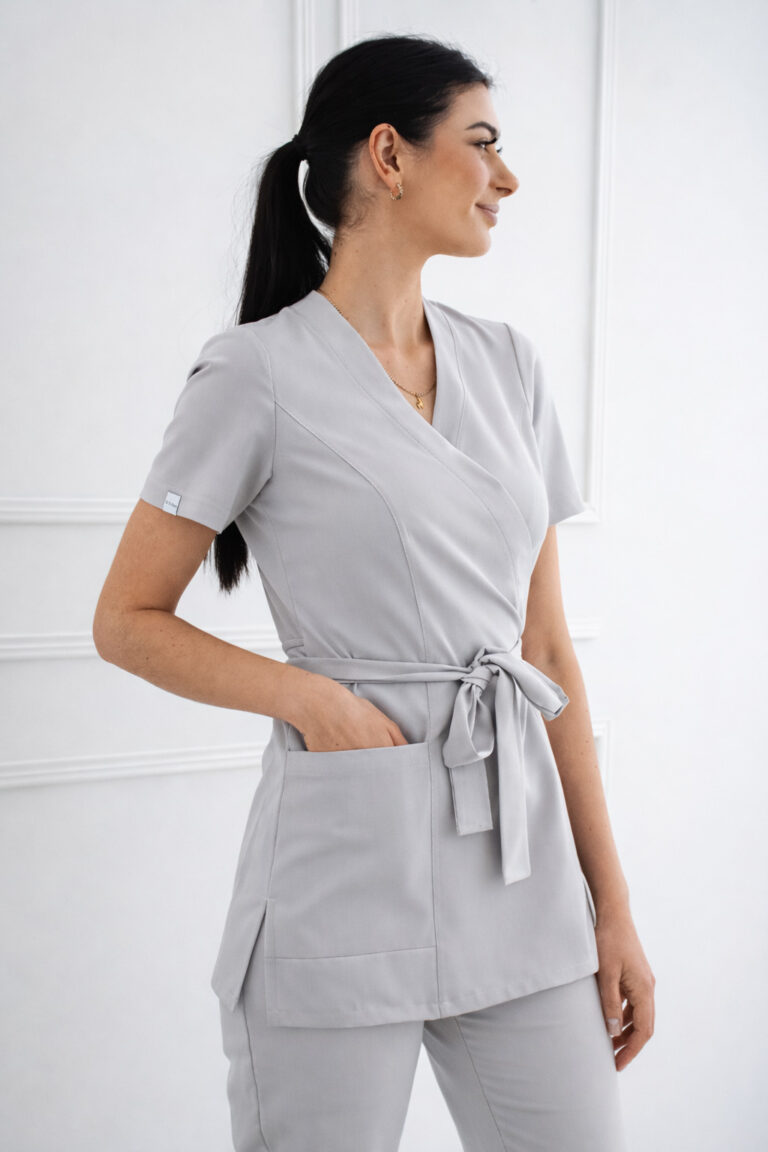
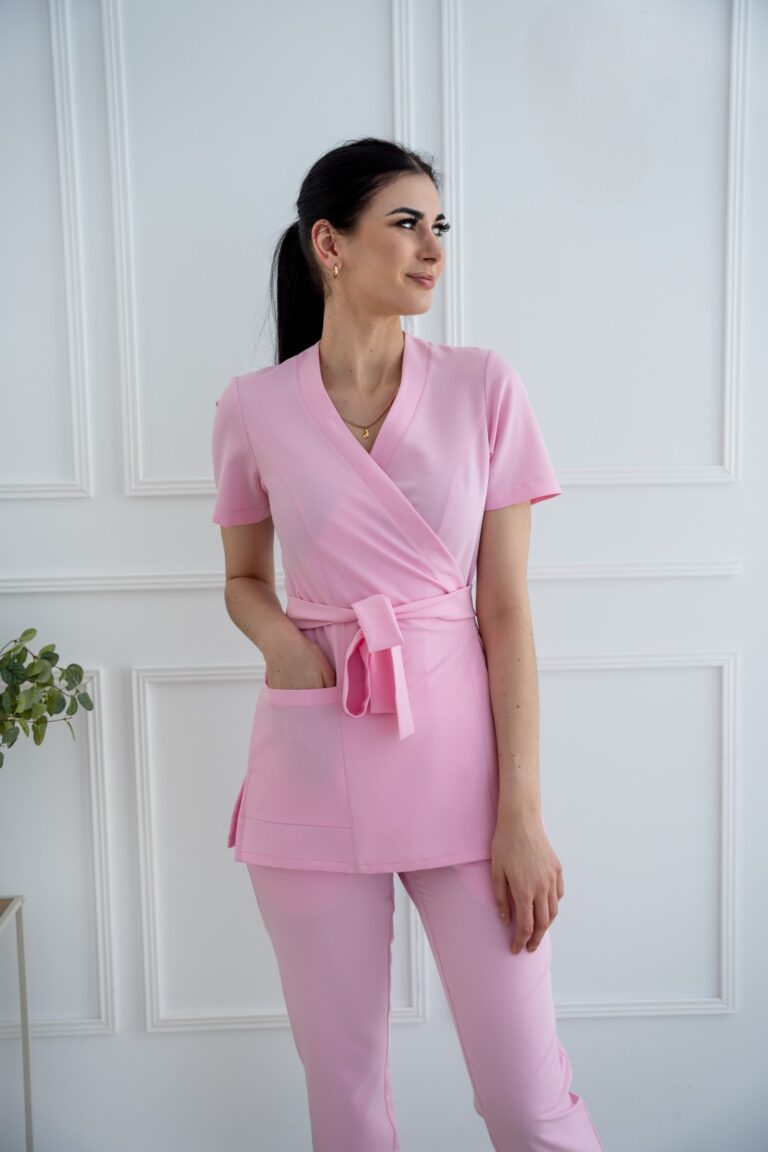
The modern cosmetologist, working with advanced technology, needs an outfit that reflects her status and competence.
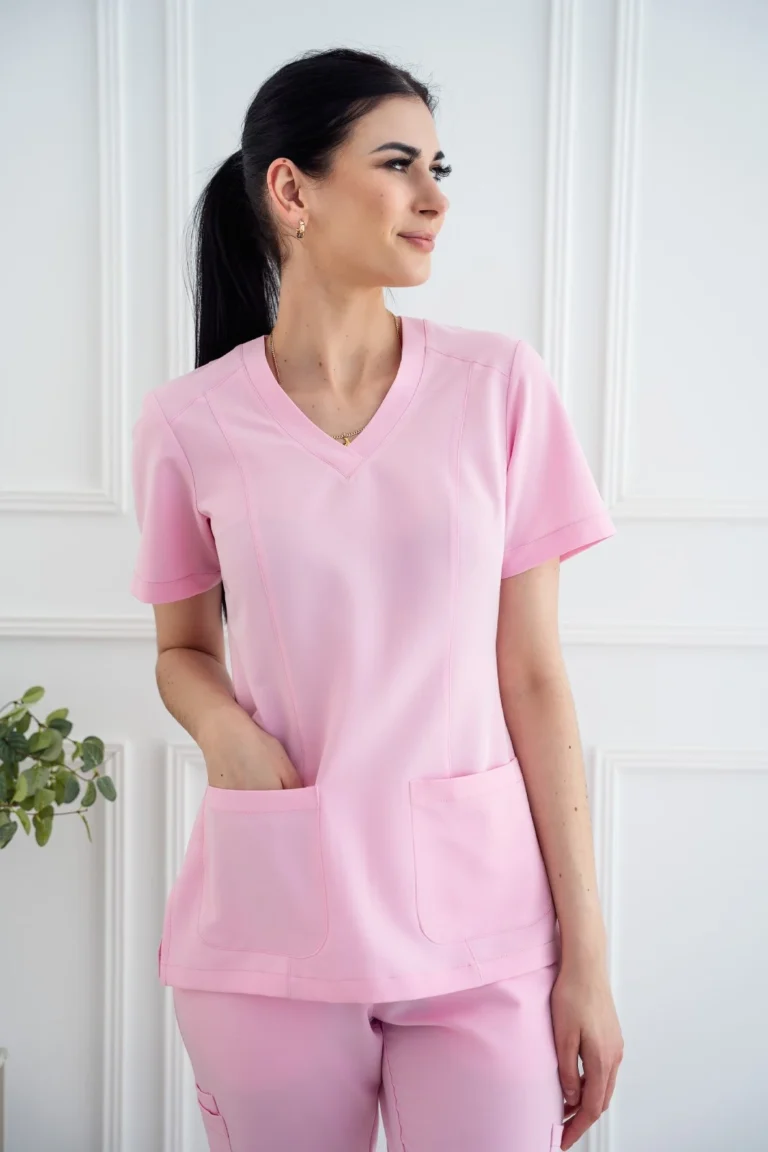
- Professionalism and Hygiene: The client, coming for a laser treatment, must feel safe. Perfectly clean, professional cosmetic tunic is the first sign that it has come into the hands of an expert who cares about sterility and standards.
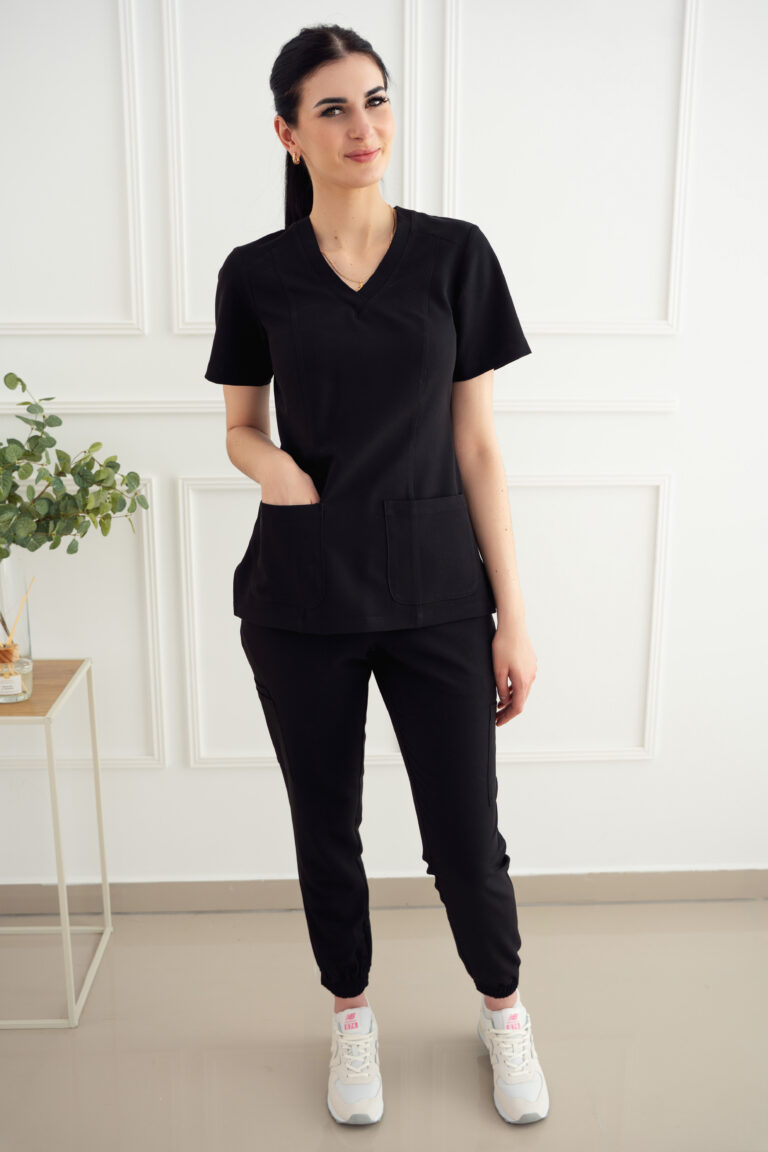
- Comfort and Ergonomics: The work of a cosmetologist is a physical job. Many hours on your feet, bending over, precise movements. Modern cosmetic trousers, often with a cut joggers, made of flexible, breathable materials, is no longer a fashion statement - it is ergonomics at work. It's a tool that allows you to focus on the patient, not on an outfit that restricts movement.
- Image of the Expert: Just as the composition of a serum demonstrates its potency, a uniform demonstrates the level of the practice. Stylish, slim-fit cosmetic tunic in a modern colour (such as pastels, navy blue or black) builds authority. It tells the patient: „You are in a modern place where science meets aesthetics”.
Summary: From Magic to Science
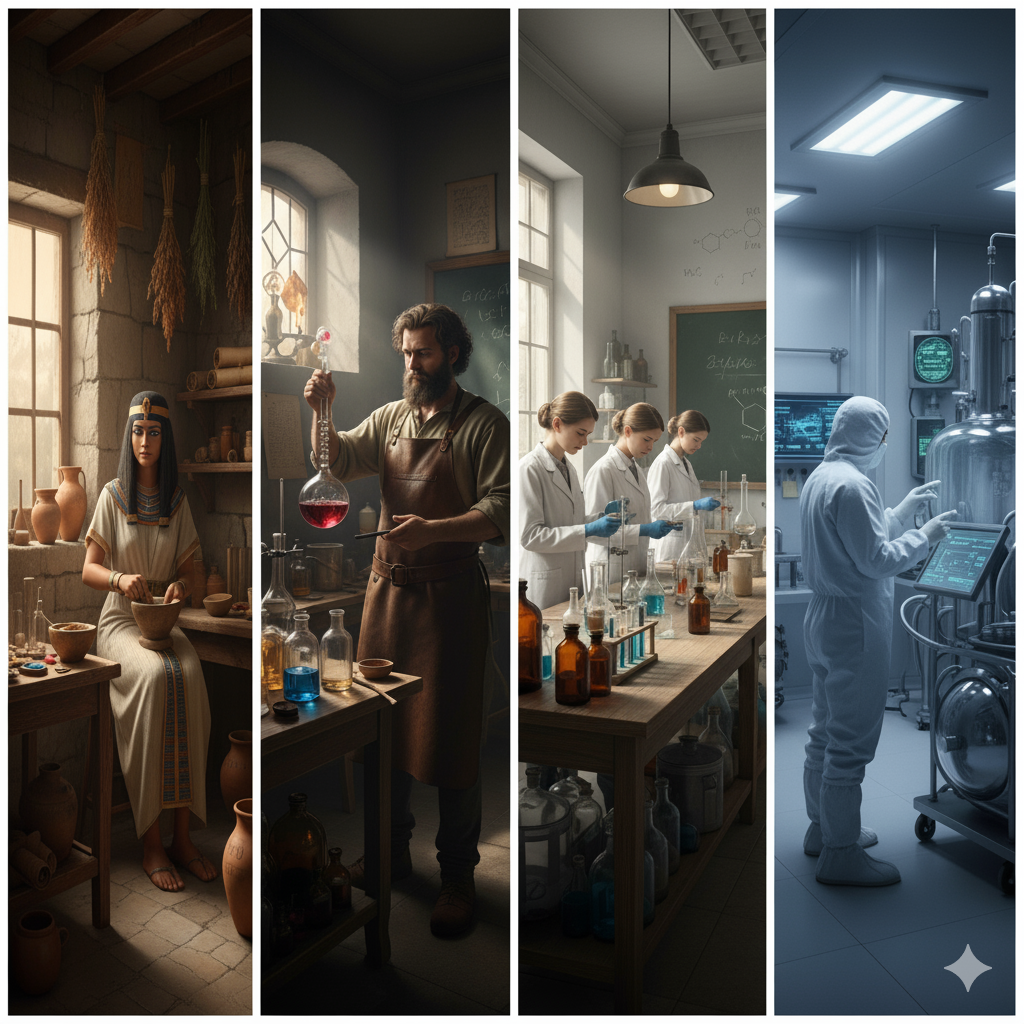
The history of cosmetics has come full circle. We started with magical but toxic concoctions created by priests (Egypt). We went through the era of poisons (Renaissance) and the industrial revolution (19th century).
Today, we are back to the point where the cosmetic is again the work of a „priest” - only that this priest is the scientist in the laboratory and the cosmetologist in the office.
The evolution from lead white to peptides shows how far we have come. And the evolution from the stiff apron to modern scrubs shows that professionalism in the beauty industry has finally got the setting it deserves.
Don't experiment with active ingredients on your own. In an era of such powerful cosmetics, trust the knowledge and experience of your cosmetologist. He or she is your best guide to the world of healthy skin.
And if you yourself are that expert who guides your clients through the world of modern skincare every day - make sure your image reflects your competence. Check out the cosmetic clothing collection Scrabme - created for professional women who value science, style and comfort.